

Integrated Roadways founder featured on CNN as autonomous vehicle expert
March 16, 2017 | Bobby Burch
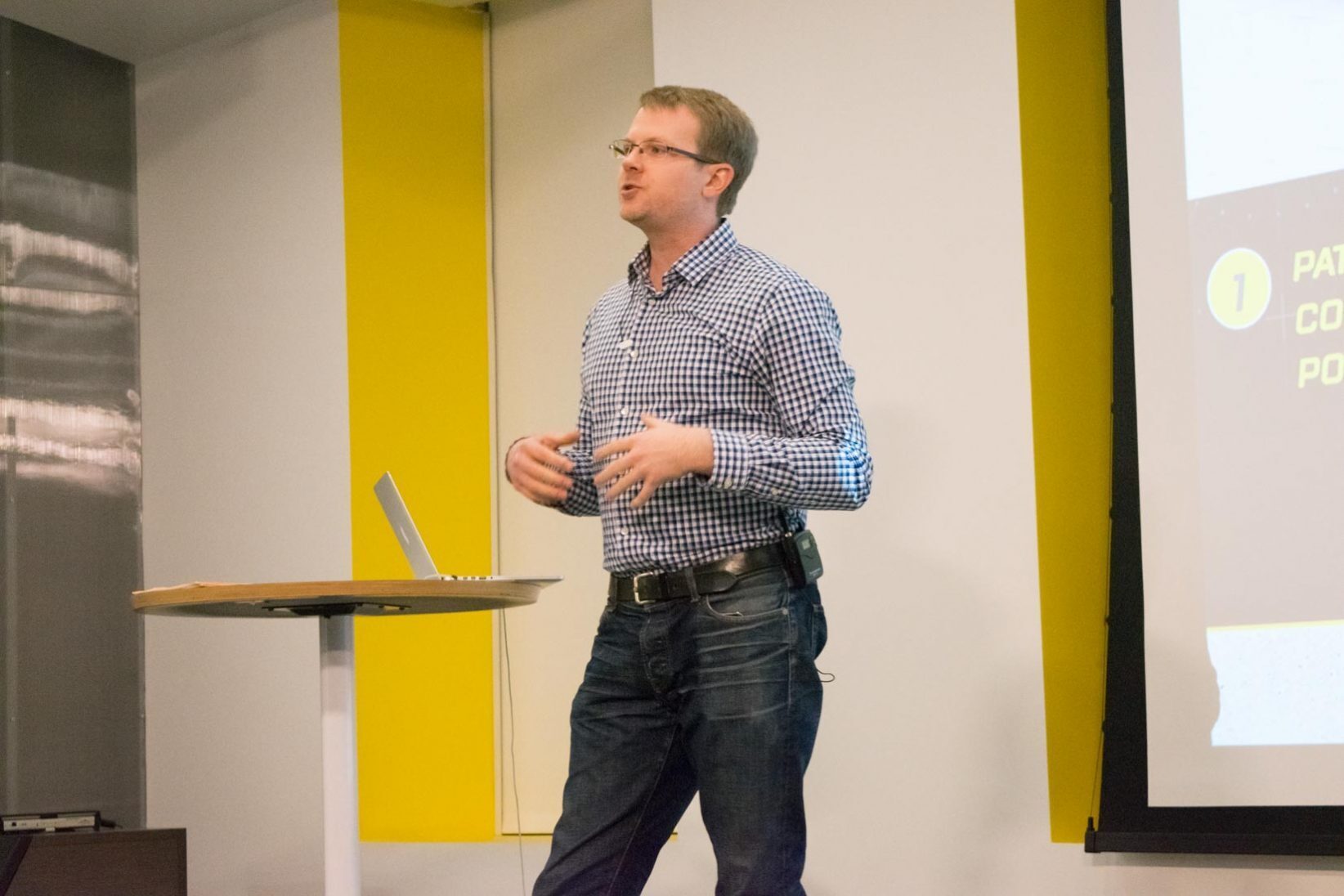
A Kansas City startup founder recently was featured on CNN as an industry expert for his knowledge on autonomous vehicles and the infrastructure that can support them.
After being discovered via a weekend panel discussion at the SXSW Conference, Integrated Roadways founder Tim Sylvester recently was hosted on CNN’s Quest Means Money show. Sylvester’s startup created patented smart pavement with embedded IoT technology that provides connected cars wireless connectivity and reduces roadway expenses.
Intrigued by Sylvester’s views that wireless networks currently cannot adequately support the imminent rise of driverless cars, CNN host Richard Quest asked what infrastructure the U.S. needs in place. Sylvester explained that his firm’s product not only would provide the network needed but also revamp dilapidated U.S. roads.
“We need lots of new American infrastructure but there’s no money for it,” Sylvester said. “While next-gen mobility services need economical ways to deploy dense networks. By marrying the need for next-gen networks to the need for new roads, we can refresh American infrastructure at no cost to the public while making next-gen mobile far more cost effective.”
Sylvester said that sharing his views and company to a national audience carried some nice perks. A “thrilling, but also scary” experience, Sylvester said it was his first national TV appearance.
“As soon as I was off air my social media blew up,” he said. “There are now tens of thousands more people who know what we do and why. … We just hope that someone from the (Trump) Administration was watching and is now researching a new way to build public infrastructure without increased public burden.”
Sylvester added that without venturing to SXSW, the exposure wouldn’t have come. In addition to interacting with other innovators, SXSW offered him a platform on which to grow.
“This is the kind of reason I attend SXSW as often as possible,” Sylvester said. “The CNN production assistant was looking for interesting perspectives on autonomy, and found me because I sat on a panel on Saturday to discuss designing infrastructure for autonomous vehicles.”
The DOTs in Kansas, Missouri and Colorado are already using Integrated Roadways. The firm also entered into a 15-year agreement with MoDOT to serve as the department’s “IoT broker” and will build and operate a testing lab that will enable Missouri to explore the top mobile-Internet innovations.
Check out Sylvester’s appearance on CNN below.
The Race for Driverless Supremacy: Intel buys Mobileye for $15.3 bn https://t.co/t0VtPZ9WnD
— Quest Means Business (@questCNN) March 14, 2017
0

Featured Business

2017 Startups to Watch
stats here
Related Posts on Startland News

Smart city leader: Can technology predict deadly shooters before it’s too late?
A smart city is a safe city, Herb Sih said. And technology can help. “If you don’t have safety, you don’t have anything,” said Sih, managing partner at Think Big Partners, one of the key collaborators in Kansas City’s $15.7 million public-private Smart City initiative. Having grown up in St. Louis, Sih said he has…
T-shirt printer GOEX hopes to clad workers in dignity
A Kansas City T-shirt screen printer has a lofty mission: Turn local purchases into global impact. “Your dollar has value in how it’s treating others across the world,” said Ryan Hudnall, engagement director at the Global Orphan Project. Tucked away near Wyandotte and 31st streets, GOEX serves as an offshoot of the Global Orphan Project,…
Looping back? Missouri partners with Hyperloop to study 23-minute KC-St Louis route
Missouri’s prospects for landing a Hyperloop route apparently aren’t off the rails after all. Despite the company revealing four U.S. finalist routes in September — which did not include a proposed route through the Show Me State – Hyperloop One announced Tuesday it has entered into a public-private partnership with the State of Missouri to conduct…

Techstars Spotlight: GRIT Virtual builds 3-D tech into 2-D construction mindset
3-D should stay 3-D, said Chris Callen, CEO of GRIT Virtual. And with the rise of virtual reality and augmented reality technology, that philosophy can be applied to the construction of 3-D buildings, Callen said. Wichita-based GRIT Virtual is a software-as-a-service platform for large contractors. It uses VR software to streamline the workflow for construction…