

The education system is broken — these Kansas Citians want to fix it
March 8, 2017 | Meghan LeVota
As you may remember or have experienced with your own child, there seems to come a point in one’s educational journey where kids ask themselves — what’s the point?
The answer has always been, so that you can get good grades, to get into a good college to then get a good job. The problem with that, however, it that the public secondary education model hasn’t changed much since it was designed in 1893 to serve an industrial economy.
As you know, technology has changed things. A lot.
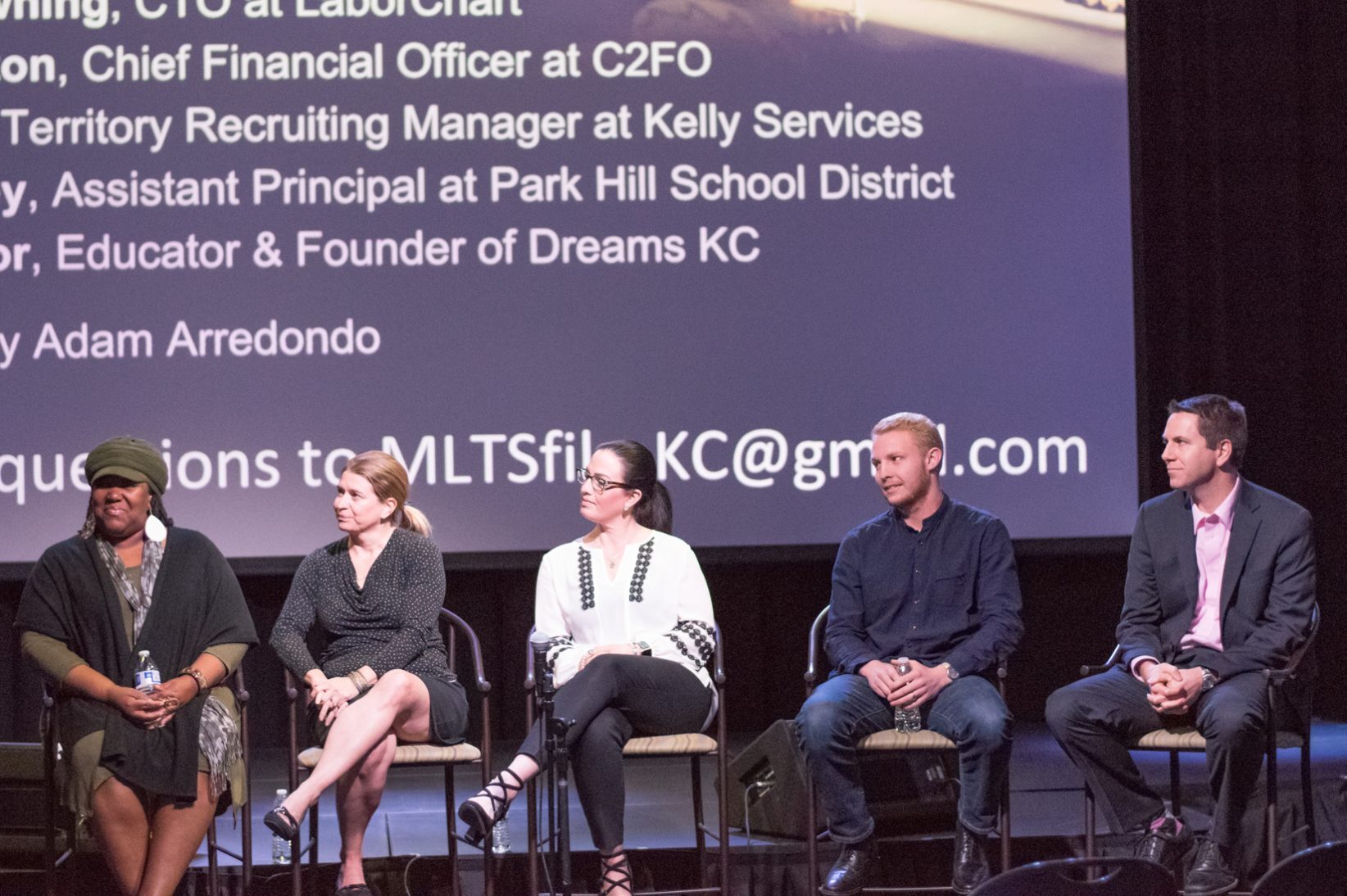
That challenge was the subject of a recent documentary screening and panel discussion on Most Likely To Succeed, hosted by the Center of Entrepreneurial Ecosystem Development (CEED,) Gould Evans and STEAM Studio at Plexpod Lenexa. The panel featured a variety of experts, including recruiting managers, educators and entrepreneurs.
CEED co-founder Adam Arredondo said that the failure of the education system is directly connected to the skills gap that many industries face today.
“Education has to change in order to meet the needs of the current workforce,” Arredondo said. “These screenings bring the community together to begin to have a conversation where we can come to the same understandings together.”
The 2015 film Most Likely to Succeed showcases the struggles that educators and industry leaders face in transforming education to meet the demands of a changing economy. Following students from the San Diego-based project-based-learning school High Tech High, it also exhibits possible solutions for the U.S. system.
Kelly Services recruiting manager Katy Fuller said the education system’s focus on hard skills and retention is no longer working as the information age calls for soft skills and creativity.
“When people first come out of school and they’re looking to enter the workforce, they are trained test takers,” Fuller said. “They are pushed very quickly to think outside the box if they want to move forward. It’s not a comfortable thing, especially when we have to do it for the first time. They are so damn afraid to step up and do anything, so they don’t, and then they feel like they’re failures.”
Kerri Thurston, CFO at C2FO, echoed the sentiment when she shared the specific soft skills that her team looks for when hiring.
“We’re looking for people who will take risks, innovate and collaborate across the organization,” Thurston said. “We want curiosity and the desire to be a lifelong learner. We’re looking for people who will be willing and able to give and receive feedback.”
Educators on the panel emphasized the necessity for teachers to begin thinking of themselves as “facilitators” rather than teachers. DreamsKC founder Catina Taylor said that schools must incorporate more project-based learning and problem solving in the classroom.
“When I think about education I think about liberation, we are cultivating and guiding human needs that are very complex,” Taylor said. “I think we make a lot of assumptions about what children can and cannot do and we need to take a step back and allow them to operate within their own power, and guide them to finding solutions that will impact us all.”
Making her own mark toward change, Taylor is in the process of building the charter school Dreams KC — an innovative, project-based educational experience. Also on the panel was Ryan Stanley, who will serve as principal of Park Hill School District’s new LEAD Innovation Studio in 2017.
In addition to hosting documentary screenings and discussions, CEED launched a new approach to education via MECA Challenge. MECA — which stands for most entrepreneurial community in America — is a problem-solving contest for high school and college students aiming to transform education and produce innovative thinkers. Since its launch in 2014, MECA Challenge has transformed into a scalable event that challenged hundreds of students last year.
“(The documentary) illustrates the impact of technology on the workforce, which is really important to show as tech advances the basic skills you come out of school with, computers and robots can do and are doing more and more every day,” Arredondo said. “If we don’t adapt and education doesn’t change we will literally be creating an army of unemployable people.”
The next documentary screening will be held April 4 at Rockhurst University.

Featured Business

2017 Startups to Watch
stats here
Related Posts on Startland News
Sweet Peaches wants a bigger piece of the pie; crowdfunding could scale this small biz across US
Community support will be key for Sweet Peaches Cobblers next batch of growth, said Denisha Jones, announcing plans to use Kickstarter funding to pack her flavorful and beloved family desserts into the freezers of more major retailers across the U.S. Already a local Kansas City favorite, Sweet Peaches Cobbler can be found in more than…

Jeremy Terman turned a likely ‘no’ into a tech career; his advice: Don’t wait for permission to start
The biggest risks are in doing nothing, said Jeremy Terman, encouraging entrepreneurship students at UMKC to take the plunge — even if at times the world might be telling them they aren’t ready. “You don’t have to be in a box. You don’t have to listen to what the rules are,” said Terman, an investor…

Cybersecurity automation: How to do more with less
Editor’s note: The opinions expressed in this commentary are the author’s alone. BARR Advisory, which has offices in Kansas City, is a cloud-based security and compliance solutions provider, specializing in cybersecurity, is a financial partner of Startland News. Click here to check out more from this Cybersecurity Month series from BARR Advisory. In today’s rapidly…

ARtechBBQ is back, bringing Oktoberfest vibes to KC’s best-smelling celebration of tech
While the party has grown larger each year, Greg Kratofil said, the goal of the ARtechBBQ remains the same: to highlight Kansas City’s tech community at what he calls the closest thing the city has to Mardi Gras. The hotly-anticipated, one-night-only event returns 6 p.m. to midnight Nov. 1 at the Kansas Speedway during the…