

Survivor, innovator Kim Gandy rewards patients for sticking to treatments
February 24, 2017 | Meghan LeVota
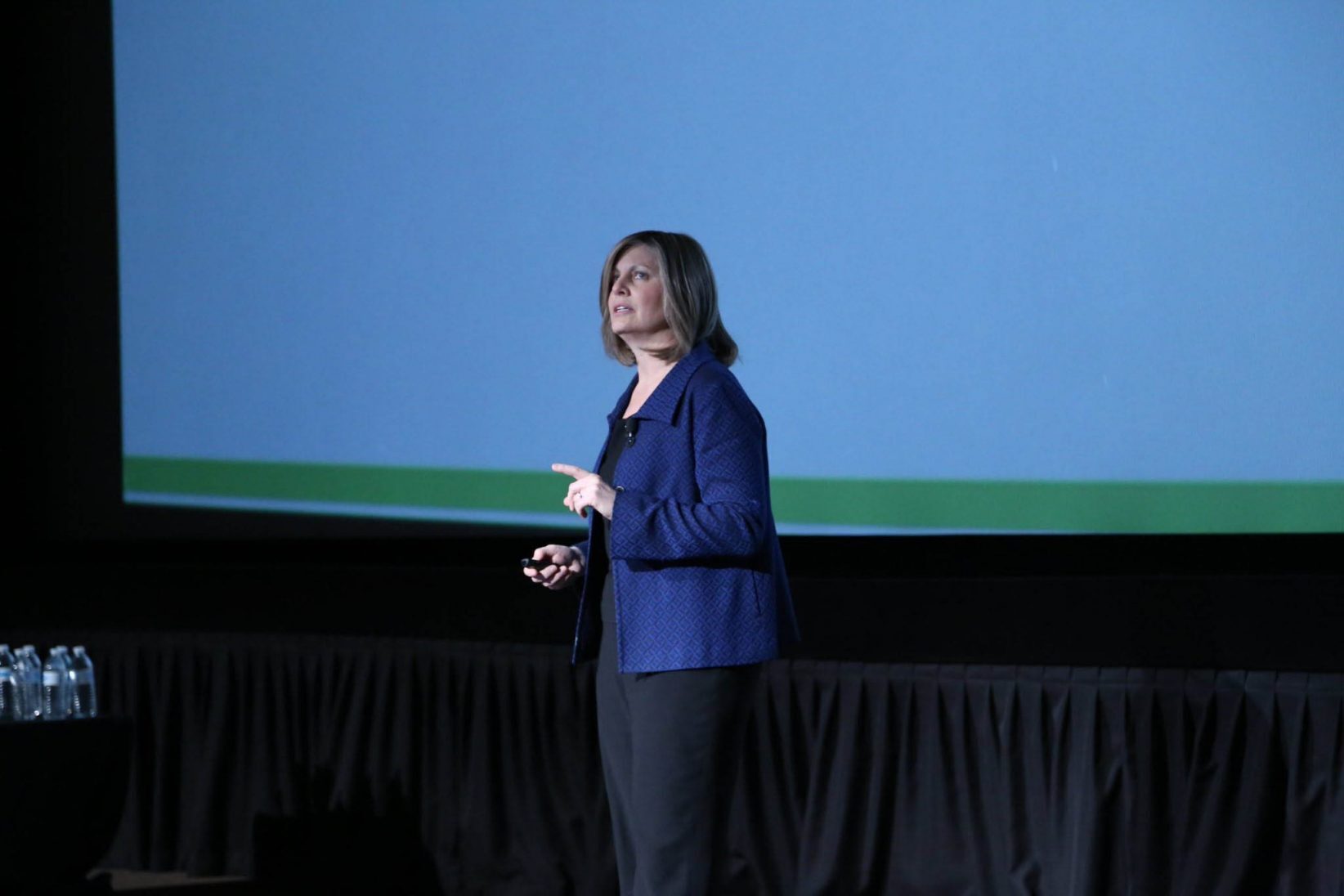
In her 20 years working as a transplantation clinician, Kim Gandy found it baffling that a seemingly simple problem had such a difficult time finding a solution.
Transplant patients consistently struggled to adhere to their health regimens, resulting not only in significant costs for care providers but also death.
“We were literally losing patients,” Gandy said. “In transplant, if you do not adhere to the medications that you need to take after the transplant you can lose the organ — and in heart and lung transplants, that often means you die.”
The problem is not limited to transplant operations — it transcends all chronic conditions.
Gandy said that before the medical field can evolve and introduce new medicines and technology, they need to tackle the basics. Often times it comes down to effective communication.
“A lot of people think there is a lack of adherence because people are lazy or rebellious,” Gandy said. “I’m a glass-half-full type of person, and there is no data to suggest that it’s the case. Truth be told, it is just hard. These regimens are complex and many people don’t understand the necessity.”
It occurred to Gandy that although it’s a well-known problem, nobody was trying to solve it. She said that clinicians seemed to be waiting around for somebody else to do it.
In 2013, Gandy decided to take on the challenge and began her entrepreneurial journey. She founded Play-It Health, a web- and mobile-based platform that makes adherence to prescribed regimens easier to understand and follow. The platform helps effectively communicate a plan, as well as offer rewards for patients that observe their treatment plan.
“Lack of adherence is probably the most actionable problem in the industry,” Gandy said. “Play-It Health has the opportunity to have a stronger impact in health care than anything else I’ve been in contact with.”
Here’s how it works. Patients download the iOS or Android app and then answer a few questions — their favorite color, hobby and others regarding their personal situation. Then, the user will receive push notifications reminding them to adhere to their regimen.
Play-It Health is compatible with over 20 chronic conditions — diabetes, cancer, multiple sclerosis and others — and tracks the user’s adherence to prescribed medications, use of medical devices and appointments with their physician. If the patient fails to adhere, the platform will change its look and feel to re-engage the user. If things get dangerous, Play-It health will connect the user with a telemedicine intervention, connecting them remotely to a clinician on-demand.
When users follow their regimen, they gain points that can be used for retail coupons or through the platform’s game.
“Nothing about this is much different from other rewards platforms that are being used outside of the medical sector,” Gandy said. “They’re just not many rewards platforms being used for this purpose.”
Gandy said that the platform is currently targeting hospital branches and other health institutions to set up pilot programs. The hope is that these institutions will front the cost of the platform, making it free for the patient.
Play-It Health has raised $200,000 to date and is currently raising funds for a $1 million round. Gandy also was a member of Pipeline’s 2016 fellowship class.
Gandy attributes her success to her perspective — both as a clinician and a patient. Shortly after her acceptance to Pipeline, Gandy was diagnosed with breast cancer.
“I’ve been through a lot of phases in my life and been through difficult things,” Gandy said. “But, you just kind of hit bumps in the road and keep going.”
Gandy used Play-It Health herself, which she said gave her fresh eyes on the product.
“It was actually kind of funny,” Gandy said. “I was now looking at using this app as somebody going through chemo as opposed to the clinician prescribing it to somebody going through chemo.”
In addition to the reassurance that the application was helpful to patients, Gandy said the experience gave her new ideas for the platform’s next set of features. After completing her chemo treatment and surgery, Gandy is tumor free and has the odds for survival in her favor. She is optimistic that this experience will help her get Play-It Health in the hands of more people.


2017 Startups to Watch
stats here
Related Posts on Startland News
Veteran entrepreneur finds security in pizza, opening new Rosati’s in south Overland Park
Bob Ring sold his homegrown company of 25 years — then got a job delivering pizzas. All part of the recipe for the longtime Kansas City businessman who — despite his decades of experience — initially found banks hesitant to lend to him during the pandemic as he worked to open his own pizzeria in…

Camel Culture tastes like home: How a Missouri dairy’s milk fills a void when everything else seems foreign
Startland News’ Startup Road Trip series explores innovative and uncommon ideas finding success in rural America and Midwestern startup hubs outside the Kansas City metro. This series is possible thanks to the Ewing Marion Kauffman Foundation, which leads a collaborative, nationwide effort to identify and remove large and small barriers to new business creation. MILLER,…

Fund Me, KC: Her startup has outgrown its puppy phase; now’s your chance to feed its potential
Startland News is continuing its “Fund Me, KC” series to highlight area entrepreneurs’ efforts to accelerate their businesses or lend a helping hand to others. This is an opportunity for business owners and innovators — like Jonaie Johnson’s effort to publicly launch the highly-anticipated PlayTach smart dog crate attachment by Interplay — to share their…
KC startup earns $100K from Google initiative, funding its ‘food as medicine’ tech solution for chronic illnesses, healthy food inequity
Kansas City-based startup Free From Market will receive $100,000 in non-dilutive funding from Google as part of the tech giant’s initiative to support Black-led startups. Free From Market is a digital health platform that unites the key components needed for people with chronic conditions to make lasting dietary changes: personalized food selection, nutritional education and…