

Melissa Roberts: How an Olathe hate crime affects your tech business
February 28, 2017 | Melissa Roberts

Editor’s note: The opinions in this commentary are the author’s alone.
In the startup world, outside the Facebook echo chamber, it can be hard to see how political trends impact your business.
I understand why. When you’re struggling to weed through the constant churn of working the problem, identifying a new problem and working that problem — relatively remote political trends just don’t seem relevant to the task at hand.
Consistently divisive rhetoric at a national level, especially as it regards immigration policy, has stirred up an irrational, destructive and increasingly violent fear of “the other.” In my observation, this has manifested in normal people making assumptions about other normal people that are grounded in irrational and exaggerated populist rhetoric rather than rational fact. And while deeply troubling, this is not on the surface immediately relevant to startups, outside the fact that they’re run and supported by human beings of different races and backgrounds.
But that changed last week in Olathe. The growing tide of fear of “the other,” political radicalism and an acceptance of openly racist behavior at the highest levels of public life led a man at an Olathe bar to believe that he could insult a table of people who looked different than he did with limited social consequences. I don’t pretend to be a journalist, so you’ll have to rely on some of the real reporting on the situation for a detailed explanation of the facts and the speculation on his motives.
At the end of the day, the two men he decided to harass were engineers who work at Garmin, a major tech employer in the area. It’s been consistently reported that the two men were Indian and that the shooter yelled at them to “get out of my country” before opening fire, killing one of them, injuring the other and injuring a bystander who tried to stop him. He later bragged to a bartender across town that he had killed two Middle Eastern men. This is, by all definitions, a hate crime.
The personal toll of this crime is clear and much discussed. One family will never see their husband and son again. Two other men will spend time recovering from serious injury. Many people who grew up in Olathe — like I did — won’t feel as safe in their community. Lots of us will think twice about the seemingly harmless crazy guy sitting next to us in a bar. I imagine many people with brown skin — regardless of religion or provenance — are handling feelings of fear, frustration and anger this week. These, of course, are the primary costs of this hate crime.
There will be additional costs of this hate crime in other communities. In particular, two are the entrepreneurial and tech communities that will feel the economic toll of a hate crime on their members. Whether you admit it or not, this hate crime is about to have an impact on your startup.
It’s a much-maligned fact that Kansas City’s tech talent crunch impacts startups. The largest forces in that market are major tech employers in town like Garmin, Cerner, Burns & McDonnell, Black & Veatch, Sprint, DST Systems and more. In fact, their tech needs are so great that our area universities can’t graduate qualified people fast enough to fill the positions that these companies have open. As a result, these Kansas City companies recruit people from all over the world to fill technical roles. These people come to Kansas City using H-1B visa programs, as naturalized citizens, through academia and a myriad of other pathways.
The immigrant experience is as diverse as the human experience. If you look only at Cerner and only at their employees that use the H-1B visa program, more than 300 people have moved to Kansas City from other countries to help this tech powerhouse grow. That’s just one pathway and one Kansas City company.
We desperately need talented technologists from all over the world to come to Kansas City. We need tech talent from any and all sources to help to grow the companies that sustain our economy today and those that will sustain our economy in the future. We need more people to start businesses and employ people with the skills to grow those businesses, whether they were born in Olathe or Ohio or Hyderabad or Sudan. Without talented people from other countries moving to Kansas City at an accelerated rate, our tech talent crunch will grow more serious.
When talented technologists think about accepting a job offer in Kansas City from this day forward, what happened in Olathe might influence their decision. And that impact will trickle down to every tech startup in the city. While this issue has existed and perhaps has been swept under the rug for many years, it is emergent. For Kansas City to build a perception as a place that tolerates hate crimes like these or bears them with relative unconcern would be both personally devastating to many humans and economically devastating to the tech labor market.
As someone who grew up here, who chose to live here and chooses to stay here, I know there are many more people in Kansas City like Ian Grillot — the man who stood up for the two men being harassed and was shot as a result — than there are like the shooter. But even one person, deranged and racist as he might be, can change that perception on an international level.
For those of you who have come to Kansas City seeking an opportunity, a challenge or a life of comfort, and are now feeling less safe, I hope you will consider seeking comfort in the startup community. It is, in my experience, a community that cares far more about your ability and passion than about where you were born.
For those of you who are members of the startup community, and are tempted to write a post on Facebook, then forget what happened last week, I submit to you that this situation is a crisis. We have an emergent need to address any racism that we see on a personal, institutional and economic level.
I’m confident that working together as a community we can come up with a better response to this situation than I can alone. I hope you’ll consider donating to the family of the man who was killed, the family of the man who was injured, or to the man who stood up against the shooter and is still recovering from his wounds. I hope you’ll chime in with some additional ideas in the comments, and that you’ll keep the discussion proactive and respectful, not divisive.
Author’s Note: Many thanks to Aditya Voleti for his review and suggestions in writing this piece. Melissa Roberts is president of Free State Strategy Group, a Kansas City-based firm that offers public relations, content marketing and community-building services.


2017 Startups to Watch
stats here
Related Posts on Startland News
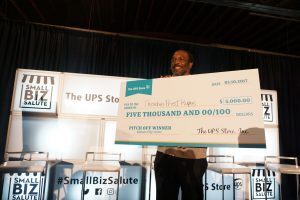
Bringing grub to KC food deserts, Rollin’ Grocer to expand impact after contest win
While he takes pride in his roots, Priest Hughes said it saddens him to see a staple of life — fresh food — become so difficult to attain in parts of Kansas City. Over the course of a decade, Hughes has noticed several grocery stores in his neighborhood close at an alarming rate. Purchasing fresh,…

Truck-sharing app Bungii hauling early success, eyeing expansion
Less than a year after its launch, Kansas City-based truck-sharing app Bungii is gaining significant traction. In addition to expanding its platform from only Kansas City to include Lawrence, Bungii has tapped hundreds of users that temporarily need a truck to haul their stuff. Led by two recent college graduates, Ben Jackson and Harrison Proffitt, Bungii’s on-demand…

Kauffman Foundation: National startup activity continues to improve
National startup activity grew slightly in 2016, a consecutive three-year improvement that reached pre-Great Recession levels, according to the Ewing Marion Kauffman Foundation. However, in the long-term view startup activity is still in decline when compared to the 1980s, the 2017 Kauffman Index of Startup Activity found. Victor Hwang, vice president of entrepreneurship at the…

Kauffman report: KC startup momentum builds for 3 years running, improves national rank
It’s not just a feeling. Momentum in Kansas City’s startup community continues to grow, according to new data from the Ewing Marion Kauffman Foundation. The Kauffman Index of Startup Activity found that for the third consecutive year, entrepreneurial activity in the Kansas City metro has grown. The index — which presents entrepreneurial trends nationally, at…