

KCMO creates live-viewing platform of smart city data
February 8, 2017 | Bobby Burch
Officially launched about nine months ago, the Kansas City Smart City initiative has produced as much enthusiasm as it has technological possibilities.
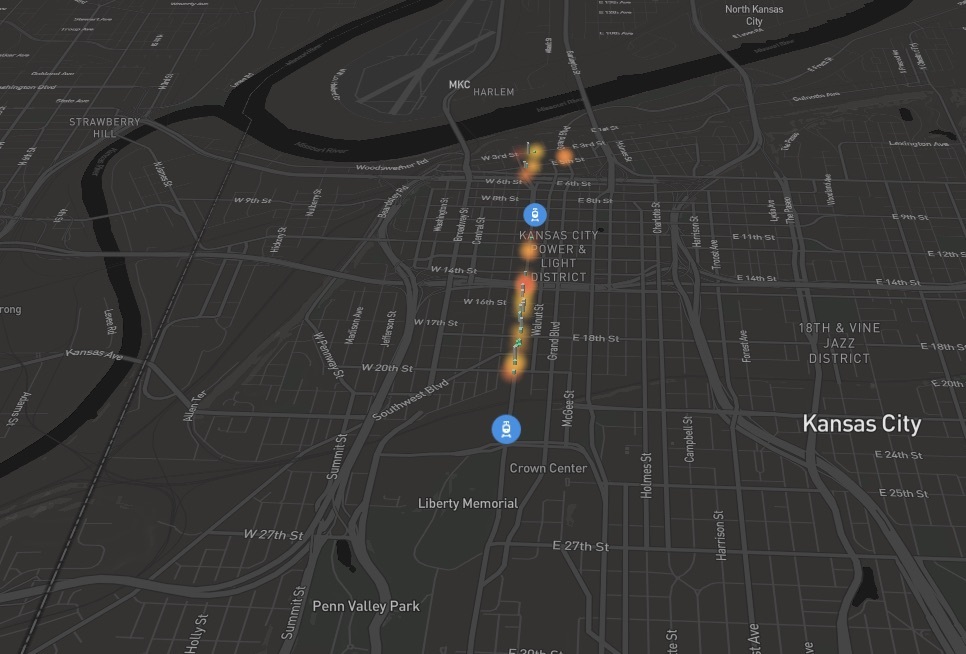
The $15.7 million public-private project — which has transformed Kansas City’s downtown into a lab of Wi-Fi connectivity on and around the 2.2-mile streetcar line — is now further empowering citizens. The City of Kansas City, Mo. announced Tuesday that it’s released a public facing window into the smart city data it collects from sensors along the streetcar line.
Powered by urban data and collaboration platform Xaqt, the city’s new interactive website provides citizens live and historical information on the streetcar, traffic flow and parking availability in downtown. In the platform’s live view, parking density is represented by grey columns denoting occupied parking spots or green columns showing available spots. The live view also allows one to see average traffic speeds to indicate congestion.
The announcement arrived Tuesday during a national conference city tech officials are hosting at Think Big with the National Institute of Standards and Technology. With discussions on data collection, smart city challenges and working on corporate partners, the conference is hosting about 100 officials from around the nation.
Kansas City officially kicked off its smart city project in May of 2016. Via a Sprint Wi-Fi network stretching more than 50 square blocks in downtown, the project will provide a variety of information to citizens while also collecting data on their behavior in downtown.
The project is a collaboration between Kansas City, Sprint, Cisco and Think Big Partners. Kansas City signed an agreement with Sprint and Cisco in June to create the largest smart city in North America with the intention to improve municipal services. The project also includes 125 “smart” streetlights along the streetcar line and 25 touchscreen kiosks that offer information on city services, nearby restaurants and real-time information collected from smart city sensors.
Kansas City Mayor Sly James previously said that the project is an open invitation to innovators from around the world to test various technologies on Kansas City’s smart city framework. Think Big’s Living Lab initiative will serve as the testing hub for entrepreneurs’ smart city ideas.


2017 Startups to Watch
stats here
Related Posts on Startland News
Closing KCK’s Black-owned coffee shop opens opportunity for Kinship to brew bigger, owner says
When TJ Roberts posted on social media about closing Kinship Cafe, a Black-owned coffee shop in Kansas City’s Strawberry Hill neighborhood, he was surprised by the outpouring of support — a morale boost that not only gives him the spirit to keep fighting for the business, but expand it, he said. “When we posted about…

Kansas brothers launch speedy trial for app that eases reentry for the wrongfully incarcerated
Podcast host-turned-innovator Dylan Carnahan is a man built for talking, he said, but there’s a time when words aren’t enough — when action is needed in the face of injustice. For Carnahan and his brother, that moment is now. “While media spreads awareness, software facilitates action,” said Carnahan, teasing the tech he’s developing alongside Alex…
Restaurant’s nostalgia is only part of it’s recipe: How Paul’s Drive In sizzled a community staple by ‘doing good first’
Editor’s note: The following story was written and first published by the Economic Development Corporation of Kansas City, Missouri (EDCKC). Click here to read the original story. In the heart of South Kansas City, Paul’s Drive In on Blue Ridge Blvd has been a cherished staple since the 1960s. Through ups and downs — including…

Meet six coalitions earning grants through Kauffman Foundation’s new ‘Collective Impact’ funding pathway
Systemic change happens when communities come together to drive transformation through collaboration, said Dr. DeAngela Burns-Wallace, announcing a half-dozen grants to high-capacity organizations with strategies to close economic mobility gaps in the Kansas City region. The “Collective Impact” planning grants of up to $500,000 are awarded to the winning coalitions are the first piece of…