

Area experts dive into uncertainty and hope for immigrant entrepreneurship
February 23, 2017 | Meghan LeVota

Now more than ever, it’s important for the community to come together to gain new perspectives.
That notion was a driving force behind the February Innovation Exchange in which Startland News dove into the subject of immigration and entrepreneurship. Hosted in partnership with Think Big, the event welcomed a researcher and a policy expert from the Ewing Marion Kauffman Foundation, a local immigration attorney and a pair of immigrant entrepreneurs.
In the conversation we hear personal stories from Kansas City immigrant entrepreneurs about how they arrived in the United States, explore how H1B Visas work and jump into the impact that immigrant entrepreneurs have on the nation’s economy. If you couldn’t make, here’s a bit of what you missed.
Research and policy
Perhaps the most famous entrepreneurial icon from Kansas City is the late Ewing Marion Kauffman. His enduring legacy in Kansas City includes the Kauffman Foundation, which focuses on improving both education and entrepreneurship around the nation.
Jason Wiens, policy director in entrepreneurship at the foundation, said Mr. Kauffman believed that both education and entrepreneurship were two of the best ways people could become economically independent. Wiens and Arnobio Morelix, a senior research analyst at the foundation, dove into research on entrepreneurship and immigration, detailing the profound impact foreign nationals’ have on the nation’s economy.
For example, more than 40 percent of the Fortune 500 companies in 2010 were founded by an immigrant or the child of an immigrant, according to Kauffman research. Also, half of the United States’ “unicorn” firms — those valued at $1 billion or more — have an immigrant founder, Weins said.
In addition, immigrants are almost twice as likely as the native-born Americans to start new businesses. When asked why immigrants are so inclined to be entrepreneurs, Morelix noted that they’re accustomed to risk and forging a path on their own.
“Being an immigrant is a pretty entrepreneurial thing,” Morelix said. “Part of the reason why immigrants start more businesses than others is that it’s a self-selected population.”
When dissecting the process of immigration, Morelix noted the extremely high demand for H-1B visas in the U.S. More than 235,000 highly-educated foreign nationals applied for an H-1B visa last year, yet only 85,000 of were approved via a random lottery, according to U.S. Citizenship and Immigration Services.
Information such as that is part of the foundation’s efforts to transform its research into actionable insights for policymakers. One tactic that both Weins and Morelix suggested is the “startup visa,” which would allow for foreign nationals to stay in the United States to launch a business. Unlike more than 12 other developed nations, the United States does not currently offer a visa for immigrants who plan to start a business.
Kauffman Foundation research estimates that the implementation of a startup visa would create 400,000 to 1.5 million jobs after ten years.
“We’ll continue to raise this as an issue to educate policymakers,” Weins said. “And if there is an opportunity, if congress decides to take up the issue of immigration, we’ll make sure that they’re aware that something like a startup visa is worth considering and will have profound economic effects for the United States.”
Personal stories
Both immigrating to the U.S. in 1998, Super Dispatch founder Bek Abdullayev and SnapIT Solutions founder Neelima Parasker shared their personal immigration stories to the crowd of about 80.
From India, Parasker received a master’s degree in computer science from the University of Oklahoma, and later worked for Sprint and IBM before starting her own company in May of 2016. With few family members living in the United States, Parasker said she had to take a leap of faith.
“It was a journey,” Parasker said. “I’m glad I did it, I can’t replace that experience with anything else.”
Growing up in Uzbekistan in the 90s, Abdullayev said that he watched Hollywood movies and always dreamed of going to the U.S. Through a U.S. federal program called Future Leaders Exchange, Abdullayev visited the U.S. and later attended Missouri’s Park University.
“When I was in college, I realized that this (the U.S.) was the place that truly afforded anyone to chase that American Dream,” Abdullayev said. “That’s something that I’ve never experienced anywhere else, so I decided to stay here and call this home.
Both were not surprised by the statistics that show immigrants have a propensity to be entrepreneurs.
“You’re looking at people who did everything they can to be here,” Parasker said “People that know to never give up and have your support system in place. If those two are not in place, no entrepreneur can be successful.”
Abdullayev said that immigrants — especially those who come from underdeveloped nations — have an unfair advantage compared to native-born Americans. Those from underdeveloped nations have dealt with more adversity and thus entrepreneurial challenges aren’t as daunting, Abdullayev said.
“These people are coming from places of oppression and no opportunity — to these people, Trump is not a surprise. They’re not startled by any of this and have seen far worse,” Abdullayev said. “America is heaven for entrepreneurs. Everything is relative and in a lot of ways, their perspective isn’t constrained by the culture as much, which leads to innovation.”
Parasker echoed that statement, adding that minorities like herself get to decide which mindset they want to hold.
“Why not be more positive and give back?” Parasker said. “The thought process shouldn’t be who do I get what from, but instead, how do I give.”
Legal clarity
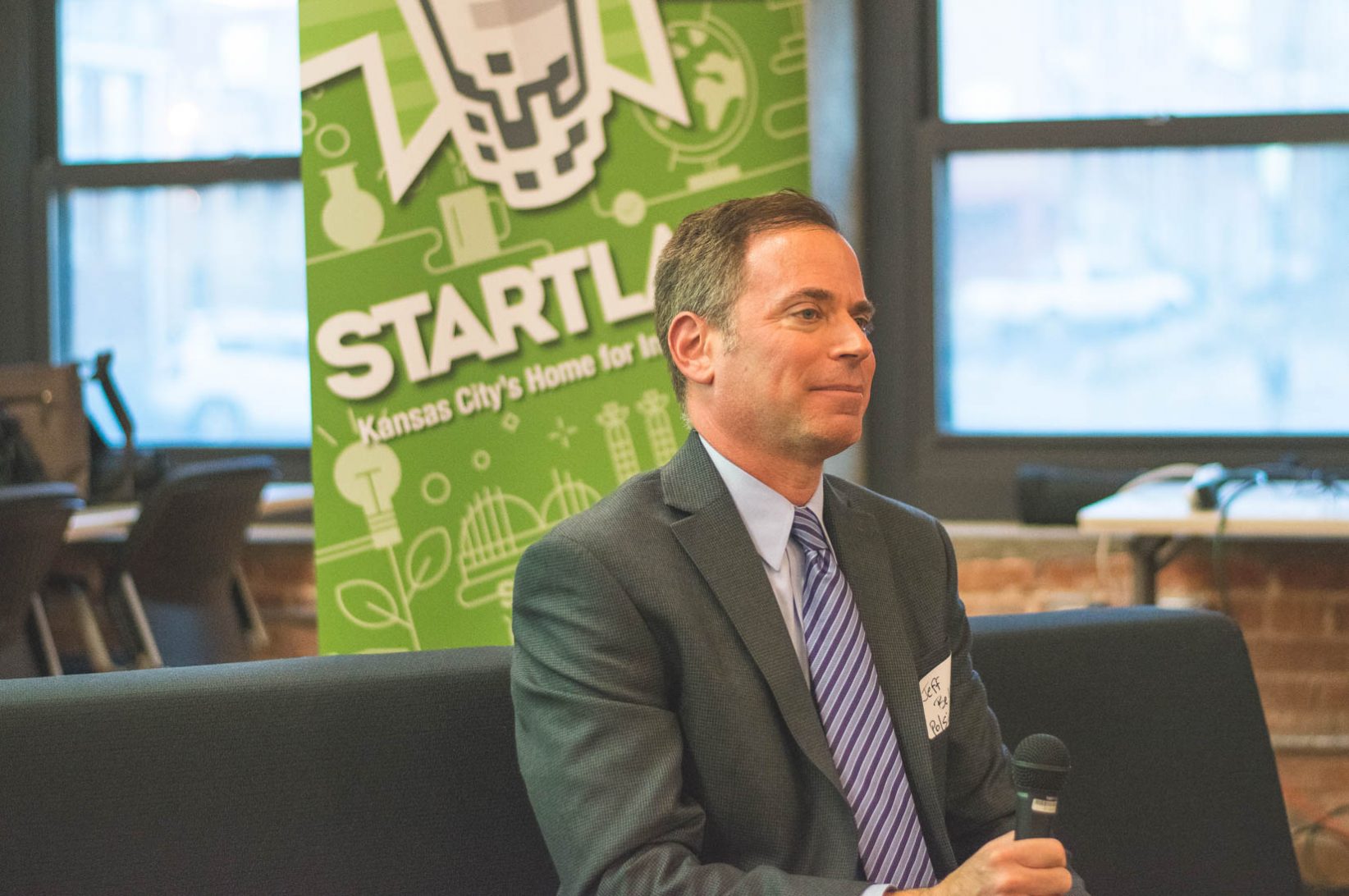
Jeff Bell, an immigration attorney with Kansas City-based Polsinelli, represents several area startups and strategizes to maximize immigrant entrepreneurs’ time in the United States. He also works to ensure that toppling immigration challenges matchup with the business’ long-term strategy.
“Sometimes what’s good for business isn’t good for immigration,” Bell said. “And, what’s good for immigration sometimes isn’t good for business.”
Bell assists foreign nationals and domestically-based businesses hoping to hire immigrants in navigating the labyrinth of U.S. immigration law, including green cards, H-1Bs and much more. With a chance of acquiring an H-1B visa at less 33 percent — and the number of applications quickly increasing in recent years — Bell said his clients face tough decisions.
In many industries, such as the technology sector, firms that wish to hire an immigrant are doing so because there is a lack of talent in the United States. The lack of H-1B visas granted per year creates a problem, Bell said.
“What this ultimately does is that it doesn’t enable the business to grow,” Bell said. “They become static because companies aren’t able to hire enough people.”
Bell believes that immigration could be a solution to the lack of tech talent firms need in the U.S. But in today’s political climate, Bell said that the possibility for immigration reform is not likely.
“When you put the politicians in a room by themselves, they all get it,” Bell said “This isn’t something that is that hard of a sell, on an individual level. The problem is that the good parts of immigration reform are wrapped up in everything. It’s become an all or nothing approach.”
Startland’s next Innovation Exchange will be held March 21 at Think Big, with more information to be announced soon. To watch a video of the event, click here.









Featured Business

2017 Startups to Watch
stats here
Related Posts on Startland News

Deadlines loom for funding, educational and fellowship opportunities
Opportunities abound, Kansas City. Whether you’re an early stage entrepreneur looking for some extra cash, representing an organization aiming to double down on its efforts, or someone seeking mentorship, the Kansas City entrepreneurial community has options available — if you take the initiative. To lend a hand, we’ve gathered some timely opportunities. Act quickly! Deadlines are…

CPR alert! KC Fire adopting tech to notify bystanders of cardiac arrest
Embracing innovation and collaboration, the Kansas City Fire Department is expected to launch technology this month that is designed to notify residents trained in CPR when a person in their vicinity experiences sudden cardiac arrest and is awaiting first responders. Sudden cardiac arrest is responsible for about 350,000 deaths a year, according to the American…

KC’s Site 1001 eyes Raleigh as next smart city, opens innovation office
Following the firm’s $6 million raise earlier this month, Kansas City-based Site 1001 recently announced it selected the city of Raleigh, North Carolina, for a new office and innovation center. A technology spin out from Kansas City construction giant JE Dunn Construction, the firm said in a release that it plans to work with Raleigh’s…

Voting open: KC-based efforts vie for spots among SXSW 2018 panels
SXSW 2018 is still six months away, but members of the Kansas City startup community need supporters’ help now to land a coveted spot on the Austin-based conference’s panel lineup for March. At least three proposals with KC ties are among those being considered during SXSW’s PanelPicker Community Voting process, which runs through Aug. 25.…