

Rick Usher: How coffee shop culture fuels KC’s startup ecosystem
January 30, 2017 | Rick Usher
Editor’s note: Opinions expressed in this commentary are the author’s alone.
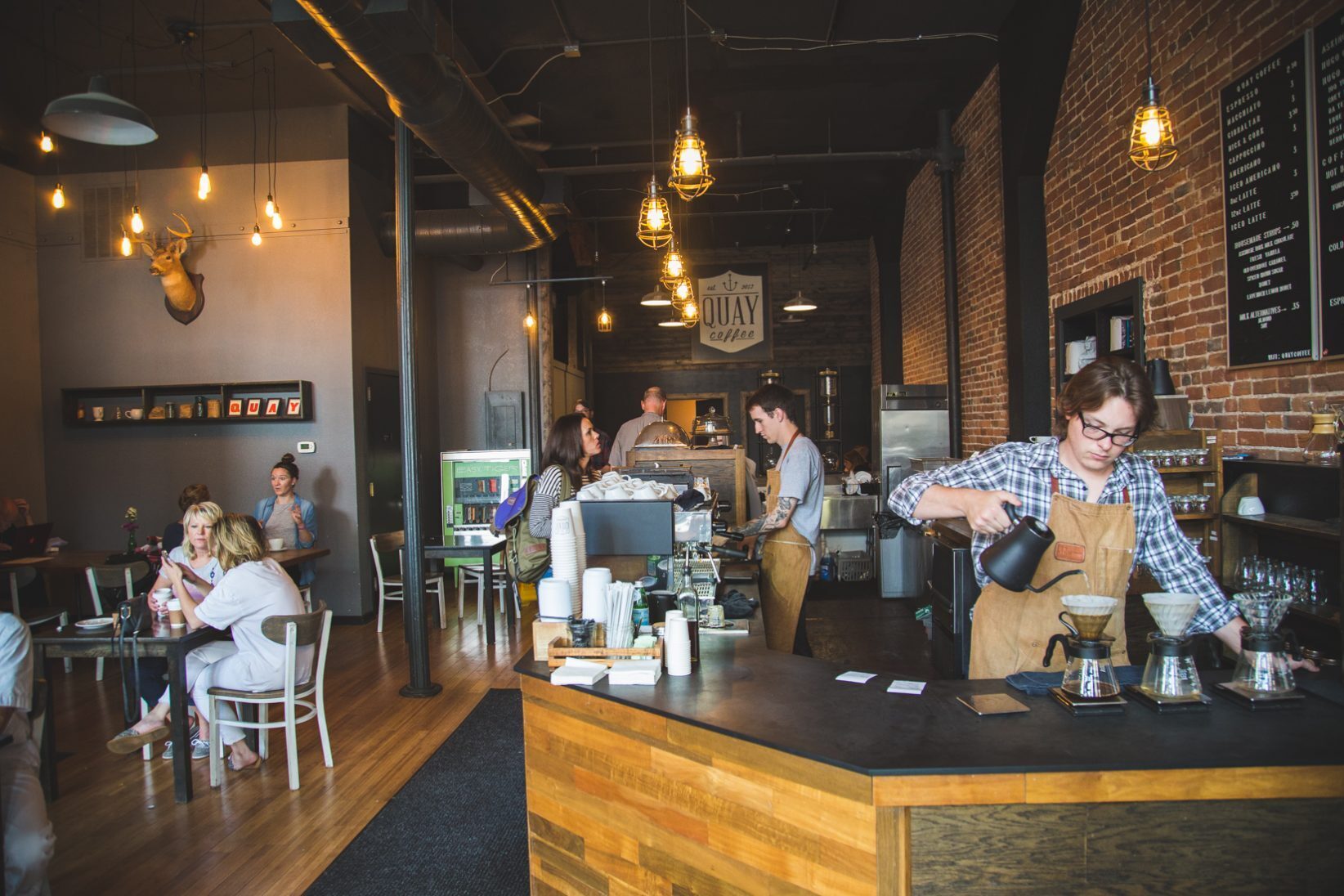
Coffee shops play a significant role in the growing success of Kansas City’s startup community.

Rick Usher
Back in September, Startland News readers offered their top picks for best coffee shops for meetings and I’m taking off on that topic now to dig deeper into the key indicators of startup support at these coffee shops and others where I have had positive experiences.
In my work as assistant city manager for small business & entrepreneurship for the City of Kansas City, Mo., I value the meeting and work space offered by coffee shops. Meeting in a coffee shop gives me a hyperlocal perspective on the topics and issues that I’m discussing with business owners and entrepreneurs. Coffee shops are also capable of creating incidents of serendipitous collision density, which is so critical to innovation and creativity.
Coffee shops are great places for entrepreneurs hoping to venture outside their home-based businesses, coworking spaces, accelerators or incubators. In fact, there are many entrepreneurs using coffee shops as their primary work location. Coffee shops are also appreciated by a few larger employers who recognize that their employees may be more productive and creative when allowed to work outside of the office at a neighborhood coffee shop.
How to effectively use coffee shops to accelerate your work
Seating options are an indicator of a successful coffee shop. Each option has a specific purpose for entrepreneurs based on the reason for the visit.
For meetings, the two- or four-top table is best for discussions and introductions. If you are only meeting with one person, a two-top is best and makes larger tables available to more customers. If your meeting is more casual, however, you may decide to use a 4-top table to unlock the full potential of the coffee shop in supporting serendipitous collisions that are so highly necessary to entrepreneurship and innovation.
Measuring impact
I believe every coffee shop has a CDI (Collision Density Index) that can be developed through this article and with ongoing input from the startup community. I also believe that once the key indicators of a high CDI are identified, the success can be replicated elsewhere in the community.
When you are meeting in a coffee shop, inevitably someone will walk in that you or your guest know. It is not only polite, but critical to the community to make introductions, exchange business cards and give a 30-second update or introduction. If you know the person well, there will likely be some common thread with which you can share in the introduction. This networking connection may be the introduction that is needed to accelerate an idea to success. If you are finished with your intended meeting topic and time allows, this is when you can offer a seat at your table to continue new discussions started by the introduction.
Enable serendipity
Bo Nelson at Thou Mayest Coffee told me that he schedules time in his day for serendipitous collision density to occur. This seems like an oxymoron — scheduled serendipity — but it is a highly effective tactic of his day. Bo and I recently discussed the valuable role coffee shops play in the KC startup community in an interview with What’s Up Kansas City. In another What’s Up Kansas City interview, Crows Coffee owner Zach Moores, introduced me to the term “ear hustling,” which is promoted at their communal table.
Over time, I’ve developed these key indicators of successful coffee shops:
- Great coffee choices
- Assortment of seating options including 2- and 4-top tables, communal tables, bars and individual seating areas. Each of these have specific utility to customers and coffee shop owners
- Free high-speed wifi — preferably gigabit-powered
- Ubiquitous electrical outlets
- Bike Racks
- Street Trees
- Location in a vibrant, walkable urban neighborhood
Please share your feedback on this concept with me on twitter @RuKCMO #StartupKC #Coffice.
Rick Usher is the assistant city manager for small business & entrepreneurship for the City of Kansas City, Mo. Connect with him at @RuKCMO.


2017 Startups to Watch
stats here
Related Posts on Startland News

3 local businessmen named EY’s Entrepreneur of the Year
Three Kansas City area businesspeople recently snagged one of the most prestigious awards for entrepreneurs. EY announced Monday the winners of the Entrepreneur of the Year 2015 for the central Midwest, which included three businessmen from the Kansas City metro area. Those receiving the commendation included: Jody Brazil, CEO of FireMon; Matthew Perry, President of…

Lantern scores big with Sporting Kansas City deal
Tech firm Lantern Software’s mobile app hit the right pitch with its hometown soccer team. The startup, located in Kansas City, Kan., recently partnered with Sporting Kansas City to offer its mobile concessions ordering platform. The deal, effective Saturday, will allow fans in Sporting KC’s Boulevard Members Club to order and pay for concessions on…

Scarcity of women, parents in startups offers research opportunity
It’s no secret that — like any business — an entrepreneurial ecosystem is disadvantaged without a diverse set of players. But hurdles such as late night meetings and male-dominated culture at startups create barriers to entry for two specific groups: women and parents. That’s why researchers at the Ewing Marion Kauffman Foundation are taking another…

Digital Sandbox welcomes six new startups
Digital Sandbox KC recently accepted six area companies into its incubator program that assists businesses with specific projects. The organization, whose mission is to develop businesses and help them secure additional funding, welcomed companies ranging from food service and technology to education and health. Digital Sandbox invests up to $25,000 in its program’s companies. “The…