

How Meshuggah Bagels and Ruby Jean’s Juicery dealt with rapid growth
January 3, 2017 | Meghan LeVota
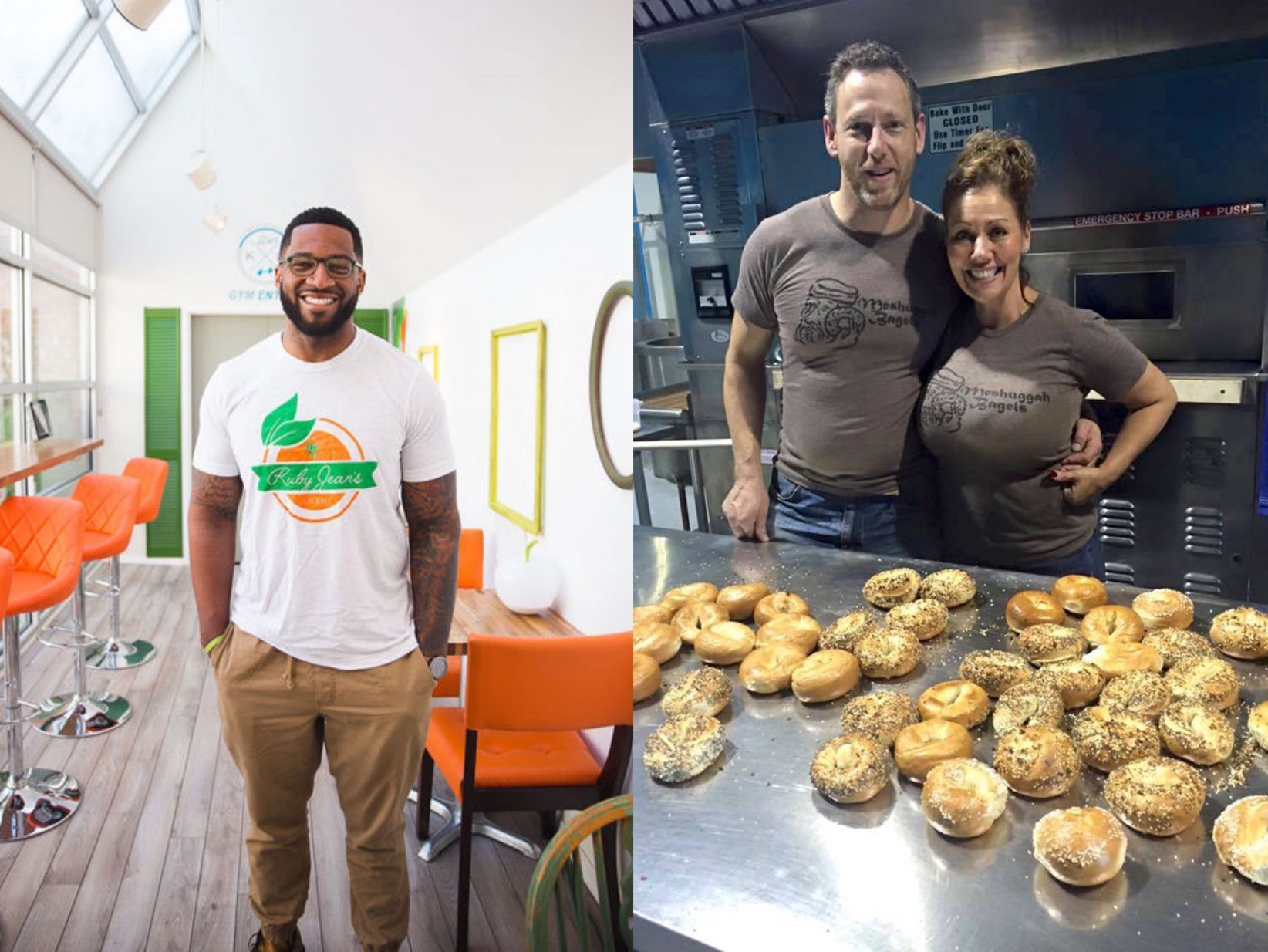
Imagine this.
It’s opening day at your quaint cafe and you hope Kansas Citians like your bagels.
It turns out they do — a whole lot. So much in fact that the line spills out the door for the next few weeks, spurring demand that’s more than 300 percent higher than anticipated.
Pair that challenge with the fact you’ve yet to hire a fulltime employee and there’s the plight Janna and Peter Linde faced in the spring of 2016 when they opened Meshuggah Bagels.
“The first three months were absolutely horrible,” Janna said. “We were exhausted mentally and just trying to get through.”
A sweet and sour predicament, rapid growth can deal a devastating blow to a business. Cash flow challenges, operational issues and customer service failures are but a handful of the possible outcomes a startup can experience when demand soars.
So how’d the Lindes handle it? Well, the pair initially chalked up the success as a fleeting trend.
“The big shock for us was that the buzz didn’t die down,” Janna said. “We were still busy every day, weekends there was a line around the corner. We just didn’t know what we were doing, we had no idea.”
Soon after opening, Peter retired to join Janna full time at Meshuggah. Though initially overwhelmed, the pair began to “play defense” to deal with the surge, ensuring a competitor wouldn’t capitalize on their discovery that bagels are big for Kansas Citians, Peter said. The two also became proactive in managing the growth by listening to their customers’ needs, he added.
Peter recognized that the majority of his customers were making a 20-minute drive or more to visit his Midtown location, and he wanted to ensure the bagel shop will stay competitive. In addition to its original location, Meshuggah Bagels will open two new locations in 2017 — one in Overland Park and another in Liberty.
Peter said that if you have a line out the door, you’re doing something wrong. You aren’t listening to your demand, which prompted the firm’s “defensive” moves.
“Playing defense is recognizing where somebody could go against you, and then get there first,” Peter said. “This isn’t the corporate world. At the end of the day, we’re going to get paid for how good or bad our decisions are.”
The couple partially attributes the firm’s success to the strong financial cushion they built for themselves before the launch. The pair saved enough to survive for six months without selling a single product, which also allowed it to respond quickly to the demand, Peter said.
Located in Kansas City’s Westport district, Ruby Jean’s Juicery faced a similar demand challenge for its first few months.
Ruby Jean’s founder Chris Goode said that while he was adequately prepared for the demand with resources, he was was surprised by the toll the traction personally wrecked on him.
“I think I underestimated how much I would have to be in the store. I worked day in and day out, sun in and sun down, and I made myself sick,” Goode said. “I knew it wouldn’t be easy but I underestimated how difficult it would be to really get it to a healthy point to where I could start to step away a little bit.”
Now past its growing pains, the health-minded shop is planning to open two new locations in 2017. He recommended that regardless of your company’s rate of growth, stay true to its mission and priorities will remain clear.
And as a result, his customers have responded.
“I wasn’t surprised (by the success) but I felt blessed and honored,” Goode said. “Even to this day, every time I hear the door chime and see a customer come in — I just smile.”


2017 Startups to Watch
stats here
Related Posts on Startland News

After coffee, calm: Messenger co-founder, partner envision West Bottoms bathhouse as retreat from what has been
Nearly a year in the works, a first floor space in an 1890s-era West Bottoms warehouse is open and envisioned as the place for a “ritual of pause.” Klā Sanctuary — with its special spa baths and body-oriented treatments — and the tea-focused Selah Lounge share the 6,000-square-foot spot at 1400 W. 13th St. Matthew…

KC-built delivery platform recruiting drivers, retailers ahead of summer app launch
Dwayne Overton is no stranger to the hustle, he said. The Kansas City entrepreneur once juggled gigs with Lyft and DoorDash — jobs that gave him an up-close look at the struggles drivers face every day. Now, as founder and CEO of VendiSafe, he’s building a delivery platform that spins the traditional model on its…

Tech catches up to this ‘hot commodity’: Trially scaling to next level as an early investor forecasts unlocked opportunity
Editor’s note: The following story was produced through a paid partnership with MOSourceLink, which boasts a mission to help entrepreneurs and small businesses across the state of Missouri grow and succeed by providing free, easy access to the help they need — when they need it. Kyle McAllister and his Trially co-founders see the Kansas City-based…

KC Defender invests in Black-owned bookstore’s legacy, keeping its story alive as media startup’s new HQ
Missouri’s oldest-operating Black-owned bookstore is set to evolve into a public archive, programming venue, and the new headquarters for The Kansas City Defender — a bittersweet turn of the page for a space marked by resilience and community action, organizers said. Willa’s Books and Vinyl, 5547 Troost Ave., has long stood as a sanctuary of Black…