

How Meshuggah Bagels and Ruby Jean’s Juicery dealt with rapid growth
January 3, 2017 | Meghan LeVota
Imagine this.
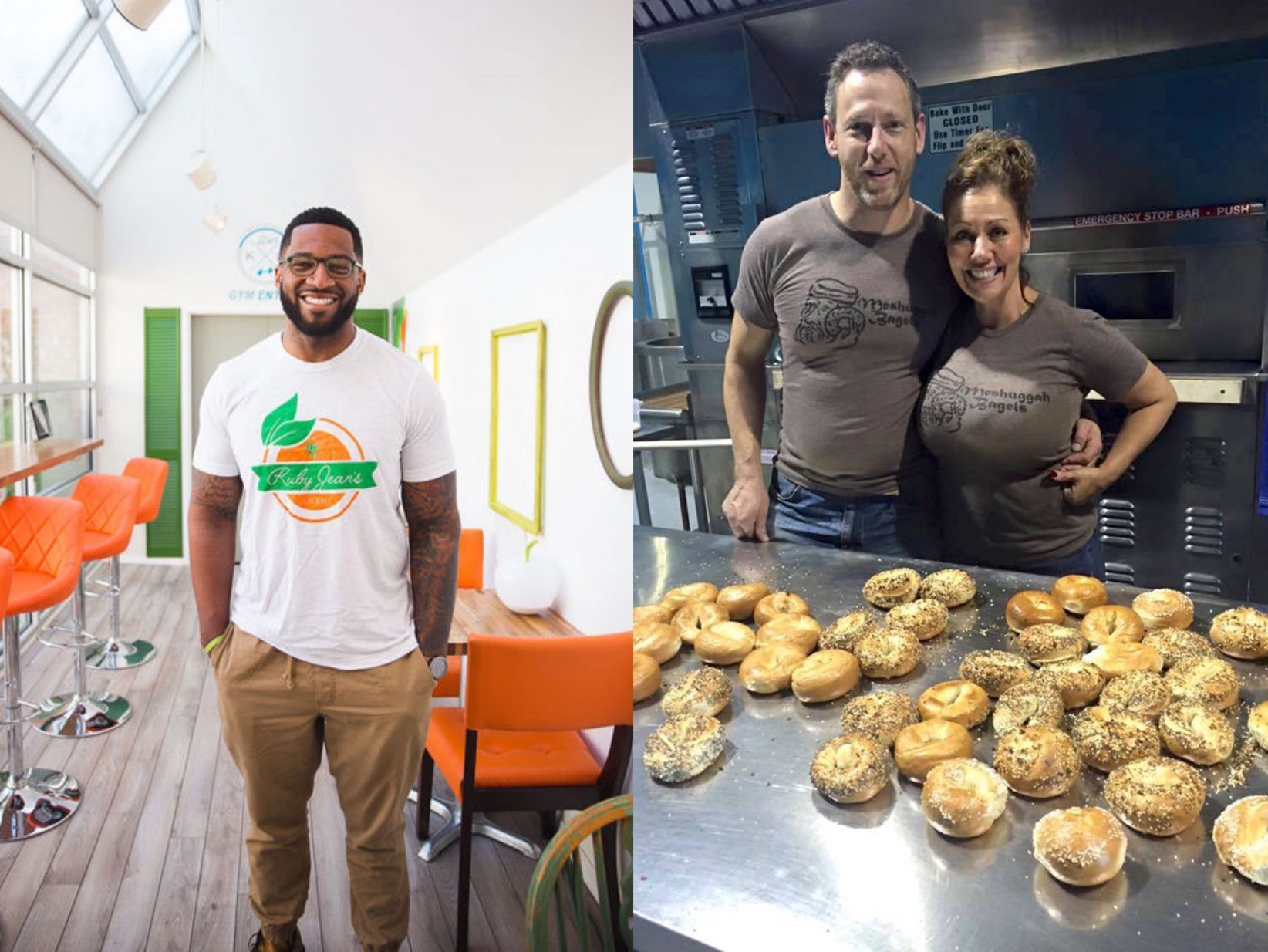
It’s opening day at your quaint cafe and you hope Kansas Citians like your bagels.
It turns out they do — a whole lot. So much in fact that the line spills out the door for the next few weeks, spurring demand that’s more than 300 percent higher than anticipated.
Pair that challenge with the fact you’ve yet to hire a fulltime employee and there’s the plight Janna and Peter Linde faced in the spring of 2016 when they opened Meshuggah Bagels.
“The first three months were absolutely horrible,” Janna said. “We were exhausted mentally and just trying to get through.”
A sweet and sour predicament, rapid growth can deal a devastating blow to a business. Cash flow challenges, operational issues and customer service failures are but a handful of the possible outcomes a startup can experience when demand soars.
So how’d the Lindes handle it? Well, the pair initially chalked up the success as a fleeting trend.
“The big shock for us was that the buzz didn’t die down,” Janna said. “We were still busy every day, weekends there was a line around the corner. We just didn’t know what we were doing, we had no idea.”
Soon after opening, Peter retired to join Janna full time at Meshuggah. Though initially overwhelmed, the pair began to “play defense” to deal with the surge, ensuring a competitor wouldn’t capitalize on their discovery that bagels are big for Kansas Citians, Peter said. The two also became proactive in managing the growth by listening to their customers’ needs, he added.
Peter recognized that the majority of his customers were making a 20-minute drive or more to visit his Midtown location, and he wanted to ensure the bagel shop will stay competitive. In addition to its original location, Meshuggah Bagels will open two new locations in 2017 — one in Overland Park and another in Liberty.
Peter said that if you have a line out the door, you’re doing something wrong. You aren’t listening to your demand, which prompted the firm’s “defensive” moves.
“Playing defense is recognizing where somebody could go against you, and then get there first,” Peter said. “This isn’t the corporate world. At the end of the day, we’re going to get paid for how good or bad our decisions are.”
The couple partially attributes the firm’s success to the strong financial cushion they built for themselves before the launch. The pair saved enough to survive for six months without selling a single product, which also allowed it to respond quickly to the demand, Peter said.
Located in Kansas City’s Westport district, Ruby Jean’s Juicery faced a similar demand challenge for its first few months.
Ruby Jean’s founder Chris Goode said that while he was adequately prepared for the demand with resources, he was was surprised by the toll the traction personally wrecked on him.
“I think I underestimated how much I would have to be in the store. I worked day in and day out, sun in and sun down, and I made myself sick,” Goode said. “I knew it wouldn’t be easy but I underestimated how difficult it would be to really get it to a healthy point to where I could start to step away a little bit.”
Now past its growing pains, the health-minded shop is planning to open two new locations in 2017. He recommended that regardless of your company’s rate of growth, stay true to its mission and priorities will remain clear.
And as a result, his customers have responded.
“I wasn’t surprised (by the success) but I felt blessed and honored,” Goode said. “Even to this day, every time I hear the door chime and see a customer come in — I just smile.”


2017 Startups to Watch
stats here
Related Posts on Startland News

Block by block: Prototype builds startup’s housing vision where everyone can afford their own castle
A mock home facade project on the grounds of Kansas City’s historic Workhouse Castle serves as a proof point for Godfrey Riddle’s rebooted Civic Saint — a social venture built on compressed earth blocks as its key to affordable, sustainable housing. “CEBs (compressed earth blocks) are great for Kansas City, because non-expansive sandy clay soil…

Resource revival: Digital Inclusion Fund relaunches with initial grants focused on devices
Kansas Citians can’t upgrade skills or devices they don’t already have, said organizers of a newly relaunched Digital Inclusion Fund — emphasizing a need to attack the metro’s digital divide at the infrastructure level. The fund is set to award up to $250,000 to 501(c)(3) public charities (including schools and churches) or governmental entities across…
New deal with lightwell keeps WeWork in Kansas City after closing Corrigan Station space
A freshly negotiated lease agreement with the developer behind the lightwell building in downtown Kansas City means WeWork will continue its two-floor coworking and flexible office space operation in the heart of the city’s central business district. WeWork has officially completed its lease rationalization with the assumption of its lightwell location contract, the company said…

Meet the founder distilling greatness (and fusion flavors) into Kansas’ first Black-owned vodka brand
Startland News’ Startup Road Trip series explores innovative and uncommon ideas finding success in rural America and Midwestern startup hubs outside the Kansas City metro. WICHITA — Greatness isn’t given; it’s earned, said Troy Brooks. But it comes one step at a time, and not without its challenges, he said. The entrepreneur behind Kansas’ first Black-owned…