

Experts weigh in: Why do StartupNames Alwayz Loook Lyke Dis?
January 17, 2017 | Meghan LeVota
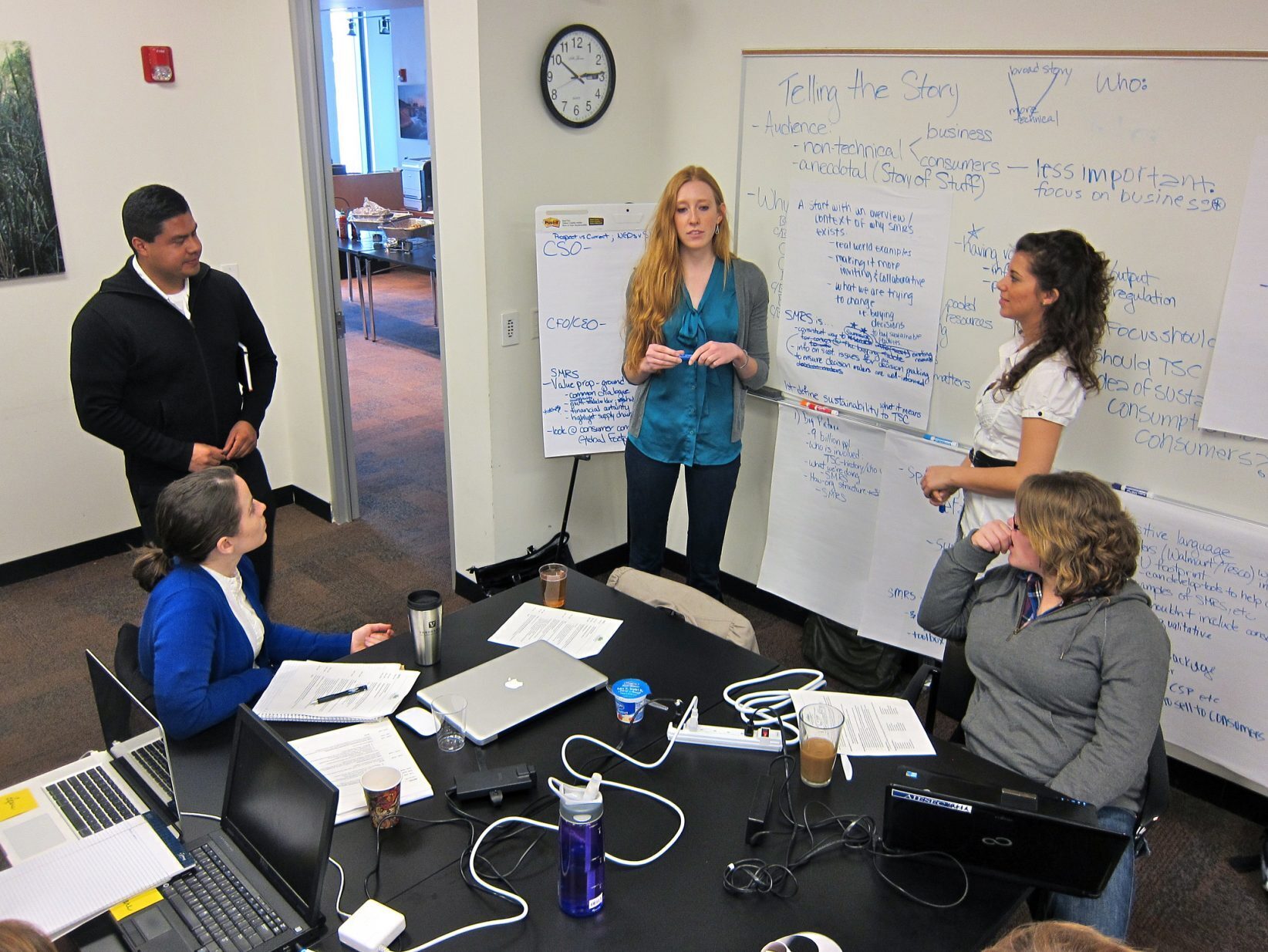
At times, it seems like startups are waging war on the English language.
From merged words to missing vowels to what appears to onomatopoeia, startup names can be as creative as they are baffling.
“It’s almost as if everyone is rebelling against Webster’s dictionary,” said Anita Newton, vice president of marketing at AdParlor.
So, what’s the deal? To get to the bottom of it, Startland gathered insight from a variety of techies, marketing and SEO experts. Here’s what we learned.
Domain name
Web presence is important, and the number one reason why startups tend to have such funky names is due to the scarcity of available domain names.
“There’s so few domains available now that are normal,” Newton said. “What happens normally is that a domain is taken or it costs $3,000 to buy.”
To get around the expense, startups take creative approaches by dropping a vowel, changing or adding a letter or merging two words — such as Flickr, Lyft, Blooom, Bungii or mySidewalk.
Over time, more domain extenstions became available, prompting startups to pass up a .com for a .ly — such as Bit.ly or Neighbor.ly — or something else. The extension thus becomes a part of the firm’s name.
Even so, founders still tend to go for .com first, which lends to quirky names.
“When you pitch your startup, people assume that there is a .com, which is an interesting social expectation,” startup tech consultant Coty Beasley said. “A .ly or .co extension is just not something your grandma will understand.”
Brand recognition
Newton said that funky names may be a popular approach — or give the startup some “street cred” — but she doesn’t think it’s always a smart strategy. If you must come up with an unusual name, she said make sure it connects to your brand.
“People are exposed to thousands of advertisements per day,” Newton said. “Your customer will have to remember what it is and also remember how to spell it, so don’t make it unnecessarily hard on them. Remember that for every Uber, there are literally thousands of companies that have a funny name that didn’t make it.”
Newton mentioned that when Verizon — formerly known as Bell Atlantic — changed its name in 2000, the firm spent billions of dollars ensuring that the public would be able to pronounce and spell Verizon correctly.
“Snapchat is the perfect name,” Newton said. “It says what it does, it’s easy to remember and a smart fifth grader could spell it. Everyone should be more like Snapchat.”
Beasley added that it’s possible for a whimsical name to sound novel to the ear and thus be remembered easily. He cautioned, however, that founders not get too attached to a particular name.
“When people start a company, a lot of times it’s because they have a vision for themselves in the world and they see the company as an extension of themselves,” Beasley said. “The logo and name will end up being closely tied to their own personality. It’s important to understand when you’re creating a product to have a distance between those things and not be swayed by cognitive bias — because your name and brand may need to change.”
Area SEO and marketing consultant Brandon Kenig said that having a quirky name may backfire.
“Sometimes, the name doesn’t reflect the product or brand at all, and it’s so far removed from what they actually do,” Kenig said “In that case, a quirky name is more harmful than helpful.”
Sound
Regardless of its meaning, the sound of a name will have an impact on your audience — especially if you’re going with a made-up word like Google or Yahoo.
“I don’t know if it’s anything super scientific outside of just the harmonics of a word,” Beasley said. “You’ll want something thats mono or bisyllabic, or has a certain cadence to it so that it’s melodic.”
Beasley said that founders often approach naming a startup as they would a child.
“When you construct a word, there are emotional tones attached to it,” Beasley said. “When you’re naming a kid, you’re branding a kid and your subjective mind will have sensitivities to these sounds. For example, if you knew some asshole named John, you won’t want to name your baby John.”
In other words, what sounds good to you is subjective. And, like baby names, startup names will go in and out of trend.
“The -ly trend has been around for four years or so, and some people may think it’s edgy,” Beasley said. “But on the other hand if you’re on the funding side you may think ‘Oh, great, another freaking -ly name!’ As you can see, there is a double-edged sword to perception.”
Short and sweet is preferable, he said. Something that rolls of the tongue will take less cognitive stress, Beasley said.
Kenig echoed his sentiment.
“Over the years, there’s been a drive toward simplicity,” Kenig said. “You don’t see many startup names that are phrases or contain more than one word. Typically, if there is a desire for more than one word they are mashed together into one. This simplicity trend goes back to the need for a memorable domain name.”
SEO and legal considerations
A short, unique and memorable name will make it easier for a startup to reach the top page of Google. Kenig said that mashing two words — such as LendingStandard — together is particularly good for SEO, adding that the way the name reads in your domain should be consistent in the copy.
“If you’re going to effectively cut through all the clutter on the web,” Kenig said. “You will need to have a name that’s simple, short, direct and to the point.”
Beasley said that startups have been moving away from using special characters or hyphens, which makes it easier for search engines to index. He added that if searching for a domain name isn’t hard enough, you’ll also want to make sure you don’t go with a name that’s trademarked.
Advice
Beasley, Newton and Kenig all agreed that quirky startup names are here to stay. This makes user experience testing even more important.
“Picking a name should not be done in a vacuum,” Kenig said. “Be sure to test it out with people around you so that you know it’s something your market will accept and understand.”
Beasley suggested to take ten hours for a whiteboarding — but not much more time. Rather than drafting a catchy name, focus on building your business.
“Don’t screw around too much time on coming up with a name,” Beasley said. “Remember, you are there to build a product.”

Featured Business

2017 Startups to Watch
stats here
Related Posts on Startland News

Midwest VC, area startup vet join Firebrand Ventures following $17.7M fund raise
On the heels of smashing its fundraising goal, Firebrand Ventures has added a pair of new team members. The Kansas City-based seed fund is welcoming Cincinnati venture capitalist Wendy Lea as an advisor and Kansas City startup vet Maranda Manning as fund associate, said managing director John Fein. Lea brings a wealth of investment and…
Kansas City Coworking Alliance named world’s best at international Coworky’s
Scoring the title of the world’s best coworking alliance is a big win for Kansas City, Melissa Saubers said. “This is just another way that we can put Kansas City on the map to show that we are the most entrepreneurial city in America,” said Saubers, president of the Kansas City Coworking Alliance. “It’s verification…

Convenience unlocked: Amazon now offering delivery directly to vehicles in KCK
Adding to its area delivery offerings, Amazon is turning trunks in Kansas City, Kansas, into mailboxes. The Seattle-based tech giant on Tuesday introduced in-car delivery options in 37 U.S. cities, allowing its Prime members to receive packages in their parked vehicle. Kansas City, Kansas, and St. Louis are the only cities in Kansas and Missouri…

Big food hall concept Parlor KC plans fall opening in Crossroads
Parlor KC, a collaborative food hall now under construction in the Crossroads Arts District, hopes to serve as a laboratory and incubation hub for area chefs and restaurateurs. Eyeing a fall opening in the east Crossroads, Parlor will offer chefs and restaurateurs a physical space to test dishes and concepts on diners that want variety…