

Chris Brown: What entrepreneurs should know about trademark law
January 24, 2017 | Chris Brown

Editor’s Note: In this post, Chris Brown explores the core aspects of trademark law that every entrepreneur should know. Opinions expressed in this commentary are the author’s alone. This article is general in nature and does not constitute legal advice. Readers with legal questions should consult an attorney.
Trademarks protect your name/logo
A trademark is any name, logo, slogan, etc., that is used to identify and distinguish your specific goods or services from those of another. Unlike copyright and patent laws, which were created to encourage creation and innovation, trademark laws were created to protect consumers. That is, trademark law exists to help consumers identify the source of the goods or services they are purchasing.
Trademark rights are tied to specific goods or services
Every trademark is tied to a specific good or service. For example, Delta Air Lines owns the mark “Delta” in connection to air travel and they can prevent other airlines from using “Delta” (to prevent consumer confusion). However, they can’t stop Delta Faucets from using the name “Delta” for their faucets because consumers are not likely to be tricked into thinking the two companies are the same.
You can’t protect generic marks
If your name is generic (“BBQ Shack” for example) you won’t be able to protect it. And if it is descriptive (“Holiday Inn” for example), it is going to be really hard to protect it. That’s why you should always pick a name that is arbitrary (“Apple” for computers) or at least only suggestive (“Coppertone” for sunscreen), so that it is easier to obtain rights in your name.
You should run a trademark search before picking your name
Before picking your name, and certainly before filing a trademark application, you should always run a professional trademark search to make sure no one else is already using the name you want to use. You can search the database on your own at uspto.gov; but by ordering a professional search you can more easily search for similar names, misspellings, phonetic equivalents, and the like.
You acquire trademark rights by using your mark in commerce
To protect your mark, you have to actually use it in commerce. For example, your mark might be in the header of your website, on a label stamped on your product, or on a tag attached to your apparel. As soon as you begin using your mark as a source identifier, you can claim common law trademark rights (rights you can enforce in state courts) and you should place a “TM” next to your mark.
But you really should file an application with the USPTO (see below).
*Note – in some situations you can protect a mark before actual use by filing an Intent to Use trademark application.
Applications aren’t required, but they are encouraged
If you want to claim nationwide trademark rights and shore up your rights in general, you really should file a federal trademark application with the USPTO. A registration provides notice to the world that you are claiming your mark in connection to your specific goods or services and it allows you to file suit in federal court to protect your mark.
Trademark infringement doesn’t require identical marks
Trademark infringement occurs when someone uses a mark in commerce that is likely to cause consumer confusion with respect to another business that already uses a similar mark. The marks don’t have to be identical; all that is required is a “likelihood” of confusion.


2017 Startups to Watch
stats here
Related Posts on Startland News
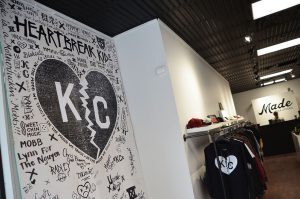
MADE’s Heartbreak Kids splits design silence on tension with Charlie Hustle
Streetwear is about making a statement, Vu Radley said, and the Heartbreak Kids collection says more than words alone could express. “It’s an attitude. Pushing out statements without censoring yourself,” said Radley, co-founder and creative director for MADE Urban Apparel. “We say it how it is in our designs.” For the Heartbreak Kids capsule, which…

Techstars’ Lesa Mitchell: Non-sexy sectors are ripe for disruption
Editor’s note: The opinions expressed in this commentary are the author’s alone. In the process of looking for a new crop of companies to invest in on behalf of Techstars Kansas City, I thought I should highlight the type of companies I think are undervalued and critical to our economy. In 2017 we invested in…

VideoFizz adapts greeting card app for real estate listings, closes $500K deal
Don’t miss your customers’ cues, said Laura Steward, founder of VideoFizz. Though the Kansas City-based startup originally developed its mobile app as a tool to help individuals create video compilations of their personal photos and videos, Steward and her team noticed a growing number of real estate agents using the technology to stitch together video…

With big KC hiring plans, Aussie-born SafetyCulture prioritizes community engagement
Though SafetyCulture is headquartered 9,000 miles away, its new North American hub in Kansas City is being intentional about driving positive local change — particularly in education, said Ross Reed. “We really want to get into the community to make an impact,” said Reed, SafetyCulture’s North American president. “We’re going to continue to get out…