

Bob Specht: How Kansas City actually becomes a startup city
December 20, 2016 | Bob Specht

Editor’s note: This post was originally published on medium.com. Opinions expressed in the commentary are the author’s alone.

With growth in our Kansas City startup community, questions continuously come of “what next?”
What do we need to keep growing? “Funding” is usually what you’ll hear yelled, but I’m not so convinced. I believe improving in a few specific areas can take the city to new heights.
Small businesses != Startups
Kansas City is known for having nice people (and we do). Unfortunately, this creates an “embrace everyone” mentality has trickled into a critical component of the city’s future: new business formation.
Community and government resources use “entrepreneurship” as a catch-all and thus do poorly in acknowledging the spectrum of growth ambitions in various businesses.
In some regards they’re right. Startups are like any other company but with a single twist. Startups are built and have the ability to scale massively.
The growth mindset of a startup affects every component of the company. Different technology, management and talent issues create incongruent needs, relative to small businesses. There must be more focus on creating and delivering resources tailored for startups.
When a startup is placed alongside small businesses it might not feel slighted, but it likely feels misunderstood. This is much worse, as it gives the feeling of an outcast.
By generalizing new businesses and not having specific resources for the growth requirements of startups, Kansas City is greatly damaging its entire entrepreneurial ecosystem. The community must better recognize startups and support their needs, for the betterment of all new companies.
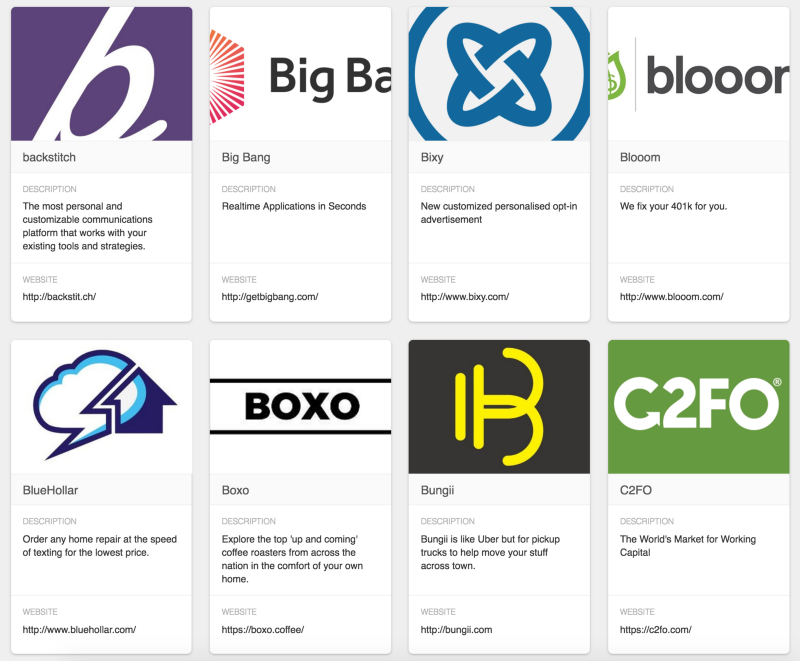
A collection of Kansas City startups from FWD/KC’s startup list.
Universities and education
Kansas City has a very skilled workforce that reaches across many disciplines, including modern engineering and technology fields. Much of this workforce is generated from area universities.
Unfortunately, these universities largely aren’t found in the city. This creates a lack of skilled youth and has long term effects.
Nowadays, by the time a young person has made the decision to live in Kansas City, it is likely in correlation with a job offer at a larger company. This isn’t inherently bad, but job adjustments become less likely as age and comfort grow.
Lacking a pipeline of young, readily-available talent leaves the entire creative class lacking the full amount of “fuel” it needs to grow. Luckily, education is changing fast. The skills needed to work at a startup (and many creative endeavors) are readily available for anyone to learn online. The city would do well to further embrace these currently non-traditional forms of education in hopes of stoking young talent and providing more opportunity.
This is not meant to discount the value traditional institutions can have. Kansas City should work to bring more significant investment from surrounding area universities to the city (i.e. Kansas City Design Center), in addition to integrating and further uplifting the presence of UMKC. There especially is a need for a stronger tie between the UMKC Bloch School and the civic and startup community.
Culture and density
The past decade has brought about a renaissance in Kansas City, much of which comes from a revitalizing downtown and urban core. A growing number of coffee shops, breweries and record stores now scatter areas that had lacked investment for decades. Side-by-side, residential and office space has been built and updated to keep up with growing demand. Younger residents find themselves spending more time, and living, in these revitalizing areas, but their jobs largely still reside in outer suburbs.
Kansas City touts the most highway miles per capita (by a lot). Residents endure lengthy, scattered commutes that make car ownership a near requirement, costing money and time. This culture also creates a resource spread, making connections and happenstance run-ins significantly less likely. When collision density is the lifeblood a startup or any cultural community runs on; KC, we have a problem.
A solution does exist. Focusing multiple decades of intentional effort to redevelop the city’s urban core would have a generational effect on Kansas City’s competitiveness. As a basic formula: focus on housing, neighborhood resources, modern educational outlets, human-oriented infrastructure and build our city up (not out).

Density graphic from recent Kansas City presentation detailing struggles.
In time, this produces a more vibrant and livable city for all, challenges the current idea that families belong in the suburbs, and makes a more attractive option for talent and outside companies to consider.
Additionally, when the suburban-dominated paradigm is shifted, new lifestyles emerge. Ones that aren’t so settled in fading ways, and accept more chance and risk in one’s life and endeavors. This allowance of risk is a necessity for advancement in any form.
The Crossroads neighborhood (just south of downtown) has established itself as the city’s leading creative class district. The area also contains the so-far-promising KC Streetcar public transit system that will likely extend through the urban core to the UMKC campus.
Continuing to build a more prominent, concentrated community here would create outward ripple effects through the core of the city. Effort should be redoubled in this and surrounding areas to locate young companies and talent, growing collisions and modern lifestyle/culture in the city.
While many other issues could be brought up, a concentration on these three will yield the greatest long-term, cross-society impact. This is far from something that happens overnight, but years of methodical progress can eventually produce a Kansas City built for the future.
So, let’s keep talking about this! Send me your thoughts, @bobspecht. These issues are more nuanced than outlined, and there is much conversation that can yield improvement in how Kansas City’s future is approached.
Bob Specht is a product manager at Think Big Partners. He also maintains FWD/KC and Next Kansas City for Kansas City’s startup and urban development communities.

Featured Business

2016 Startups to Watch
stats here
Related Posts on Startland News

Hold that thought: Leading with emotion might feel good at first, but there’s a smarter way (Holistic Hustle)
Kharissa Parker-Forte is a news producer, writer, certified health coach, and columnist for Startland News. Read her “Holistic Hustle” columns for Startland News here. For more of her self-care tips on how to keep your cup full, visit kparker.co. Editor’s note: This commentary on emotional intelligence continues Parker-Forte’s series on the 7 Pillars of Self-Care…

Feeling bad vibes at work? It actually could be your own fault (Holistic Hustle)
Kharissa Parker-Forte is a news producer, writer, certified health coach, and columnist for Startland News. Read her “Holistic Hustle” columns for Startland News here. For more of her self-care tips on how to keep your cup full, visit kparker.co. Editor’s note: This commentary kicks off Parker-Forte’s series on the 7 Pillars of Self-Care by discussing…

Sometimes self-care is more about shutting down than showing out (Holistic Hustle)
Kharissa Parker-Forte is a news producer, writer, certified health coach, and columnist for Startland News. Read her “Holistic Hustle” columns for Startland News here. [divide] When I recently made the decision to dissolve my self care brand, Grace & Grind, it was one of the easiest decisions I’ve ever had to make. From the outside…

Kauffman leader: Our economy can’t afford to leave half the population behind; there’s a new way forward
Editor’s note: The opinions expressed in this commentary are the author’s alone. Wendy Guillies is president and CEO of the Ewing Marion Kauffman Foundation. Startland News is financially supported by the Kauffman Foundation and other sponsors. This commentary originally appeared in The Hill. [divide] I am not oblivious to the political divisions that dominate national news…