

Medical device startup Forest Devices finds local fit with stroke detection tech
October 6, 2016 | Meghan LeVota
Editor’s note: This content is sponsored by LaunchKC but independently produced by Startland News.
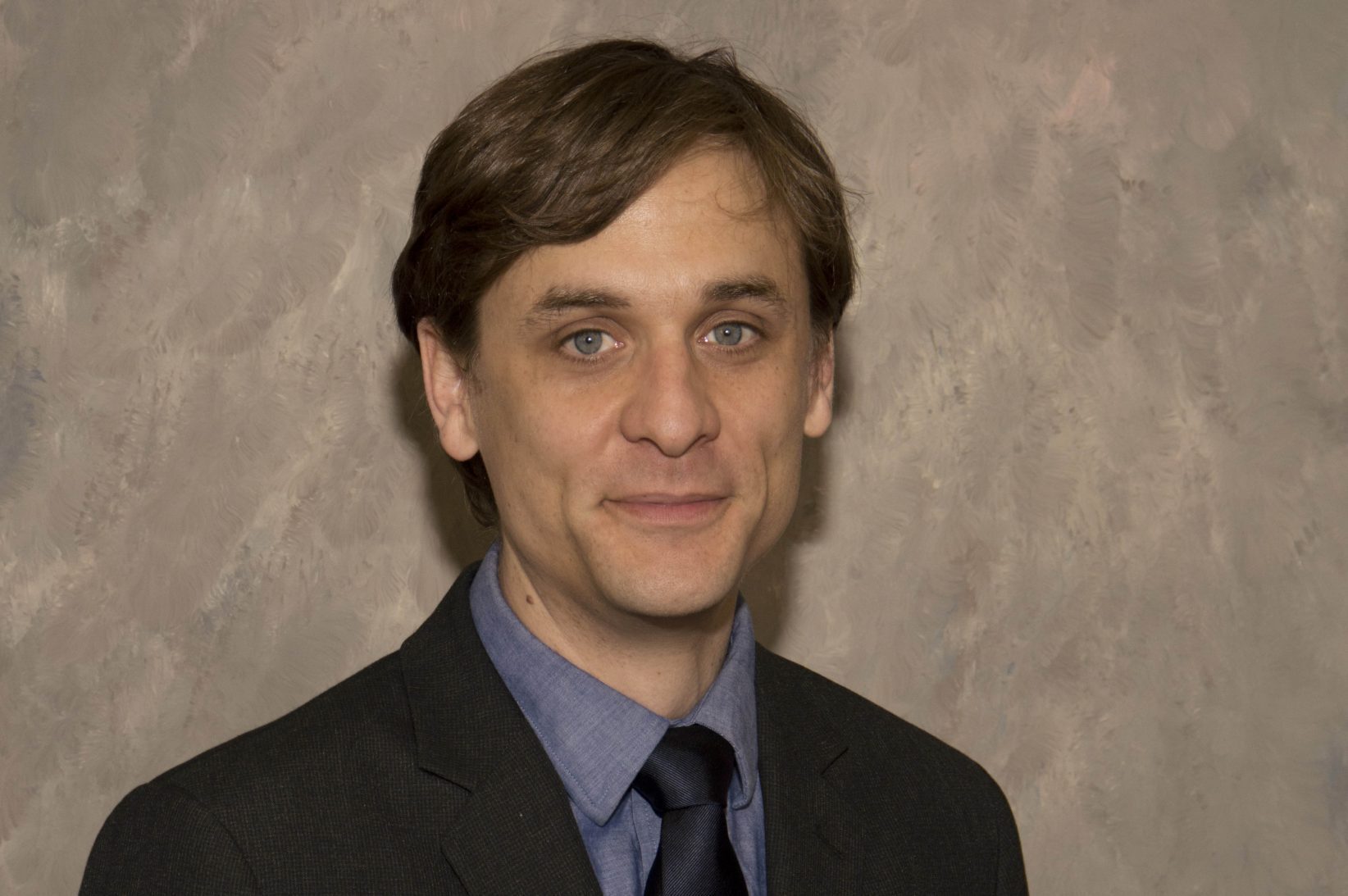
Everyone who goes into medicine is motivated, in part, by their desire to reduce pain and suffering.
That desire is what pushed Matt Kesinger to go to medical school.
In 2009, Kesinger worked as an emergency medical technician in Boston. His first month on the job, he was flabbergasted to find that he failed to detect a stroke in one of his patients.
“I took it really hard at first,” Kesinger said. “I didn’t realize how absolutely common it was to miss a stroke.”
After conducting national scale research, Kesinger learned that half of all strokes — when blood flow to an area of brain is cut off — are undetected before the patient’s arrival at the hospital. Without methods of early detection, Kesinger said strokes lead to thousands of deaths and billions in unnecessary annual costs.
Kesinger examined a plethora of technologies to tackle the problem. After a single “eureka moment,” he realized that the technologies to more effectively detect strokes already existed but that it had yet to be commercialized.
“I believe the efforts I am doing with Forest Devices will impact a lot more people than what I could do in an emergency department.” – Matt Kesinger
At that moment, Kesinger transformed from medicine man to an entrepreneur. And In 2015, Kesinger launched Forest Devices, a medical device startup that is currently developing a stroke screening device called AlphaStroke.
“AlphaStroke is basically an EKG (electrocardiogram) for the brain,” said Kesinger, a co-founder of Forrest Devices. “We’re looking at brain signals and asymmetry. A stroke only happens on one side of the brain, and AlphaStroke can pick up that asymmetry within 60 seconds.”
Via a few electrodes placed on a patient’s head, the AlphaStroke device measures asymmetry in brain waves and oxygen levels in the brain, which allows an EMT to detect a stroke in about one minute. If the AlphaStroke detects a stroke, it allows a medical professional to more quickly transport the patient to a stroke treatment center rather than a hospital that may not be suitable for care.
Kesinger estimates that early treatment of a stroke can prevent up to 6,000 deaths and 300,000 hospital days per year.
Already in a working relationship with Kansas City-based Truman Medical Center, Kesinger said they are seeking various partnership opportunities throughout the Midwest, as well as fundraising. With a team of 6 full-time employees, Kesinger said that monetizing AlphaStroke and reaching FDA approval is still a couple years into the horizon.
Kesinger traveled to Kansas City in September for Techweek, and the firm came home with a $50,000 grant from LaunchKC, along with local office space. Forest Devices is headquartered in Pittsburgh, Pa., but thanks to Kansas City’s central location and proximity to stroke centers, Kesinger believes Kansas City is apt for its expansion.
Kesinger said that the firm’s ultimate mission is to put an AlphaStroke in every ambulance around the nation.
“The reason I am not practicing medicine right now is because I believe the efforts I am doing with Forest Devices will impact a lot more people than what I could do in an emergency department,” Kesinger said. “Although I wish I was drawing the salary that I would be drawing over there — money isn’t everything.”


2016 Startups to Watch
stats here
Related Posts on Startland News
Kauffman survey: Women more critical of their own early-stage entrepreneurial efforts
Women entrepreneurs are more likely than their male counterparts to grade their performances harshly during the first year of business, though that tendency typically fades over time, according to a new survey by the Ewing Marion Kauffman Foundation. It often is about approaching the venture a realistic viewpoint, said Jeff Shackelford, executive director of Digital…
Video: ShotTracker fan app courts NAIA tourney crowds with AR experience
A new ShotTracker fan app — expected to launch today — will combine real-time analytics with augmented reality for a first-of-its-kind fan engagement opportunity at next week’s Division 1 NAIA basketball tournament, said co-founder Davyeon Ross. “We want to make the experience as great as possible for the end user,” Ross said, noting his company’s…

TechAccel, UC Davis lab developing wheat seed to combat climate change
A Kansas City-based tech and venture development firm hopes to engineer wheat seeds that produce higher yield by withstanding warmer temperatures. “We’re taking a concept that is pretty important for wheat worldwide,” said Brad Fabbri, Chief Science Officer of TechAccel. Increasing temperatures make growing wheat more difficult across the globe, studies show. Reports indicate climate…
Startup stakeholders: Opportunity zones could prompt culture shift on redevelopment
Startup community stakeholders think opportunity zones in some of Kansas City’s poorest areas could work, but only with collaboration between the government and private sector. A number of low-income communities in Kansas City are eligible for designation as opportunity zones — areas in which investors may defer paying capital gains taxes over a certain period…