

Medical device startup Forest Devices finds local fit with stroke detection tech
October 6, 2016 | Meghan LeVota
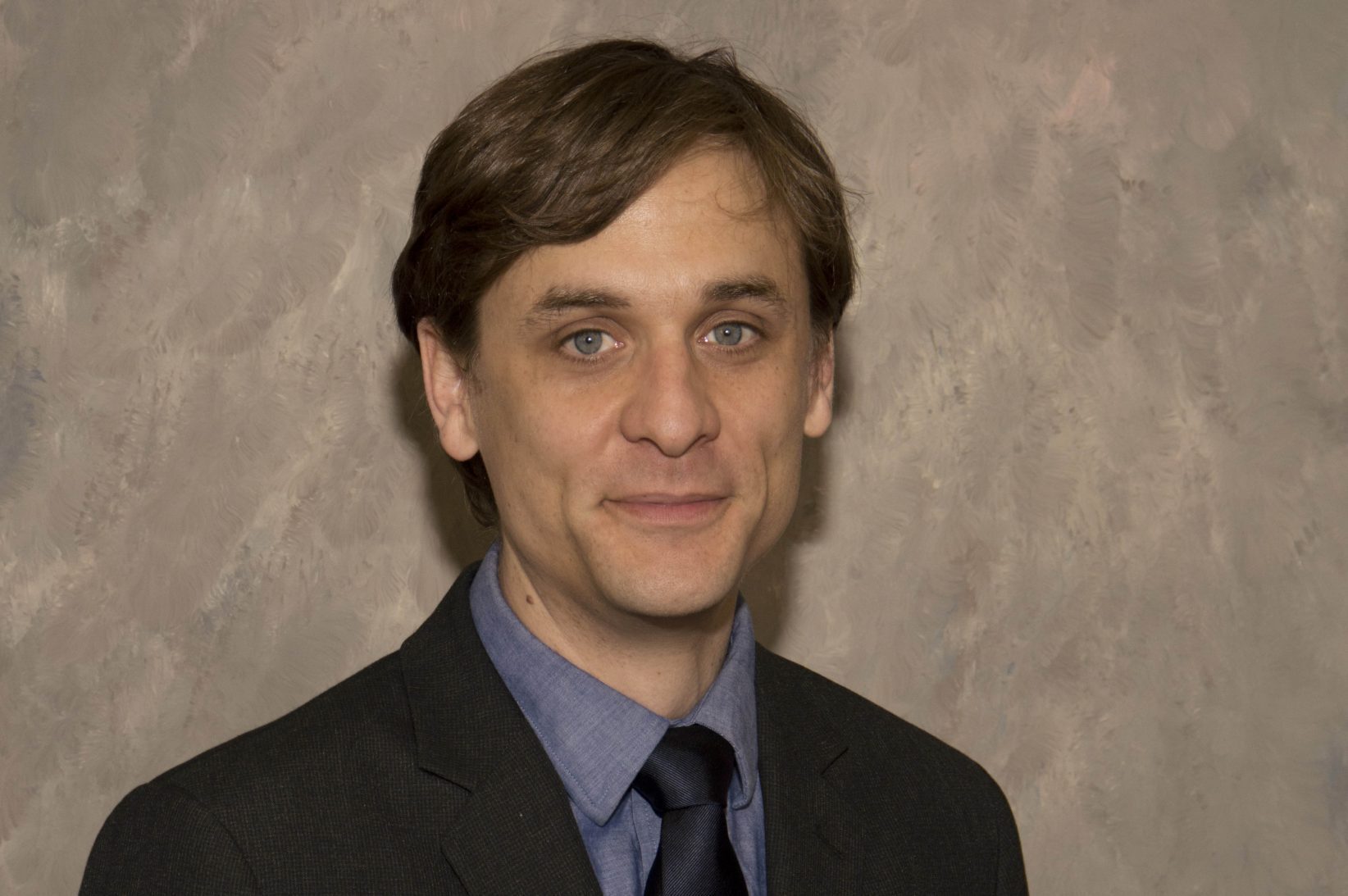
Editor’s note: This content is sponsored by LaunchKC but independently produced by Startland News.
Everyone who goes into medicine is motivated, in part, by their desire to reduce pain and suffering.
That desire is what pushed Matt Kesinger to go to medical school.
In 2009, Kesinger worked as an emergency medical technician in Boston. His first month on the job, he was flabbergasted to find that he failed to detect a stroke in one of his patients.
“I took it really hard at first,” Kesinger said. “I didn’t realize how absolutely common it was to miss a stroke.”
After conducting national scale research, Kesinger learned that half of all strokes — when blood flow to an area of brain is cut off — are undetected before the patient’s arrival at the hospital. Without methods of early detection, Kesinger said strokes lead to thousands of deaths and billions in unnecessary annual costs.
Kesinger examined a plethora of technologies to tackle the problem. After a single “eureka moment,” he realized that the technologies to more effectively detect strokes already existed but that it had yet to be commercialized.
“I believe the efforts I am doing with Forest Devices will impact a lot more people than what I could do in an emergency department.” – Matt Kesinger
At that moment, Kesinger transformed from medicine man to an entrepreneur. And In 2015, Kesinger launched Forest Devices, a medical device startup that is currently developing a stroke screening device called AlphaStroke.
“AlphaStroke is basically an EKG (electrocardiogram) for the brain,” said Kesinger, a co-founder of Forrest Devices. “We’re looking at brain signals and asymmetry. A stroke only happens on one side of the brain, and AlphaStroke can pick up that asymmetry within 60 seconds.”
Via a few electrodes placed on a patient’s head, the AlphaStroke device measures asymmetry in brain waves and oxygen levels in the brain, which allows an EMT to detect a stroke in about one minute. If the AlphaStroke detects a stroke, it allows a medical professional to more quickly transport the patient to a stroke treatment center rather than a hospital that may not be suitable for care.
Kesinger estimates that early treatment of a stroke can prevent up to 6,000 deaths and 300,000 hospital days per year.
Already in a working relationship with Kansas City-based Truman Medical Center, Kesinger said they are seeking various partnership opportunities throughout the Midwest, as well as fundraising. With a team of 6 full-time employees, Kesinger said that monetizing AlphaStroke and reaching FDA approval is still a couple years into the horizon.
Kesinger traveled to Kansas City in September for Techweek, and the firm came home with a $50,000 grant from LaunchKC, along with local office space. Forest Devices is headquartered in Pittsburgh, Pa., but thanks to Kansas City’s central location and proximity to stroke centers, Kesinger believes Kansas City is apt for its expansion.
Kesinger said that the firm’s ultimate mission is to put an AlphaStroke in every ambulance around the nation.
“The reason I am not practicing medicine right now is because I believe the efforts I am doing with Forest Devices will impact a lot more people than what I could do in an emergency department,” Kesinger said. “Although I wish I was drawing the salary that I would be drawing over there — money isn’t everything.”


2016 Startups to Watch
stats here
Related Posts on Startland News
KC-based Sellozo opens upgraded analytics platform to Amazon sellers
Upping the stakes, true profit tracking platform Sellozo plans to roll out a new level of access for its users selling on retail giant Amazon, said Jessica McCune. “It’s definitely cool to have the capability to work with more than just the North American marketplace,” McCune, the Kansas City-grown company’s marketing specialist, said of the…
Dream Muscle Coffee roasts hipster coffee shop stereotype with protein brew targeting KC’s east side
When life hands out lemons, some people turn them into lemonade. But what happens when it throws 300 pounds of coffee beans in your direction? You percolate new ideas that can disrupt an overcaffeinated market and strengthen a community, Timothy Shockley chuckled. “A friend of mine closed his [Shawnee] coffee shop and left [the beans]…

Talent pipeline: Missouri Hyperloop could be a light at the end of the tech jobs tunnel
A high-speed Missouri Hyperloop route connecting Kansas City and St. Louis would power a state-spanning metro area with fluid access to tech jobs and talent, as well as a region pumped for economic growth, leaders familiar with the proposed project said. “You could easily live in St. Louis and work in Kansas City, and have…
Collaboration in the air: Cough detection sensors combine Sickweather, Mycroft tech
You can’t manage what you can’t measure, said Sickweather CEO Graham Dodge, describing the need for cough detection sensors that are slated to be rolled out in public places across Kansas City in 2019. Illness forecaster Sickweather is teaming up with fellow Kansas City startup Mycroft, a leader in artificial intelligence-infused tech, to develop the…