

Medical device startup Forest Devices finds local fit with stroke detection tech
October 6, 2016 | Meghan LeVota
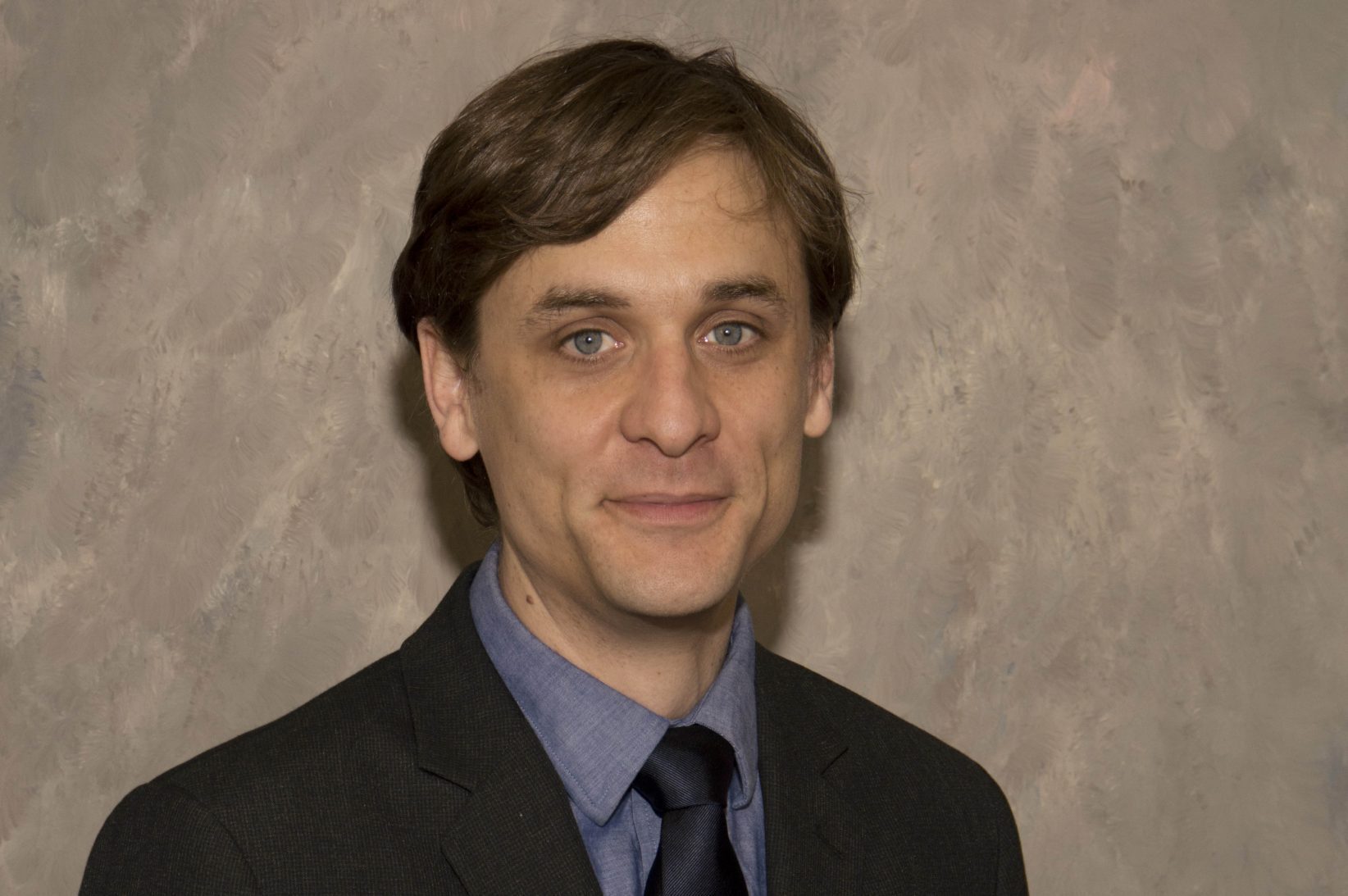
Editor’s note: This content is sponsored by LaunchKC but independently produced by Startland News.
Everyone who goes into medicine is motivated, in part, by their desire to reduce pain and suffering.
That desire is what pushed Matt Kesinger to go to medical school.
In 2009, Kesinger worked as an emergency medical technician in Boston. His first month on the job, he was flabbergasted to find that he failed to detect a stroke in one of his patients.
“I took it really hard at first,” Kesinger said. “I didn’t realize how absolutely common it was to miss a stroke.”
After conducting national scale research, Kesinger learned that half of all strokes — when blood flow to an area of brain is cut off — are undetected before the patient’s arrival at the hospital. Without methods of early detection, Kesinger said strokes lead to thousands of deaths and billions in unnecessary annual costs.
Kesinger examined a plethora of technologies to tackle the problem. After a single “eureka moment,” he realized that the technologies to more effectively detect strokes already existed but that it had yet to be commercialized.
“I believe the efforts I am doing with Forest Devices will impact a lot more people than what I could do in an emergency department.” – Matt Kesinger
At that moment, Kesinger transformed from medicine man to an entrepreneur. And In 2015, Kesinger launched Forest Devices, a medical device startup that is currently developing a stroke screening device called AlphaStroke.
“AlphaStroke is basically an EKG (electrocardiogram) for the brain,” said Kesinger, a co-founder of Forrest Devices. “We’re looking at brain signals and asymmetry. A stroke only happens on one side of the brain, and AlphaStroke can pick up that asymmetry within 60 seconds.”
Via a few electrodes placed on a patient’s head, the AlphaStroke device measures asymmetry in brain waves and oxygen levels in the brain, which allows an EMT to detect a stroke in about one minute. If the AlphaStroke detects a stroke, it allows a medical professional to more quickly transport the patient to a stroke treatment center rather than a hospital that may not be suitable for care.
Kesinger estimates that early treatment of a stroke can prevent up to 6,000 deaths and 300,000 hospital days per year.
Already in a working relationship with Kansas City-based Truman Medical Center, Kesinger said they are seeking various partnership opportunities throughout the Midwest, as well as fundraising. With a team of 6 full-time employees, Kesinger said that monetizing AlphaStroke and reaching FDA approval is still a couple years into the horizon.
Kesinger traveled to Kansas City in September for Techweek, and the firm came home with a $50,000 grant from LaunchKC, along with local office space. Forest Devices is headquartered in Pittsburgh, Pa., but thanks to Kansas City’s central location and proximity to stroke centers, Kesinger believes Kansas City is apt for its expansion.
Kesinger said that the firm’s ultimate mission is to put an AlphaStroke in every ambulance around the nation.
“The reason I am not practicing medicine right now is because I believe the efforts I am doing with Forest Devices will impact a lot more people than what I could do in an emergency department,” Kesinger said. “Although I wish I was drawing the salary that I would be drawing over there — money isn’t everything.”


2016 Startups to Watch
stats here
Related Posts on Startland News
New owner plans Vietnamese redux with modernized experience at Northland bánh mi spot
Quick service. Customization. Simple menu. Meals made-to-order in front of the customer. Chipotle was built on this service model. Now Peter Nguyen wants to bring it to his new Vietnamese restaurant, and even use that system to start a franchise of his own. In August, Nguyen purchased the former Bun Mee Phan restaurant at 4011…
Office with a pew: Coworking veterans hail ‘untapped potential’ of unused space within churches
A coworking space and a church — united around the idea of building community — formed a unique partnership earlier this year in Kansas City’s northland, said Bob Martin. The CO-OP at Shoal Creek — which Martin and Heather Heckroot opened in January — has taken up residence at Shoal Creek Community Church in Pleasant…
Digital Inclusion Fund awards $75K for devices to KC nonprofits working to get residents online
A relaunched Kansas City-area fund is expected to help residents struggling because of a lack of simple tech resources: devices that might often be taken for granted among their neighbors for whom the internet — and the opportunities that come with it — is already easily accessible. Eleven nonprofits in the region recently were awarded a…
Biden-Harris official tours KC BioHub; region prepares to reapply for federal Tech Hubs funding
A visit from a top federal economic development leader early this month offered regional leaders an opportunity to showcase and build upon Kansas City’s strategy to increase domestic production of life-saving vaccines within the footprint of the newly established KC BioHub. Maryam Janani-Flores, chief of staff for the U.S. Department of Commerce’s Economic Development Administration…