

AOL founder Steve Case says innovators must become policy savvy
October 25, 2016 | Bobby Burch
Get familiar with public policy or your company will get left behind.
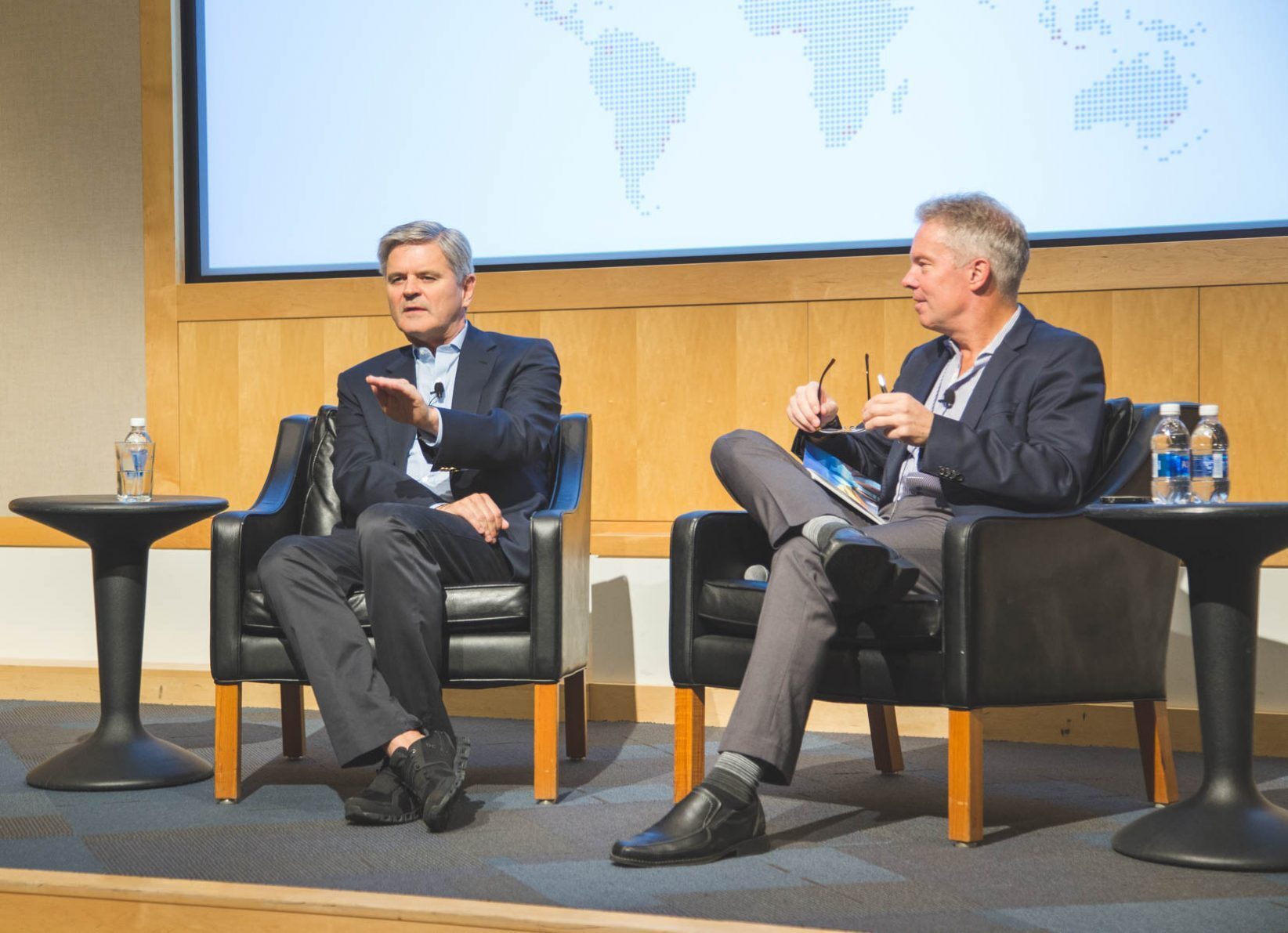
That was the forward-looking message that AOL founder Steve Case had for a group of about 200 investors and entrepreneurs at the 2016 Kauffman Fellows summit in Kansas City.
Now the CEO of Revolution, Case argued that investors, entrepreneurs and policymakers will have to forge better working relationships or risk losing out on the economic paradigm shift he’s dubbed “the third wave.”
“The only way that we’re going to get this right is if we have move constructive dialogue between the innovators and the policymakers,” Case said during a Tuesday visit to the Ewing Marion Kauffman Foundation. “Right now they’re talking past each other.”
In his new book, Case defines the third wave as entrepreneurs’ ability to leverage the Internet to transform the largest sectors of our economy. That will not only prompt new technologies to connect with broader industrial systems but also entail more cooperative partnerships among businesses big and small.
Entrepreneurs will have to get more creative with their partnerships to achieve scale and differentiation in the market. Corporations also will need to embrace “self-disruption,” in which they are constantly re-inventing their businesses.
Innovation will be more difficult in the future, he said, which is why entrepreneurs must work closer with local, state and federal lawmakers to craft policies conducive to competition.
Case said that regulators must change their mentality moving forward.
“My general view is that regulators are focused on keeping bad things from happening and need to focus on enabling good things to happen,” Case said. “Regulations are there essentially to lock in the status quo in a way that protects incumbents. We need (regulations) to enable innovation and open up the door to disrupters. We need more of a bias to enable good things to happen .”
Case is no stranger to Kansas City. In 2014, he visited the City of Fountains during his nationwide “Rise of the Rest” tour, in which he hosted a $100,000 pitch competition and stopped at the Kansas City Startup Village.

Featured Business

2016 Startups to Watch
stats here
Related Posts on Startland News

5 reasons your startup isn’t attracting investors
Last week, Techstars managing director John Fein told us that one of the main complaints he hears from Kansas City investors is that there aren’t enough fundable startups. Investors may be right, but it’s not necessarily a lack of good ideas. Today, Kansas City investors are looking for more than the next big idea: they’re…

Events Preview: SMCKC Breakfast, Second Fridays
There are a boatload of entrepreneurial events hosted in Kansas City on a weekly basis. Whether you’re an entrepreneur, investor, supporter or curious Kansas Citian, we’d recommend these upcoming events for you. WEEKLY EVENT PREVIEW SMCKC February Breakfast – Connected City When: February 5 @ 7:30 am – 9:00 am Where: Grand Street Cafe Learn how the…
Unimpeded support for Kansas’ angel tax credits floods Topeka
It appears area entrepreneurs and business leaders are unanimously agreed on at least one thing: Kansas’ Angel Investment Tax Credit program must endure. About a dozen people converged on Kansas Legislature Wednesday to voice unopposed support of the program, which has spurred significant growth in Kansas’ tech and bioscience sectors. The program — as represented…
Google Fiber offering free gigabit to low-income homes
Access to the Internet is almost universally agreed to be a defining sign of progress in third-world countries. Yet millions of citizens across the U.S. still sit on the wrong side of the digital divide. The vast majority of these citizens have one thing in common: they live in low-income households, where cost outweighs the…