

An innovation ‘bromance’ brews in Kansas City leadership
September 9, 2016 | Meghan LeVota
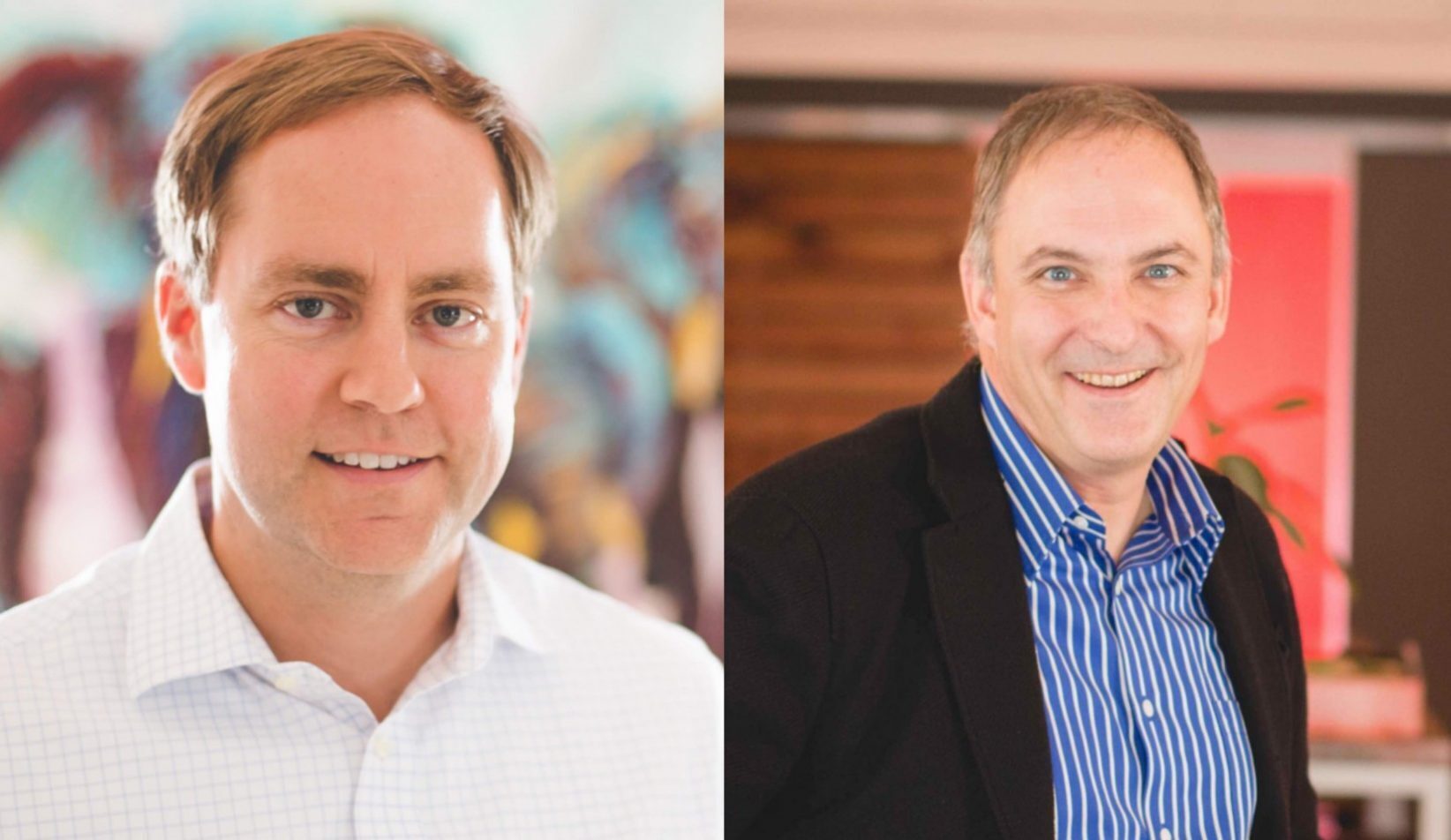
If a blossoming collaboration between two city leaders is any indication, innovation knows no borders in the Kansas City metro.
Bob Bennett, chief innovation officer for Kansas City, Mo., and Alan Howze, chief knowledge office for the Unified Government of Wyandotte County and Kansas City, Kan., both share a common goal: they believe that open data is paramount to the success of the metro area.
Bennett, who has served as CIO for almost a year now, was thrilled when the UG announced Howze as the new CKO. Although this is not the first time Kansas City, Kan. has led innovation efforts, it was the first centralized office position. Bennett said this would lead to more collaboration across borders, which he believes is best for the metro.
“I think one of the things Alan and I share is an appreciation for the fact that technology is impacting across every aspect of a city and how it operates,” Bennett said. “If I learn any lessons the hard way, we can make sure that he doesn’t have that horrific experience. Between the two of us, I think we’re going to create quite a smart region.”
Both cities are now working together within the MetroLab Network, which pairs U.S. municipalities with academic organizations to bring innovation to city governments. Kansas City and the UG have partnered with the University of Kansas and University of Missouri Kansas City on five projects, including open data, public health, clean energy and others.
As part of MetroLab, Bennett said that the cities are collaborating with UMKC on open data initiatives that will give civic leaders the ability to solve a problem — such as crime, energy and transportation — before it manifests itself. These predictive analytics will gather information from 311 phone calls, crime reports and utility information.
“Between the two of us, I think we’re going to create quite a smart region.” – Bob Bennett
Bennett said he hopes to develop a data algorithm with a transferable framework; which he plans to debut in early October. He believes that open data is the best way to solve issues of crime in a community.
“Data tells you what’s happening. And if you know what’s happening and where you want to go with a policy, it then becomes a process of figuring out that pathway,” Bennett said. “If you’re not using data, you don’t know where you are and thus you have no idea what steps have to be taken to achieve your goals.”
On the Kansas side, Howze hopes to expand upon the open data lessons learned from UMKC. The UG plans to use the information to help with the identification of blighted properties to curb the deterioration of neighborhoods, which Howze said could include geospatial tech tools.
“Blighted properties are a challenge that both communities face,” Howze said. “We’re both looking at how can we use open data and information to shine a light on the factors that are driving it and what are some options that are available to the community.”
The pair make a point to grab lunch often and update each other on their respective governments. Still acquainting himself with the area, Howze said he is appreciative for Bennett.
“Bob is a sparkplug,” Howze said. “He’s a phenomenal connecter. One of the challenges I’ve had being in a new community is meeting new people, and he’s been incredibly generous in helping me make some of those important connections.”
Bennett and Howze believe that there are more similarities than differences across the border. Although they both prefer to focus on the cities’ similarities, Bennett said that this belief is frequently discounted by outsiders.
“People aren’t used to seeing cities work together at this level,” Bennett said. “Being able to assert that we are in this together, frankly, some see as a bit weird.”
Bennett attributes the partnership partially to the Kansas City metro’s Midwestern warmth, adding that while a border may be “no big deal” for cities, it becomes a problem when you view it through a macro lens.
“Cities get collaboration in a way that states can’t, because they aren’t competing for federal dollars,” Bennett said. ”City staffers and mayors don’t have to wait for a poll to let them know something isn’t working — they hear about it at the grocery store.”
Howze noted the Kansas City Startup Village as community leaders in bridging innovation efforts across borders. He said the companies, ideas and creative energy that have emerged in the village — which was spurred in part by the arrival of Google Fiber in 2012 — prove that Sunflower and Show Me State collaboration can be done in Kansas City.
“The ability to speak as a unified regional voice is very important.” Howze said. “We are stronger together than we are as individual entities. It allows us to do things better and faster.”

Featured Business

2016 Startups to Watch
stats here
Related Posts on Startland News
15 local companies selected for latest ScaleUP cohort
ScaleUp Kansas City announced Thursday the 15 entrepreneurs that were selected to the program’s latest cohort. Since its launch in 2015, 62 local business owners have graduated from the four-month program, which offers immersive training for companies looking to scale. “ScaleUP! KC has been — and continues to be — such a critical program for…
Hyper-sustainable coffee shop opens in Hyde Park
A Kansas City coffee roaster with a focus on sustainability and creating zero landfill waste is hoping its first shop will be a model for cafes around the nation. A product of the Kansas City-based Paris Brothers food and coffee distribution company, Mother Earth Coffee has been available in local grocery stores and via wholesale…
Silicon Valley accelerator 500 Startups invests in KC tech firm
A Kansas City firm planning to transform the world with its artificial intelligence tech recently landed in a highly-esteemed startup accelerator in Silicon Valley. Mycroft announced Wednesday that it’s in the latest cohort of 500 Startups, a global venture capital seed fund and startup accelerator that manages $200 million in assets and has invested in…
Virtual reality field trips offer black history experiences for KC students
With backgrounds in tech, education and business, five women have joined forces to create technology-based educational experience to impart lessons on black culture. Last month, the V Form Alliance received a $19,000 grant from Mozilla Gigabit Community Fund to fund the group’s inaugural project: Virtual Realities in Culture: Explorations of the African Diaspora Project. With…