

Rep. Kevin Yoder talks challenges with KC entrepreneurs
August 4, 2016 | Meghan LeVota
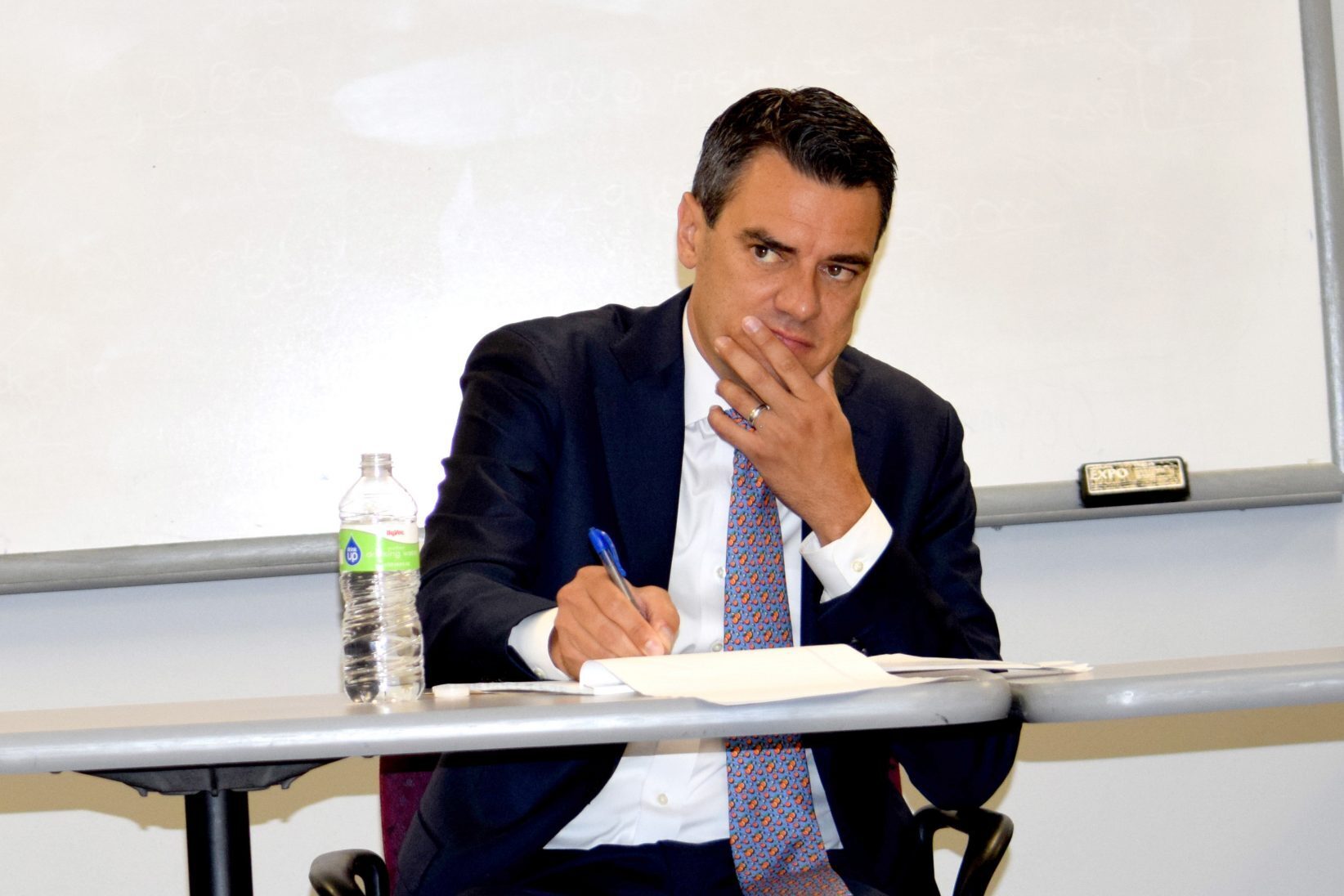
U.S. House Rep. Kevin Yoder, R-Kansas, told a group of Kansas City entrepreneurs Thursday that he has their interests at heart when he heads back to Washington D.C. in September.
Speaking at the Enterprise Center in Johnson County as part of Startup Day Across America, Yoder said that he aims to make sure entrepreneurs in Kansas City have access to capital, talent, and tax credits.
“We want to make sure that people who want and need to work have the opportunities,” Yoder told the group of investors, entrepreneurs and community members.
In 2013, a bipartisan group of politicians launched Startup Day Across America with the goal to provide entrepreneurs with the opportunity to connect with their federal representatives and educate them on what is going on at home. It is now organized annually by members of the Congressional Caucus of Innovation and Entrepreneurship, in efforts to create jobs.
“There are people saying ‘I can’t find workers’ and there are people saying ‘I can’t find a job.’ You would think that this would be fixable. We’ve got to make this equation matchup.”
The roundtable kicked off with a discussion on the U.S. Department of Labor’s new overtime regulation that takes effect Dec. 1. The rule extends overtime pay to all salary workers that make up to $47,476 a year, the limit formerly being as low as $23,660. Some attendees voiced concerns that the change would shock businesses, while others argued that the rule would benefit workers, which would transitively benefit the economy.
Yoder told the group that 48 percent of able-bodied Americans work full time in this country. He added that he is concerned about young people being able to find a job in this country without having to live with their parents. Yoder says that the fast changing business landscape makes it difficult for policy makers and educators to keep up the pace.
“When I was at the (Kansas City) Startup Village, I was kind of taken aback at some of the tech companies who were like ‘Look we can’t find the people who know how to do the coding that we need,’” Yoder said. “There are people saying ‘I can’t find workers’ and there are people saying ‘I can’t find a job.’ You would think that this would be fixable. We’ve got to make this equation matchup.”
Yoder said that no matter where you lie politically, everyone in the area can agree that job growth and securing a good economy are top priorities for Kansas and Missouri. He said that the majority of jobs in this country are created by small businesses and recognized that the local efforts of those in the Kansas City area will indicate where the economy will go.
The discussion also veered into how Kansas City can create a stronger pipeline for talent through education. Attendees offered up some plans to develop computer science programs to create more talent, however, not all agreed that Kansas City should exclusively focus on technology.
Greg Jackson, of Greg Jackson Media Group, suggested that investors and politicians should start to look at everyone, regardless of the industry, and fairly assess their return on investment.
Jackson, who operates a record label, said that he’s found it difficult to attract investors due to his unconventional model and close work with minorities who are hoping to make it in the music industry. At times, he said that lack of opportunity can compel some to engage in criminal activity. Jackson added that the Kansas City community needs to look at what is best for the community as a whole and implement creative solutions.
Melissa Roberts, vice president of communications and outreach at the ECJC, said that in general, Kansas City’s investment landscape has improved over the years. She said that angel investment activity has really ramped up in large part thanks to Kansas City recognition as an entrepreneurial leader on the national level.
“The startup world is really encouraging right now,” Roberts said. “But there is always more we could do and we have plenty of room to grow in this community.”

Featured Business

2016 Startups to Watch
stats here
Related Posts on Startland News
Think globally, invest locally: Are KC dollars worth more than outside capital?
Hometown capital is validating, said Darcy Howe, but it isn’t everything. Half of the firms in Startland’s 2018 list of Top Venture Capital-Backed Companies in Kansas City received 50 percent or more of their funding from KC investors — a promising indicator of local support that suggests to outside investors that a company is ready…

2018 Top VC-Backed Companies in Kansas City List
The Top Venture Capital-Backed Companies in Kansas City List recognizes the growing cohort of growth-stage, venture-backed companies in the Kansas City metro — further illustrating the impact of the countless efforts aimed at boosting entrepreneurship in the region and creating a productive dialogue. The list is expected to be updated and published annually. The 2018…

Made in KC cocktails: Plaza tasting room infuses local spirits into 6 unique concoctions
No rum behind the bar? Ozzie Mendoza Diaz has the recipe for six Made in KC cocktails that feature only spirits from Kansas City-area distillers. And while the metro freely pours gin, vodka and even tequila for the thirsty masses, rum isn’t on the locally made menu — a problem for daiquiri lovers, said Tyler…

Entrepreneur’s pitch: Throw a life vest to those caring for loved ones with special needs
Families of loved ones with disabilities are fighting the clock, said Samantha Lane, Kansas City-area entrepreneur and founder of Lumina Advocacy and Coaching in Gardner. “There is a huge gap to be filled,” Lane said as she described the array of physical, intellectual, and sensory needs affecting — what she referenced as one-fifth of the American…