

Pennez wants to turn the page on youth illiteracy with AI app
August 9, 2016 | Meghan LeVota
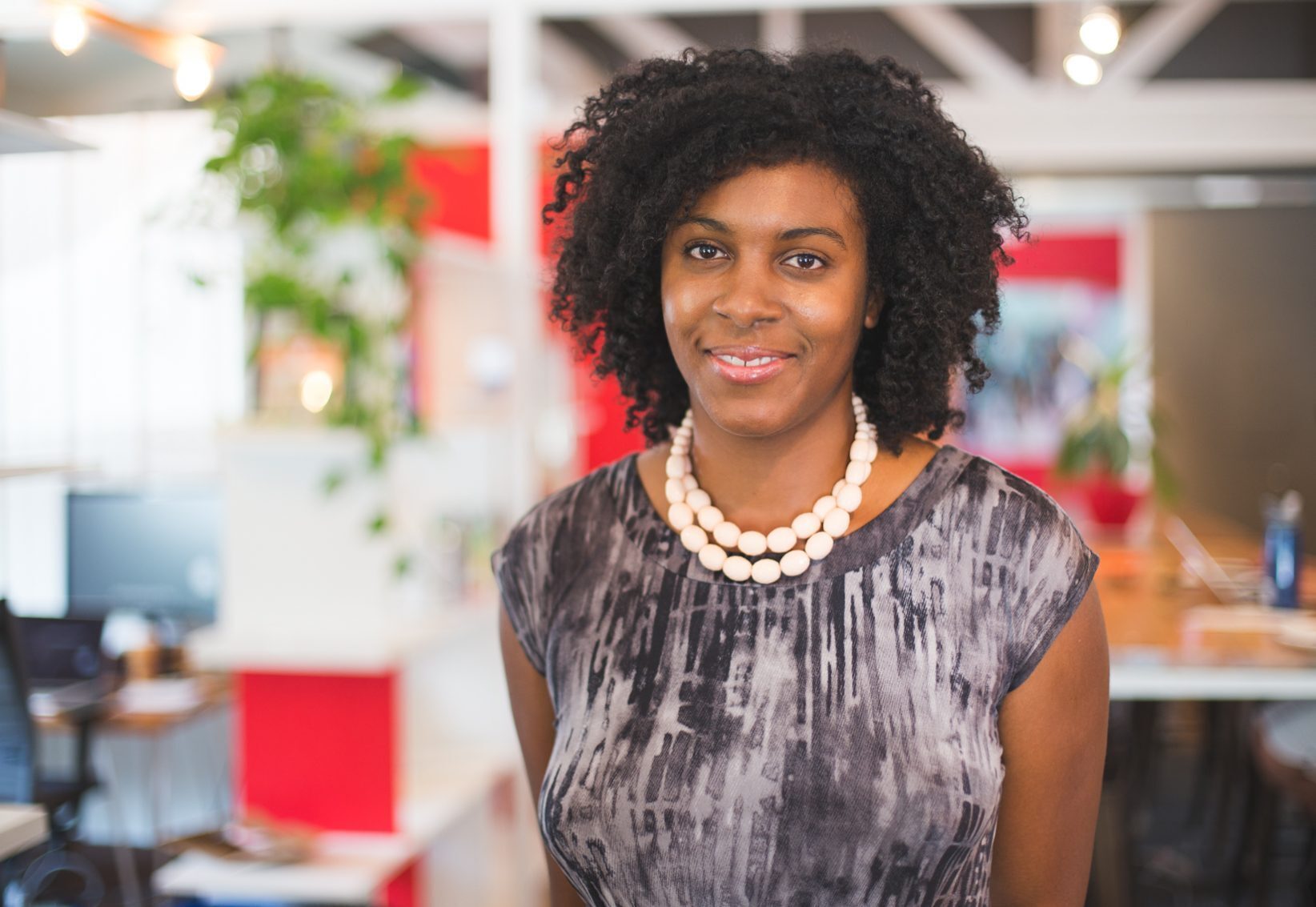
If you’re reading this, congratulations, you’re literate.
Statistically, this is something to be proud of as 773.5 million people are illiterate around the world. It also means that you’re more likely to have a higher-paying job and be able to more fully participate in society.
Rebecca Dove, a former elementary school teacher, saw first-hand that when literacy issues go unnoticed, it creates a domino effect that will harm the child the rest of her life. Dove said that poor readers are more likely to get held back, funneled into special education or not graduate.
But now she’s working to change that as founder of Pennez, a company that’s building an artificial intelligence app to help students improve their reading abilities and comprehension.
Growing up as a black woman in Miami County Kan., Dove said she feels lucky for her education. She knows that the numbers disproportionately affect students depending on their race. Dove said that by the 4th grade, 82 percent African-American, 79 percent Latino, 72 percent American Indian, 54 percent Caucasian and 43 percent Asian students still struggle to read. Although this affects all students at a dramatic rate, Dove is passionate about evening the playing field.
“Right now [minority] children mostly see slavery, sports or musicians in their books,” Dove said. “If they don’t see themselves in the characters it leads them to believe that they aren’t important. This lack of engagement could slowly pull them out of society, which polarizes the community.”
Founded in 2014, Pennez is an online platform that produces content with the goal of helping struggling and diverse readers through a variety of educational tools. The platform also includes articles, lesson plans, activities and interviews of multicultural authors. Dove says that minority groups are misrepresented in children’s publishing and hopes that Pennez will help all kids love reading.
“If they [minority children] don’t see themselves in the characters it leads them to believe that they aren’t important. This lack of engagement could slowly pull them out of society, which polarizes the community.”- Rebecca Dove
In September, the company plans to launch a free, web-based application called Read2Think. The app is an artificial intelligence tool that will evaluate the reading habits of students and give teachers and parents deeper understanding. People can also register as beta users online to test the app’s features.
The child will read into the computer or tablet, and the software will listen to the child, evaluate the recording and then give a score. Children are scored by a letter grade A through Z and are given a reading level upon evaluation. The system looks at vocabulary, fluency, reading speed and phonics. Once the application has passed its first rounds of testing, the team plans to add a feature that will match the child up with books to read based on their reading level, culture and interests.
Dove works part-time as an adjunct professor at Avila University, and has bootstrapped most of the funds for Pennez, which now employs seven people. Pennez received a $25,000 grant from IBM, $24,000 from Mozilla’s Gigabit Community Fund and $1,500 from UMKC’s Venture Creation Challenge.
Dove says that the transition from teacher to entrepreneur hasn’t been easy.
“Getting funded really helped a lot because people began to see my vision as a viable product,” Dove said. “I definitely started as someone who wasn’t sure whether I belong, but now I feel like I have to be here.”
This fall, Pennez plans to pilot the app Read2Think with first- through eighth-grade students at four Kansas City-area schools and one in Chattanooga, Tenn. In total, 250 kids will test Read2Think.
Pennez CTO Quest Taylor said the focus of the pilot is to collect the voices of children so that the technology can be trained to learn with them.
A developer for over 15 years, Taylor said that besides the popularity of Siri, Skype and Google Voice, few firms have had a reason to include kids’ voices in their natural language processing algorithms.
He said Read2Think aims to offer a solution that learns how kids naturally speak.
“So far, all artificial intelligence solutions to this problem currently on the market have failed,” Taylor said. “We had to learn to create our own.”
Aside from artificial intelligence, the app uses natural language processing and artificial neural networks. It is designed to work with up to 90 different English accents as well as Spanish speakers.
While Taylor said that Pennez is focused on minority students, he hopes it will help all illiterate youth. However, he said he feels as if he has to constantly prove that the poor literacy rate is a problem.
“If there are this many children who can’t read, then it’s an issue,” Taylor said. “It’s pretty pathetic.”
Taylor says he used to advocate for teaching children how to code at an early age, but after he became aware of children’s literacy statistics he changed his tune a bit. Taylor now maintains that reading should be the top priority for students and that those in the startup community should worry about teaching children to code once we’ve solved this problem first.
“The Kansas City startup scene is both inclusive and exclusive,” Taylor said. “Only some of us are willing to help each other. … The money is here; the talent and designers are here. We all need to come together.”

Featured Business

2016 Startups to Watch
stats here
Related Posts on Startland News

Northland BBQ spot opens, building flavors, menu from side hustle to storefront
After a decade-long journey building his BBQ business — from tailgates to a just-opened brick-and-mortar restaurant — Wardell Hooks Jr. would only change one thing along the way: He’d have quit his full-time job sooner. “My thing is the joy,” said Hooks, founder of Off the Hook BBQ, describing the feeling of accomplishment from his…

Match this: ‘Ted Lasso’ filming in KC another win for city’s tax credit pitch, mayor says
Scoring state-side shooting locations for the newest season of “Ted Lasso” reflects a strategy by the KC Film Office that’s straight from the hit Apple TV+ series’ playbook: the harder you work, the luckier you get. “‘Ted Lasso’ filming in Kansas City represents everything we’ve been working toward,” said Rachel Kephart, director of the KC…

Kauffman Foundation launches new executive role to lead its Real World Learning team
Cross-sector collaboration will be key for Misty Chandler as she embarks on a freshly carved out journey within the Ewing Marion Kauffman Foundation’s evolving Real World Learning strategy, said Dr. Susan Klusmeier, lauding the longtime advocate for her wealth of experience with workforce readiness and student success at the University of Kansas. “Her deep understanding…

Indoor golf concept shoots past the rough with tech driver, hooking franchise success across US
Lenexa-based indoor golf concept GolfTRK is teeing off into the world of franchising, said Matt Williams, scoring big wins from coast to coast as demand to expand access to “golf light” soars. The modern training and performance facility — a Trackman Preferred Franchise Partner with locations in Lenexa and Overland Park — now has 11…