

Tech startup Bungii is your new friend with a truck
July 12, 2016 | Kat Hungerford
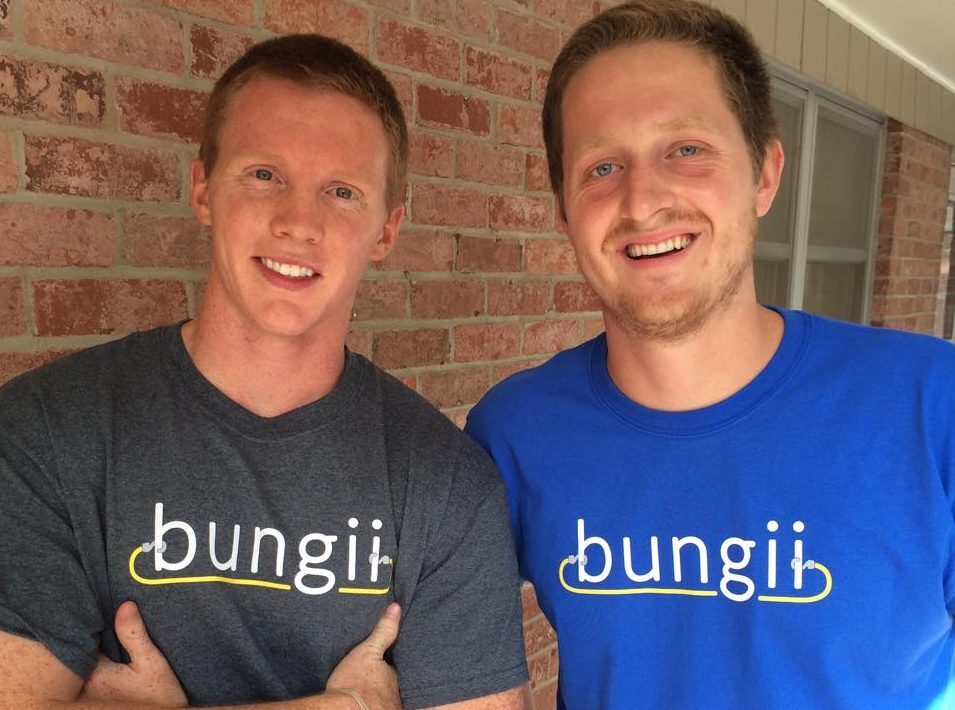
“Hey, can I borrow you and your truck this weekend?”
It’s a question dreaded by truck owners everywhere, and in April of 2015, it made Ben Jackson regret ever buying his 1999 Ford Ranger. Jackson — and his truck — had just finished an exhausting day helping friends make four hauls across Manhattan, Kan.
The experience led Jackson and fellow Kansas State University student Harrison Proffitt to launch Bungii, which pledges to be “your friend with a truck.” With an on-demand model similar to Uber and Lyft, Bungii users can request a local truck and schedule pickups for items they’d like to move.
Jackson is optimistic about the company’s ability to scale.
“Our market opportunity is enormous,” he said. “Most people can remember a time when they’ve said to themselves, ‘Man, it would nice if I had a truck,’ and our goal is to be available during that moment. Let’s face it — whether you’re a buying a couch on Craigslist or a mattress from the store, unfortunately everything just doesn’t fit in a Toyota Prius.”
Bungii recently launched its online platform in Kansas City, and plans to expand to other Midwest cities by the end of 2016. While the service is currently online-only, Bungii founders say the mobile app is set to launch this fall, at which time they will phase out website requests.
Bungii charges $1 per minute and $1 per mile, with the average trip costing around $40, according to Jackson. To vet its drivers — and their trucks — Bungii completes a background check, vehicle inspection, personal interview and customer service training. The platform also has in-app GPS tracking so users can track their drivers and a driver rating system.
The company recently raised $200,000 from a private investor, and also won $5,000 through the K-State Launch competition. Jackson said they plan to spend the capital on developing the platform’s software.
Although the initial idea for the on-demand truck service blossomed in Manhattan, founders chose Kansas City in which to establish and launch the business due to its vibrant startup community, Jackson said.
“We chose Kansas City because it just fits,” he said. “From the birth of the Startup Village, to Google choosing KC as its launch pad for Fiber, to the Greater Kansas City Chamber of Commerce announcing that KC is going to be one of the most entrepreneurial cities, Kansas City is quickly becoming one of the leading startup cities in America.”
Despite Bungii’s on-demand similarities to Uber and Lyft, Jackson doesn’t see them as direct competitors now or in the future.
“At this point, Uber and Lyft are focused on growth in the international market,” Jackson said. “From China to India, it seems like a lot of their resources are being directed towards those areas. This gives us a great opportunity to grow our brand and scale here in America.”
While the name “Bungii” may seem like an odd choice for an on-demand hauling company — founders say it’s apt. All Bungii drivers are required to carry at least two bungee cords, among other moving items like a blanket and straps. Added to that, the company strives to be as “inexpensive, reliable and flexible” as its namesake.

Featured Business

2016 Startups to Watch
stats here
Related Posts on Startland News

Coworking studio the GRID marks grand opening in Overland Park
Already popular in downtown Kansas City, coworking options are now expanding further south into the metro area. Jennifer Stearns, community manager at the relatively-new GRID collaborative workspaces in Overland Park, said that coworking has a bright future in not only Kansas City but also in its suburbs. The facility opened their doors in April, but…

Reporting from Ireland: A pint with Pipeline fellow Jeff Rohr
Belfast, Northern Ireland — Keen to tap Irish hospitality and a culture of innovation, members of the Pipeline entrepreneurial fellowship program have incurred no shortage of either in Northern Ireland’s capital city. After a morning of “speed dating” with Irish entrepreneurs, 13 fellows in Pipeline’s 2016 fellowship class joined alumni at Brewbot to continue fostering…

‘5 things on my desk’ with ShotTracker co-founder Davyeon Ross
Startland News and the Kansas City Star have partnered to publish content as part of the Star’s new special section, “Spirit.” This story was originally published in the Star’s Sept. 18 Sunday edition. Kansas City doesn’t need an NBA team for it to stand out in the world of basketball. Working with partners like Golden…

WillCo Technologies hiring 90 people after snagging energy-saving patent
The average american household wastes up to 61 percent of its energy input. Kevin Williams, CEO of WillCo Technologies, said that this is because of the way electrical grids are designed. Although the average consumer requires significantly less power during school and work hours, the grid keeps energy limits consistently high in order to sustain through…