

New STEM leader Martha McCabe wants to prioritize diversity
May 27, 2016 | Martha McCabe
Editor’s note: The opinions expressed in this commentary are the author’s alone.
Kansas City cannot continue to grow as a tech hub without first establishing a vibrant — and diverse — local STEM talent pipeline.

Martha McCabe
As a community, we’ve put the wheels in motion. For example, about half of metro school districts now offer the nationally renowned Project Lead the Way STEM curriculum and growth in programs like FIRST Robotics has skyrocketed.
Yet we have much to do, and in this case, “much to do” centers on diversity. A couple of weeks ago I shared the stage at the STEM Institute with Intel’s Anne Marie McSwiggan to talk about the impact diversity — or lack thereof — has on STEM jobs and the tech talent pipeline. Sporting purple hair and a heavy Scottish accent, she said “Diversity is about inclusion, a common purpose and to be understood.”
That’s what diversity is, but why does it matter when it comes to increasing the STEM workforce? From a commonsense standpoint, if you need more people in a field, it doesn’t make sense to recruit them from an already-saturated pool. 84 percent of STEM jobs in the U.S. are currently filled by white or Asian males, who make up roughly 38 percent of the population. Why not reach the other 62 percent to fill the gap in STEM jobs?
More importantly, we need diversity in STEM if we expect the fields to thrive. In my experience, when working to solving a common problem, the more diverse the team, the more robust the solution.
If we want to attract and retain the best and the brightest for the Kansas City tech workforce, we must include the underrepresented, taking time to understand why they’re underrepresented and discovering how we can align for a common purpose.
Five places to start increasing STEM diversity:
1. Expand the Girls in Tech KC movement.
Kansas City is on the right track when it comes to including women in tech. For two years running, Kansas City has ranked as the second-best city for women in tech in both pay equity and the makeup of the workforce, according to Smart Asset. Yet women still hold only 33.6 percent of tech jobs here, leaving plenty of room for growth.
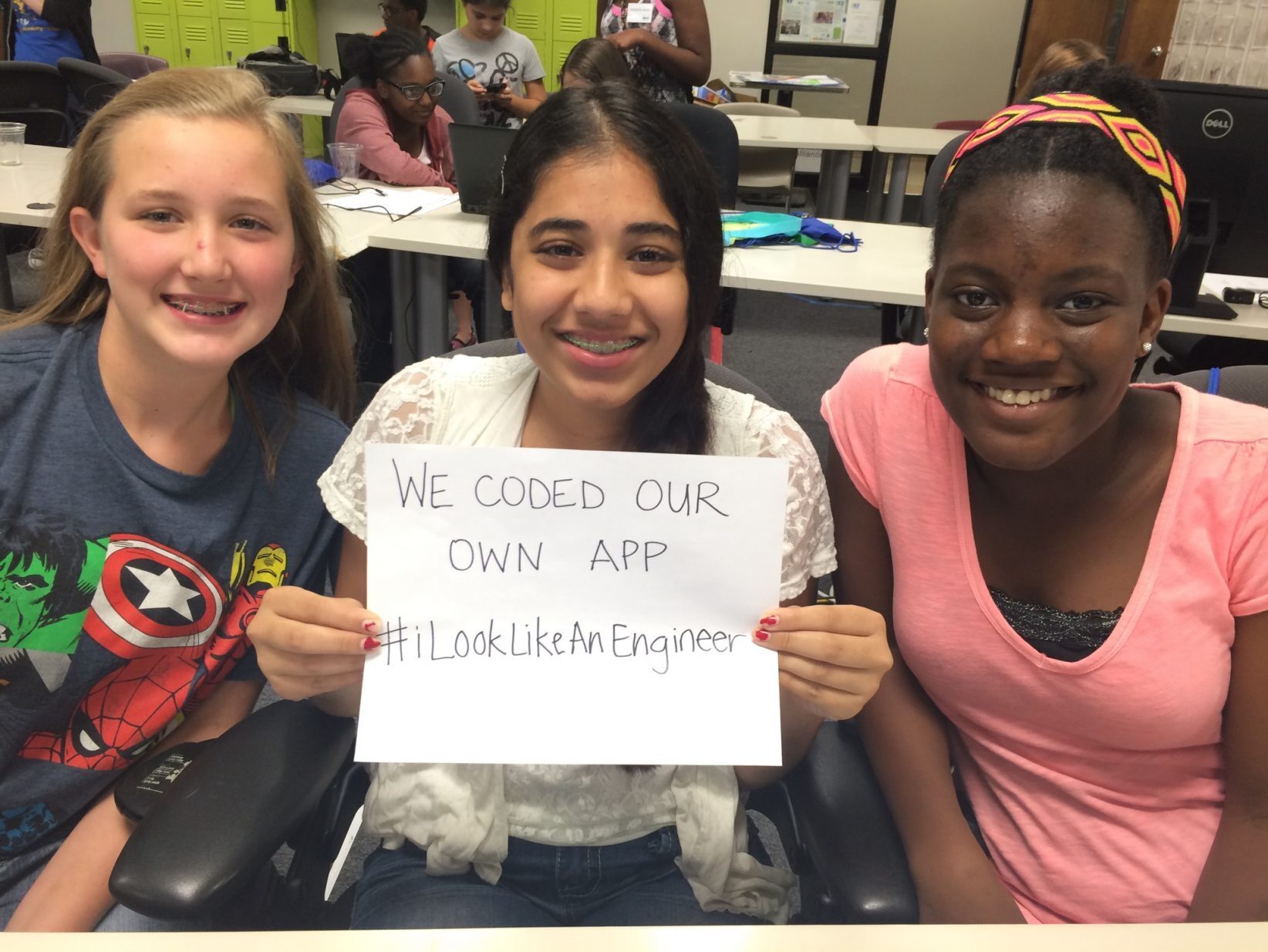
Last year, KC STEM Alliance and key partners including Cerner, the Women’s Foundation and the SkillBuilders Fund, launched the Girls in Tech KC movement to address this gap, but it needs help with introductions, awareness and mentors.
2. Keep young women engaged in STEM all the way through high school.
Students’ interest in pursuing STEM careers peaks in middle school, but falls off by high school. We must find ways to keep them engaged. As a tech community, we can start by working with local companies to offer real-world learning experiences, encouraging more women role models, and creating more all-girl learning opportunities in schools.
After school is a great time to learn too — KC Women in Technology and Society of Women Engineers-KC offer engaging STEM programs with inspiring female role models.
3. Push for every student in Kansas City to have the opportunity to learn computer science from engaging, qualified teachers at school.
Despite a groundswell of support from many sectors, according to Code.org three-quarters of U.S. schools do not offer meaningful computer science courses. We must push not only for schools to be required to offer computer science classes, but also for the resources needed to implement this effectively.
One piece of good news is Project Lead the Way’s recent agreement with the College Board. This partnership allows students who complete PLTW computer science courses to be eligible to take the associated AP Computer Science exams for credit, which will encourage more students to take advantage of the offering. As students complete high school, Kansas City initiatives like Tech Hire KC and LaunchCode can extend learning and provide apprenticeships.
4. Create a STEM Learning Ecosystem for Kansas City.
Children spend about 80 percent of their time out of school, so looking for ways young people can learn about and engage with technology outside of school is important. Kansas City is one of 27 communities working to build a STEM Learning Ecosystem — a strong community network that knits together schools, out-of-school programs, museums, science centers, higher-ed institutions, community-based groups, businesses and STEM organizations.
Getting experience in multiple settings can help young people see themselves as successful at STEM at an early age, giving them the confidence to move forward. The Kansas City initiative, ecosySTEM KC, is underway now.
5. Create a mentor network for women and minorities in tech.
We know there are key windows when talented people drop out of the tech pipeline. One of those vulnerable periods — especially for women and minorities — is the first five years on the job. KC STEM Alliance is embarking on a new initiative (now in the design phase) that will focus on coaching and connecting mentors with students and early career professionals.
Martha McCabe serves as the director of the KC STEM Alliance, where she uses her passion for collaboration to develop relationships with preK-12 schools, post-secondary institutions, STEM organizations and industry.

Featured Business

2016 Startups to Watch
stats here
Related Posts on Startland News

Entrepreneurship is the path to freedom; how Black business pioneers’ legacies still stand today
Editor’s note: The perspectives expressed in this commentary are the author’s alone. Brandon Calloway is CEO and Co-Founder of Generating Income For Tomorrow (G.I.F.T.), and now writes a weekly blog, The Equity Advocate. [divide] In the past eighteen months of traveling from city to city, I’ve made it a point to delve into the histories…

Five ways to (finally) kickstart your financial plan
Editor’s note: The perspectives expressed in this commentary are the author’s alone. The following is a paid thought leadership piece from Chris Malmgren, The Ferguson Smith Cohen Group at Morgan Stanley. [divide] For many people, the idea of long-term financial planning may seem like that dentist visit or home repair project you keep putting off:…

Why Kansas City’s startup community should rally behind local news
Editor’s note: The perspectives expressed in this commentary are the author’s alone. Stephanie Campbell is CEO of The Beacon, a nonprofit news organization covering Missouri and Kansas, and a member of the KC Media Collective, which also includes Startland News, KCUR 89.3, American Public Square, Kansas City PBS/Flatland, and Missouri Business Alert. [divide] Tulsa just…

New exempt salary threshold struck down: Why a judge said the feds’ rule had ‘gone seriously awry’
Editor’s note: The opinions expressed in this commentary are the author’s alone. Robert J. Hingula is employment class and collective actions co-chair at Polsinelli’s Kansas City office. He primarily focuses his practice on trial and counseling work involving labor and employment law. This commentary was originally published by Polsinelli. [divide] Employers have been waiting with…