

Kansas City’s east side to receive free wireless gigabit network
May 26, 2016 | Bobby Burch
Kansas City is diligently continuing work to become the most connected city on earth.
Three organizations are now working to create a free, large-scale wireless gigabit network on Kansas City’s east side.
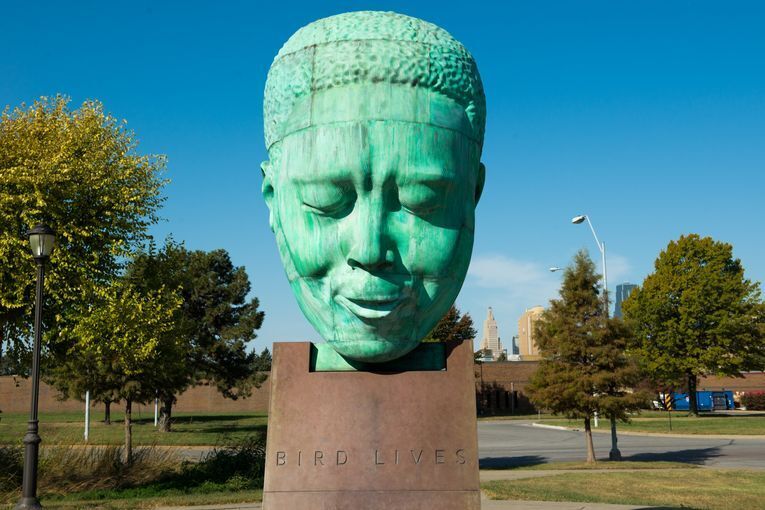
The project — led by Siklu Communications, the Urban Neighborhood Initiative and KC Digital Drive — will help eliminate cost barriers to help bridge the digital divide. The network will be available at such locales as the Historic Lincoln Building, the Mutual Musicians Foundation, several churches and the Ivanhoe Neighborhood Alliance.
The project will leverage “Millimeter Wave” technology to bypass infrastructure limitations that older buildings may present. The project will use Siklu millimeter wave radios that will attach to existing fiber provided by KC Web.
The radios can be quickly attached to building facades, the tops of buildings, poles and other points in the community to create a faster wireless extension of fiber. By using millimeter wave radios frequencies, the radios can transmit gigabit internet with low latency and no interference, Siklu said. The radios operate in the 60, 70/80 GHz spectrum bands.
“We believe that connectivity helps empower communities and lets Kansas City continue our growth as a gigabit leader,” Dianne Cleaver, executive director of Urban Neighborhood Initiative, said in a release. “While blessed with an abundance of fiber, even throughout the east side, we still face barriers to connecting individual homes and critical community anchors. Siklu’s technology will provide affordable gigabit connections throughout the UNI area.”
The new project is the latest in a series of initiatives that will create wireless networks around Kansas City.
Google announced in April that it’s planning to build a massive wireless broadband network in Kansas City. Google expects to spend the next six months delivering equipment for construction of the wireless network.
The moves have compelled Kansas City officials to become more conscious in communicating digital inclusion efforts. Connecting For Good CEO Tom Esselman recently shared his thoughts on digital divide efforts with Startland News.

Featured Business

2016 Startups to Watch
stats here
Related Posts on Startland News

Dying schools taught Katie Boody how to build
Editor’s note: Katie Boody is a co-founder of The Lean Lab, a Kansas City-based education incubator that helps educators create and implement innovative ideas in schools to help students. The Lean Lab co-founder Carrie Markel contributed to this piece. Opinions expressed in this commentary are the author’s alone. Both the schools I taught at are…
The Lean Lab will award $100K to education entrepreneurs
Local efforts to inject innovation into education received a boost Friday as The Lean Lab announced fellows in its incubator program will earn seed capital for their projects aimed at disrupting traditional learning. Founded in 2013, The Lean Lab welcomed five new teams of fellows from around the nation for its incubator, which develops…

‘Kansas City Startup House’ aims to be smart home incubator
A local tech founder is transforming his Kansas City, Kan., home to eventually become the area’s next incubator program. Sports Photos founder Brandon Schatz recently launched the “Kansas City Startup Home” to host entrepreneurs and innovators from around the world. While it’s now serving as an Airbnb destination for techies, Schatz said in the next…
Kauffman Foundation analyzes Kansas City’s startup growth
What does startup community success look like? Often one hears buzzwords like “vibrant,” “supportive” and “close-knit” — standards by which nearly any community can label itself successful. But since it’s nearly impossible to objectively measure those terms, a startup community’s success is instead frequently evaluated through funding and exits. That ignores the fact that most…