

The red carpet, garageband and laboratory of funding models
April 22, 2016 | Larissa Uredi

Editor’s note: The opinions expressed in this commentary are the author’s alone.
“Funding! Funding! Funding!”
It’s the warrior’s cry of the startup community.
In the world of entrepreneurship, there’s an incredible amount of pressure to run a startup that can be described as “disruptive,” “innovative” and “scalable.” Those descriptions come with a hefty price tag, however. So, what’s a startup to do? It depends.
Like most things, startups run on money. To solve the money question, you ultimately have three paths to consider, which I’ll refer to as the red carpet, garageband and laboratory methods.
Venture Capital: the red carpet of funding
Venture capital steals the spotlight as the “best” route to becoming an all-star startup. Raising capital through VC has the perception of being the red-carpet route to success, fame and fortune, because it says people with the big bucks think you’re brilliant.
To have a chance at walking that carpet, you, the entrepreneur, take the time to build the idea, the team and to gain proof-of-concept traction. You take the work you’ve done and present it to a group of people with more money and experience than you. You show them that your company is a great fit for their portfolio because your idea fits those descriptions of “disruptive,” “innovative” and “scalable.”
It’s a tough approach to win, especially in Kansas City. The local venture capital market is extremely conservative, and although things are looking up, we’re a long ways away from Silicon Valley.
Then, if you do gain entrance to the red carpet by raising a bunch of capital, you’re no longer completely your own boss. Your investors want a return on their investment, which sometimes means changing your vision, approach and product to fit someone else’s goals.
The takeaway: Pursuing venture capital funding is a great way to find the money you need to aggressively scale your company. The downside is that you run the risk of your business morphing into someone else’s vision while joining an aggressive playing field.
Play in a garageband with bootstrapping
Bootstrapping is often pigeonholed as “what you do until you can get funding.” It’s the option entrepreneurs hold onto when they can’t raise capital and are still unwilling to give up their dream.
Bootstrappers fund their business ideas themselves and work like a fiend until they’re profitable. They don’t borrow excess money and don’t compromise their venture or vision because an investor tells them it’s a bad idea. They don’t pivot their business every time they lose a sale. They have the ability to scale their business at their own pace and have the time to avoid common — and dangerous — growing pains.
The takeaway: If you have the savings and the guts to put your money where your business idea is, this is a great route to go. You call the shots and run the business you want to run. The downside is that all of the risk is yours and the safety net is small or nonexistent.
A lean startup model is the startup laboratory
If your startup doesn’t fit the VC model or you hate the idea of answering to investors, the lean startup model may be for you.
Instead of building a complete idea, the lean startup team builds parts of the whole. They test those parts by drumming up as many sales as possible and then use the proceeds to restart the cycle. The idea, per serial entrepreneur Eric Ries, is to constantly adapt your business to fit the needs of your customers, and when something doesn’t work for them, get rid of it.
It’s worth noting, however, that lean startup methodology can be implemented within both the bootstrapping and venture capital model. It’s not so much a funding model, as much as a method to quickly and inexpensively test ideas.
The takeaway: For those of us with a restless entrepreneurial spirit, the lean startup is a great way to decide what kind of business to run. You have virtually no costs to get started and you get a quick sense of market demand. The flipside? Without a solid plan in place and a roadmap to follow, it’s easy to get off track and end up in an endless pivot loop where you never quite nail down your business model or goals.
While the choices on how to run your business are difficult, how you choose to fund your business can define the success of your company. It’s one of the biggest decisions you will make. Choose carefully, while keeping an eye on the kind of business you want to run and the amount of control you want to have.
Larissa Uredi is the marketing and sales director for The DeviceShop, a small business accelerator out of Shawnee, Kan. that offers office space, workshops, and manufacturing and prototyping services. The DeviceShop considers itself to be a community of innovators aiming to develop successful and profitable entrepreneurs. Uredi is also the business developer for No-Where Consultants.

Featured Business

2016 Startups to Watch
stats here
Related Posts on Startland News
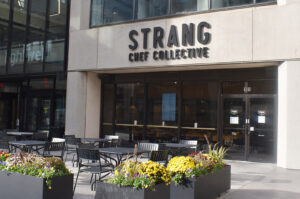
Downtown food hall hits closing time; Strang’s chef-driven concept leaving lightwell
Strang Chef Collective is serving its final customers within the food hall’s downtown space, said CEO Shawn Craft, announcing the lightwell location would close Tuesday “despite the company’s best efforts over the past year to keep it open.” The chef-driven concept — through which diners experience a mix of global and elevated comfort flavors —…

KC Daiquiri Shop closing Dec. 1; iconic duo behind the party vibes plans to ‘regroup, reflect, and rebuild’
The good times roll through the weekend at KC Daiquiri Shop as the well-known Mardi Gras-themed getaway on Grand Boulevard shuts down its years-long revelry. “This decision has not come lightly,” Kinley Strickland and Calvin Vick, owners of KC Daiquiri Shop, said Monday in a social media post announcing the business’ plans to close Dec.…

Side hustle to help autistic adults belong in the workplace earns young founder Student Entrepreneur of the Year honor
Grace Kertz is redefining what workplace inclusivity can look like with Sensory Sync, an AI-powered platform designed to support neurodivergent employees. Her work on the innovative venture on Thursday earned her the title of UMKC Student Entrepreneur of the Year. “Sensory sync is an enterprise grade DEI and wellness platform sold to companies. It utilizes…

UMKC Entrepreneur of the Year: How Populous designed a legacy, built to go global
Kansas City-built design firm Populous brought to reality more than just great venues, Tom Bloch shared; it developed great experiences for a worldwide audience. “From its start here in Kansas City as HOK Sport in 1983 until now, Populous has set an unmatched standard for stadiums, convention centers, and event spaces,” Bloch told the crowd…