

Google Fiber nixes free Internet offering in Kansas City
April 11, 2016 | Bobby Burch
It’s often said there’s no such thing as a free lunch.
And in Google’s case, there’s no such thing a free fiber connection — at least anymore.
The tech titan last week nixed its free Internet offering, which dished out download speeds of 5 megabits-per-second and upload speeds of 1 mbps. Google has offered the free service — which required a one-time $300 construction fee — since its expansion into Kansas City about four years ago.
The company, based in Mountain View, Calif., replaced the free offering with a $50 per month plan that offers 100 megabits per second. The plan has no data caps, but doesn’t include added features of the pricer gigabit plans such as 1 terabyte of cloud storage with Google Drive or Gmail.
Google Fiber recently celebrated the five year anniversary of when it first announced that the service would be coming to Kansas City.
Google in March announced that it would be offering “fiber phone” service in its fiber cities, which includes Kansas City, Kan., Kansas City, Mo., Provo, Utah and Austin, Texas. The service — which provides unlimited local and nationwide calling — costs $10 per month.
Google is now expanding its fiber service into several other cities, including Atlanta, Charlotte, Nashville, Raleigh-Durham, Salt Lake City and San Antonio.
Google will continue to offer free Internet access to people in affordable housing developments without construction or equipment fees, according to ARS Technica.
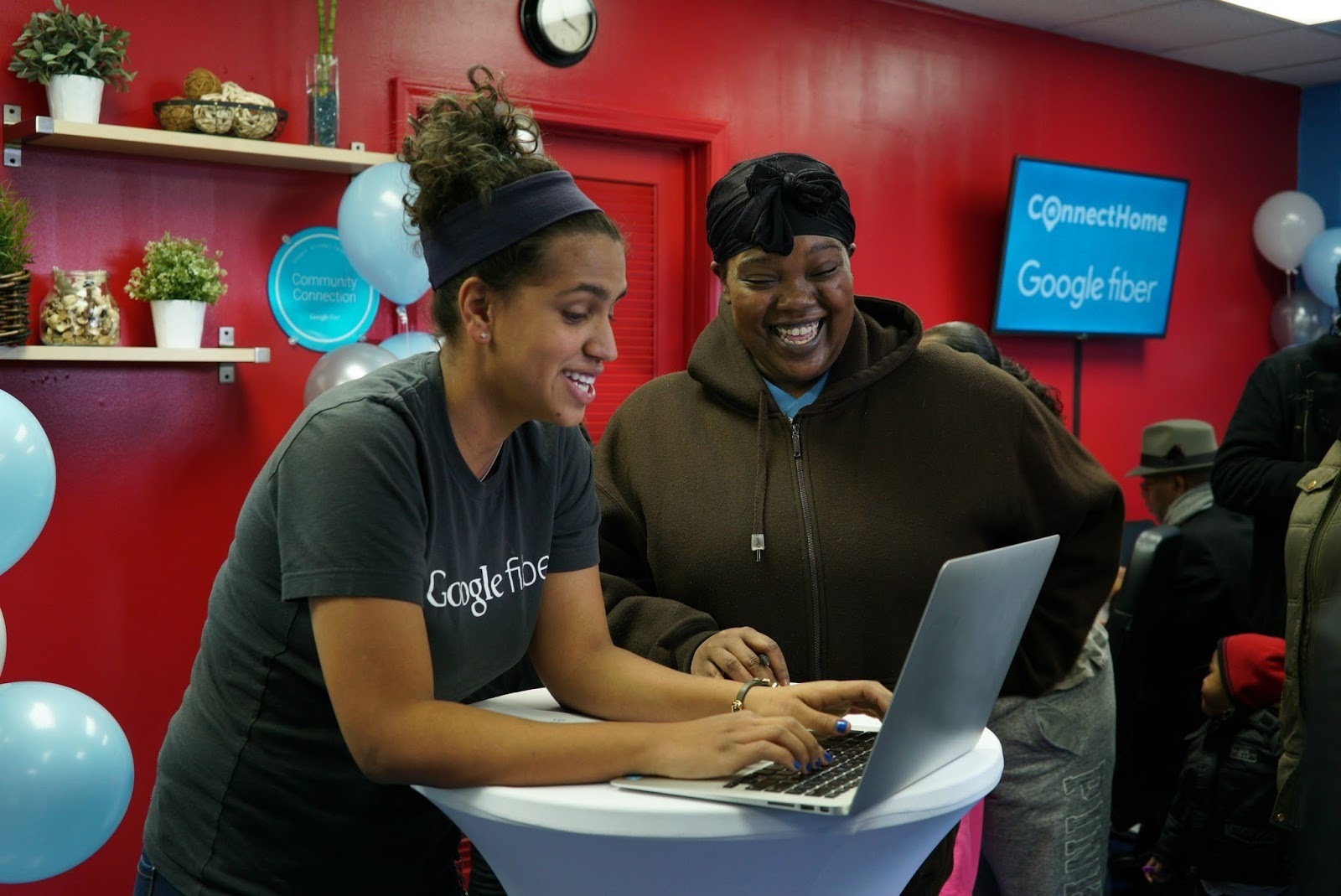
In February, Google Fiber began working with the Housing Authority of Kansas City to connect its super-fast, gigabit connection to residents of local public housing properties for free. Google launched the program at West Bluff Townhomes in Kansas City, Mo., connecting all 100 homes to its service. Through Google’s partnership with ConnectHome, a federal initiative to speed Internet adoption by families living in public housing, families who sign up for access may also purchase discounted devices and learn new computer skills.

Featured Business

2016 Startups to Watch
stats here
Related Posts on Startland News

Novel Capital teams with Crux KC to offer growth-focused marketing to early-stage tech companies
An exclusive partnership between two Kansas City-based innovators is expected to help remove a traditional financial hurdle to business growth, said Ethan Whitehill, president and chief strategy officer for the KC Chamber-lauded marketing firm Crux KC. The collaboration between Crux and Overland Park-headquartered capital provider Novel Capital is expected to offer B2B SaaS and tech…
Neighborhood smart cans help Kansas Citians save the planet from their kitchens
Newly introduced composting technology is already turning new ground in Kansas City, Kristan Chamberlain said, with more solar-powered compost cans arriving later this spring across the metro’s urban landscape. Her social venture, KC Can Compost, installed three of the devices in October — free to use for KCMO residents wanting to deposit their soil-making food…

Voodoo Volleyball bounces back in OP: Father-daughter duo doubles as new venture’s setters
Quinn Austin put several sports to the test as a preteen — racing from basketball practice to softball to volleyball. But she latched on to just one. “Volleyball. It was my sport. Everyone was having a good time,” she said. “We just loved the cheers — a cheer when we got a hit, a cheer…

Black farmers are losing ground in the fight to feed their communities, advocates say
More than a century of systemic land dispossession and discriminatory practices has left Black farmers with less than 0.6 percent of U.S. farmland — less than a third of the 16 million acres they operated in 1910, according to local urban farming advocates. They gathered Tuesday at Independence Boulevard Christian Church to confront this history…