

Entrepreneurial lessons from the girls of Malawi, Africa
April 29, 2016 | Elizabeth Usovicz
Editor’s note: The opinions expressed in this commentary are the author’s alone.
While the Kansas City entrepreneurial community continued to percolate in April, I spent two and a half weeks in the poorest country in Africa.

Elizabeth Usovicz
Malawi is known as “The Warm Heart of Africa,” and with an average annual income of $255 per person, tenacity is more than an entrepreneurial trait. It’s a survival skill.
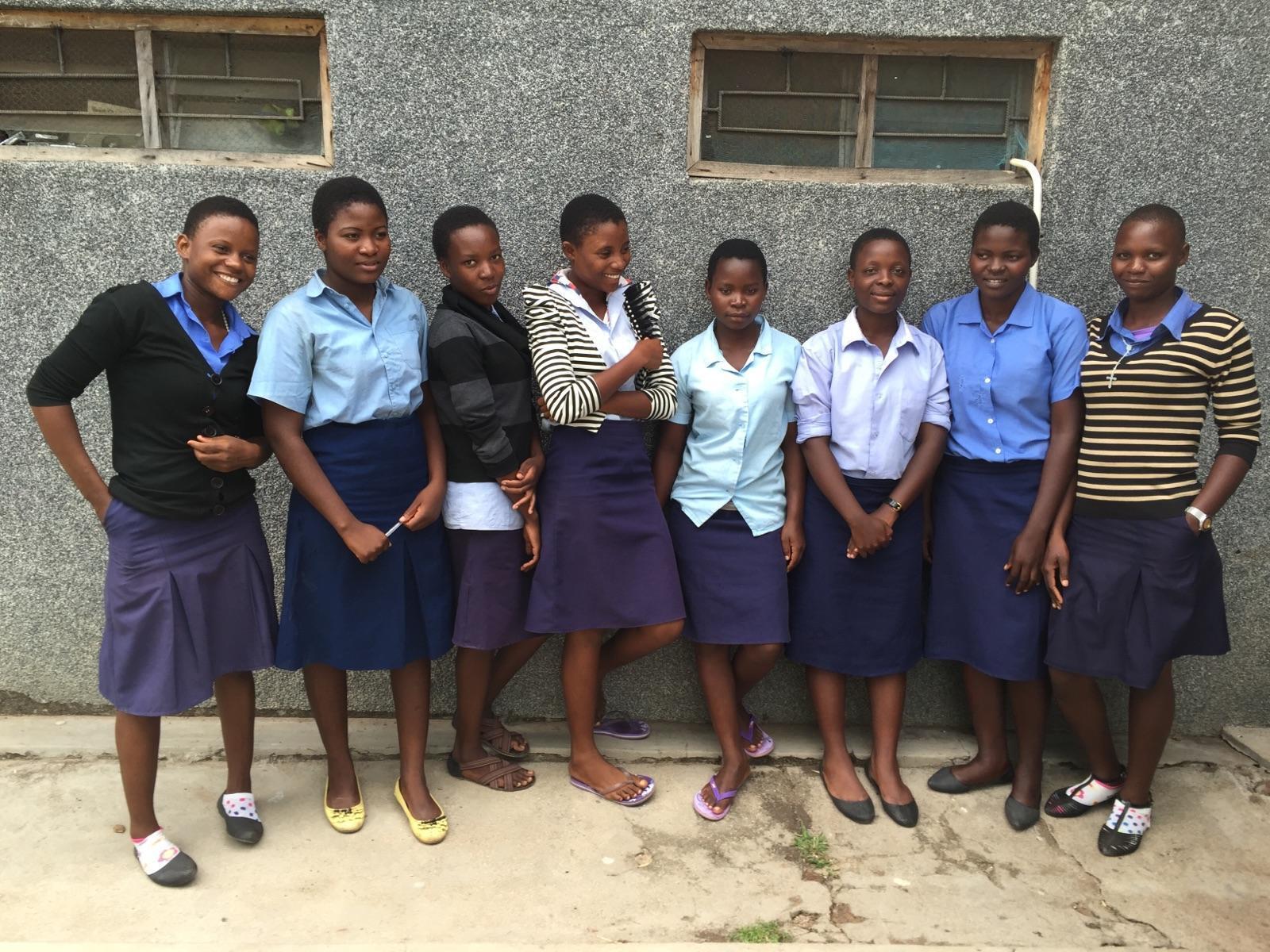
I led a Rotary Foundation-funded team to install solar lighting in schools and train teachers in a program designed to empower children — especially girls — to stay in school. Girls have limited educational opportunities due to roadblocks such as gender inequality, early marriage, teen pregnancy and HIV/AIDS.
Although their circumstances differ, the girls of Malawi share challenges with women entrepreneurs. Here are a few insights.
Multitasking: Unlike the technology-driven distractions that interrupt activity in developed economies, the multitasking I observed in the Mangochi villages is physical. Girls learn how to multitask from their mothers, walking barefoot several times a day from the village water pump with 70-pound buckets of potable water on their heads, babies on on their backs and another child or two by the hand.
I saw village girls supervising younger siblings while pounding maize, herding the goats and trying to get homework done. If tenacity and the ability to wear many hats are essential entrepreneurial traits, these girls have both in droves.
Tradition: According to a United Nations Development Program background paper on Malawi, only 47 percent of girls finish “standard 8” — the equivalent of the eighth grade. Family pressure to honor the tradition of early marriage and cultural acceptance of teen pregnancy limit opportunities.
The girl who intends to go to secondary school and then to college or university must have what women entrepreneurs also need — unrelenting focus, as well as encouragement.
Mentors and Role Models: Inc. Magazine recently reported that almost 48 percent of female founders cite a lack of available mentors or advisers as holding them back. They share this issue with girls in rural villages in Malawi.
I met dozens of girls who told me they aspired to become businesswomen, doctors, nurses or accountants. None of them knew women in these fields. Just like many women entrepreneurs who are pioneers in their industries, these girls don’t have mentors or role models. If and when they reach their goals, the girls who succeed will become role models for others.
Two and half weeks in-country doesn’t make me an expert, but this experience has given me a global perspective on the value of entrepreneurial traits in girls’ education and future success.
Currently, the girls of rural Malawi must apply these traits to meeting their basic subsistence needs and not to enhancing their personal growth and development. With tenacity and encouragement, it’s my hope that the girls of Malawi will be able to reach their aspirations and become the entrepreneurs and professionals of the future.
Elizabeth Usovicz is topline revenue strategist and principal of WhiteSpace Consulting, and General Manager of Transaction Commons. Her career includes leadership roles in corporate, start-up and consulting environments. Connect with Elizabeth at elizabeth@whitespacerevenue.com or @eusovicz on Twitter.
In July of 2015, Startland News collaborated with WhiteSpace Consulting to conduct a whiteboard conversation with women entrepreneurs in the Kansas City region. Women entrepreneurs shared their perceptions about launching and leading companies, and identified topics for ongoing discussion. As a result of this conversation, Startland News and WhiteSpace Consulting have developed (S)heStarts, a blog series that explores the entrepreneurial experience that women and men share, as well as perspectives on how their experiences are unique.

Featured Business

2016 Startups to Watch
stats here
Related Posts on Startland News

Right to Start: States getting $10B in stimulus funds to boost entrepreneurs; Here’s how they should invest it
Editor’s note: The opinions expressed in this commentary are the author’s alone. Victor Hwang is the founder and CEO of the Right to Start movement. Click here to learn more about Right to Start, a campaign to drive economic recovery and advance economic justice. This commentary originally appeared on Route Fifty and is republished with…

Entrepreneurs’ intellectual property rights: Invention theft prevention using patents
Editor’s note: The opinions expressed in this commentary — the fourth in a four-part series — are the author’s alone. Chris Brown is the founder of Venture Legal where he represents startups, freelancers, and small businesses. This column is intended to be general in detail and does not constitute legal advice. When someone secures patent…

Why Husch Blackwell’s free legal counsel to minority-led small businesses could create a ‘ripple effect’ in KC and beyond
Editor’s note: The following commentary, sponsored by Husch Blackwell, is the second in a two-part series looking at an initiative at one of the city’s largest law firms to provide pro bono legal representation to minority businesses. The opinions expressed in this commentary are the author’s alone. Quinncy McNeal is pro bono counsel at Husch…
How one law firm’s effort to offer free legal counsel to minority-led enterprises began with passion in KC
Editor’s note: The following is the first in a two-part series looking at an initiative at one of the city’s largest law firms to provide pro bono legal representation to minority businesses. This piece, sponsored by Husch Blackwell, provides first-person narrative on how the initiative started. The opinions expressed in this commentary are the author’s…