

Byrd: What we can learn from 5 corporate innovation blunders
April 28, 2016 | Louis Byrd

Editor’s note: The opinions expressed in this commentary are the author’s alone.
Most corporations don’t want innovation, they just say they do.
Corporate leaders talk about radical and disruptive ideas, but is that truly all that innovation is?

Louis Byrd
In it’s purest form, innovation creates more effective processes, products and ideas that will in turn increase the likelihood of success. But for many corporations, innovation is hard.
Innovation requires change, which for risk-adverse corporate leaders, is the type of friction that does not net a good return. So what do they do? They say “innovation,” but continue to thrive in the status quo.
Too many corporations are miles from an innovative mindset, and “innovation” has instead become one of the many buzz words spewed around corporate circles and lacking any depth.
I sit in on countless executive team meetings and frequently consult corporate leaders. People become bright-eyed and bushy-tailed when it’s time to talk innovative ideas; however, when it comes to acting on those ideas, eyes dim, tails droop and nothing happens.
After years watching big businesses in action, I’ve narrowed the causes of the corporate innovation problem to these five:
1) Called the “innovator’s dilemma,” companies are too wrapped up maintaining their existing business lines (e.g. gas-fueled cars) to invest enough in innovative new lines of business (e.g. the electric car). Companies like Tesla, Uber, Airbnb and locally Blooom have turned established industries on their heads by taking advantage of this mindset.
2) Employees are not given flexibility to bring innovative ideas to the table. Rigid cultures and constant demand to maintain the status quo forces smart people to do just enough stay under the radar and keep their job. Even when given a place to do so, ideas are seldomly used or the systems to encourage employee innovation become stagnant.
3) Big companies have overly complicated approval structures to keep out bad ideas, which can also stall or completely tank the good ones. Every department — from finance and marketing to R&D and production — top-level management must give the nod before an idea goes anywhere.
4) Despite each level of management weighing in on an idea, they rarely actually talk to each other. Communication occurs on a need-to-know basis and “collaboration” is synonymous with “updates.”
5) Even when companies invest in innovation, they often don’t take advantage of game-changing opportunities due to their size and market position. If even after vetting and testing an idea flops, corporate image and reputations are on the line.
So with all that weighing against an emerging idea, how do corporations make innovation happen? By realizing three basic principles.
The three truths to making corporate innovation happen
Innovation does not take place in a vacuum.
Acting on ideation needs structure, process and flexibility in management as well as throughout the entire business. Big ideas take place all the time, but too often end up in an infinite loop of planning and never moving forward. Corporations need to create a framework within which to move ideas forward while keeping them grounded in market realities.
Nobody can predict innovation success.
Remember when Netflix launched Qwikster? Probably not (which tells you something about how valid reason No. 5 above is). Despite that, it DID almost kill the company because Netflix wasn’t diversified enough to handle failure.
Years later when Netflix started producing its own shows, they knew from the outset that some shows would flop while others would be instant hits. They built systems and processes to handle the highly speculative and unpredictable success of innovation. It was a risk, but it paid off.
Innovation is inherently prone to uncertainty, but corporate innovation is still possible. Institutionalized innovation means diversifying investments so the failure of an idea doesn’t kill the company. It is not about blindly investing in ideas, but doing so strategically and with a purpose while understanding that success or failure is often unpredictable.
Innovation is Binary.
An idea is either going to work or not. You can learn a great deal from both.
While I vote for the word innovation to move to the corporate jargon list, if you truly want to make it a reality at your corporation, then do it!
Louis Byrd is the founder of Mellie Blue Branding, a cross-cultural branding agency that helps companies elevate their brands through strategy, creativity and the fundamental idea of being more human. Follow Byrd on Twitter @SiuolByrd.

Featured Business

2016 Startups to Watch
stats here
Related Posts on Startland News
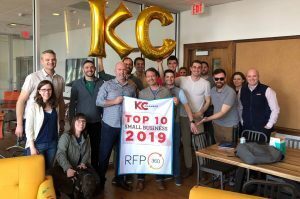
Mr. K Award finalists: RFP360, KC Bier Co., Charlie Hustle among Chamber’s Top 10 Small Businesses
From one of Kansas City’s most popular breweries to a startup that streamlines the RFP process to an apparel company known for its big heart, 10 small businesses received surprise visits Friday — each now a finalist for the prestigious Mr. K Award. “The Greater Kansas City Chamber of Commerce showered us with confetti today…

New industry-specific LaunchKC accelerators expected to bring more dollars, winners
Applications for this year’s LaunchKC program are going vertical, said Drew Solomon, announcing plans for three industry-specific accelerators — two of which will launch new funding-rich demo days in the fall. “We’ve always wanted to grow and expand not only the competition, but the program as a whole,” said Solomon, chair of the LaunchKC program.…

We Create KC report: Half of top VC-backed companies tapped early-stage support
In 2018, 50 percent of the top venture capital-funded companies in Kansas City got their start with early-stage investment programs that emerged after 2012, according to We Create KC 2019, KCSourceLink’s sixth annual state of entrepreneurship report. “That high percentage shows us how important these early-stage investment programs are to our entrepreneurs and our ecosystem,”…

Butter to eSports: Sprint Accelerator draws new class of startups from coasts to Canada
Josh Green is used to navigating the streets of Brooklyn, hand delivering artisanal butters, chilled in the back of a pickup, he recalled. As founder of Brooklyn Buttery — which crafted a line of flavor-packed, sustainably sourced compound butters designed to bring a high end restaurant experience to home cooks — the entrepreneur’s growth has now…