

106-years-young Hallmark is evolving with the collaborative economy
April 28, 2016 | Kat Hungerford
The collaborative economy is everywhere.
You may have heard it by another name — like the sharing, on-demand, access, peer, freelance or gig economy. You’ve definitely heard of its national headliners Uber and Airbnb, but it also has a local presence with firms like PopBookings, Farmobile and MachineryLink.

Jeremiah Owyang
Since first showing up on radars eight years ago, the collaborative economy has grown to a $15 billion powerhouse, said Crowd Companies founder Jeremiah Owyang during a Thursday presentation at Hallmark. Within the next ten years, he said revenue is forecasted to swell to $335 billion.
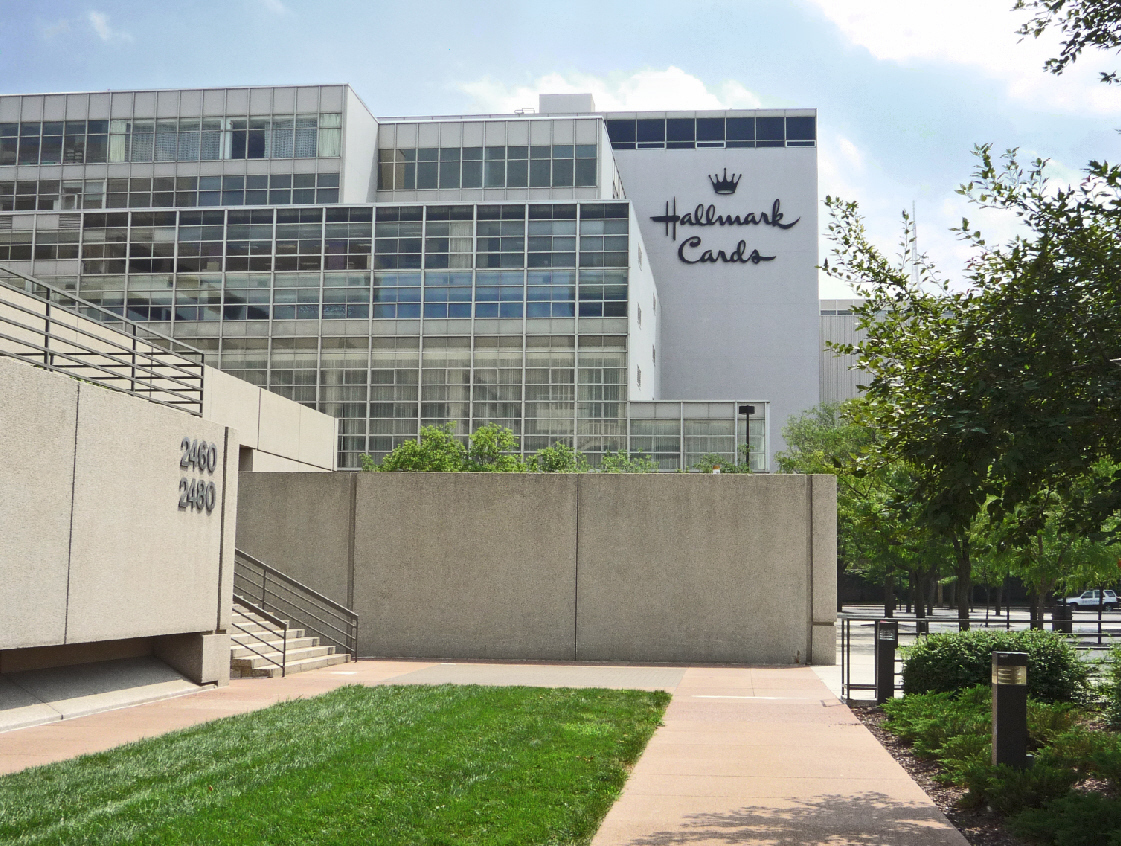
Crowd Companies members — among them Kansas City-headquartered Hallmark — are Fortune 1000 enterprises that know the collaborative economy is here to stay. They have realized the need and opportunity for innovation within this comparatively young economy, said Mary Putman, Hallmark’s vice president of digital innovation strategy.
“Jeremiah is a thought leader who works with brands to help solve business problems,” Putman said. “We wanted to learn from him and other brands that are also trying to figure out how to best provide value in this new paradigm.”
The collaborative economy is an economic model where common technologies enable people to get what they need directly from each other, Owyang said. Its peer-to-peer nature has created a new kind of brand loyalty, he added.
“The trust level that we had before was a company’s logo — like here at Hallmark, it’s the crown,” Owyang said. “But a different trust market has emerged. It’s the five-star rating.”
Recognising these kinds of changes, established corporations are finding new and innovative ways to bring the collaborative economy into their business models. Auto makers like BMW, Daimler and Audi have launched car-sharing services. Whole Foods teamed up with Instacart to let consumers shop their stores from home. And Hallmark is working with local craftsmen via its Crafters & Co. brand to bring new products into its stores, Putman said.
Corporate innovation and adaptation like this isn’t easy, Owyang points out.
“You have to give props to big companies for opening up to the crowd,” he said. “There’s always this risk and reward when working with people who are not directly your employees.”
Hallmark is also working on additional collaborative economy innovations. As brick-and-mortar stores switch their focuses to better survive ecommerce competition, Hallmark hopes to partner with sharing economy companies to meet consumer demands.
“We want to use the crowd to provide even better products and save people time,” Putnam said. “For example, by using Postmates or Uber Rush to deliver products (directly to consumers).”
But the collaborative economy isn’t the final stage of economic evolution, according to Owyang. Big companies can expect to have to continually innovate to stay with fast-paced times.
“Unfortunately, some people in the (collaborative economy) crowd are going to be supplanted or replaced by robots,” he said. “The autonomous economy is the next phase, and it’s on the horizon and coming fast.”
Owyang defines the autonomous economy as a future state when intelligent technology systems operate without humans to enable new business models in an efficient society. Think self-driving vehicles, drone delivery and AI customer service. We will first be capable of realizing this new economy in 2022, he says, although full integration will take much longer.
Hallmark isn’t worried about its place in such a future, according to Putman. In fact, brands like Hallmark that facilitate connections between people can expect to thrive in such an environment, she added.
“The automated economy is an emerging space that offers opportunity and will be full of change, but one thing never changes and that is the desire for people to stay connected with and do meaningful gestures for those they care about most,” Putman said. “As people have more time in an automated world, Hallmark can help them with these underlying human needs.”
Below is Owyang’s record of the major businesses operating in within the collaborative economy.


Featured Business

2016 Startups to Watch
stats here
Related Posts on Startland News
Meet the Kauffman Foundation’s newest board member
The Ewing Marion Kauffman Foundation has added a new member to its high-caliber board of trustees. The foundation announced Thursday that Esther L. George — the current president and CEO of the Federal Reserve Bank of Kansas City — will serve on its board. As a member of the board, George will support the foundation’s…

15 local companies selected for latest ScaleUP cohort
ScaleUp Kansas City announced Thursday the 15 entrepreneurs that were selected to the program’s latest cohort. Since its launch in 2015, 62 local business owners have graduated from the four-month program, which offers immersive training for companies looking to scale. “ScaleUP! KC has been — and continues to be — such a critical program for…
Hyper-sustainable coffee shop opens in Hyde Park
A Kansas City coffee roaster with a focus on sustainability and creating zero landfill waste is hoping its first shop will be a model for cafes around the nation. A product of the Kansas City-based Paris Brothers food and coffee distribution company, Mother Earth Coffee has been available in local grocery stores and via wholesale…
Silicon Valley accelerator 500 Startups invests in KC tech firm
A Kansas City firm planning to transform the world with its artificial intelligence tech recently landed in a highly-esteemed startup accelerator in Silicon Valley. Mycroft announced Wednesday that it’s in the latest cohort of 500 Startups, a global venture capital seed fund and startup accelerator that manages $200 million in assets and has invested in…