

The WTF Series: Triple constraint
March 10, 2016 | Ben Kittrell

One of the hardest parts of software development is managing stakeholder expectations.
Of course, everyone wants as much as they can get, as fast as possible, for the lowest price. Why wouldn’t you?

Ben Kittrell
The problem is that most programmers get frustrated when a stakeholder asks for too much too fast, and don’t know how to push back. Some of us aren’t exactly social butterflies. That’s why we borrowed a project management term called the triple constraint.
This is usually explained by drawing a triangle and writing one word at each corner: “scope”, “cost” and “time.” These corners represent what will be included in the project, how much it will cost and how long it will take, respectively. 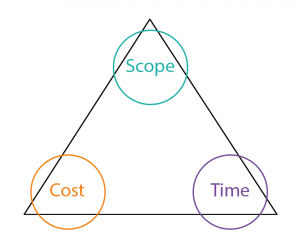
With the triple constraint, you can’t change one corner without affecting the others. If you add features, it’s either going to cost more or take more time. If you want to get it done faster, you have to remove features or pay more. It’s a handy way to explain that you can’t get something for nothing. The model, of course, can be applied to many different industries.
Another popular way of using the triple constraint is to say “Among the three options of fast, good and cheap, you can choose two.” If you want it fast and good, it’s not going to be cheap. If you want it cheap and fast, it’s probably not going to be very good.
This not only helps the developer set guidelines for what’s possible, it helps stakeholders understand what their options are. Usually, after I explain this to a client, they’re happy to say something like “Well we have to get this done in two months and this is our budget, so what features can we cut?”
Ben Kittrell is the co-founder of Doodlekit and an advisor for startups and small businesses. Kittrell also is host of Spare Room Radio, a podcast that features Kansas City entrepreneurs.


2016 Startups to Watch
stats here
Related Posts on Startland News

KC luxury watch startup, Niall lands in Tivol stores
Luxury timepiece-maker Niall will soon be selling its watches with one of Kansas City’s most prestigious jewelers. The Kansas City-based watchmaker will start selling its timepieces at two Kansas City Tivol stores on June 18, offering it both exposure and validation, Niall CEO Mike Wilson said. Tivol is the company’s first major retailer, Wilson said.…

Kauffman Foundation selects familiar face as new CEO
After a yearlong, nationwide search for a new CEO, the Ewing Marion Kauffman Foundation wound up selecting one of its own. The Kansas City-based foundation selected Wendy Guillies as the Foundation’s new president and CEO. Guillies, who previously served as interim CEO and vice president of communications for the foundation, joined the organization in April…

EyeVerify enters new European market with Vodafone deal
Biometrics tech company EyeVerify is continuing its global expansion into Europe with a new deal. The Kansas City-based firm recently announced a licensing and marketing agreement with Turkish security tech company Olcsan CAD. The deal makes Olcsan the exclusive distributor of EyeVerify’s eye vein biometrics technology, or Eyeprint ID, throughout Turkey. “We’re pleased to partner…

What’s in a name? MindMixer gets new moniker
A year after its move to Kansas City, MindMixer is making a name change. Formerly based in Omaha, MindMixer now will go by the name of its new software product, mySidewalk, which engages communities to share ideas and stay informed of new initiatives. “Like all businesses, the more we learn about the people we serve,…