

Roberts: Can’t stand the options? Disrupt elections with a vote for nobody
March 18, 2016 | Melissa Roberts
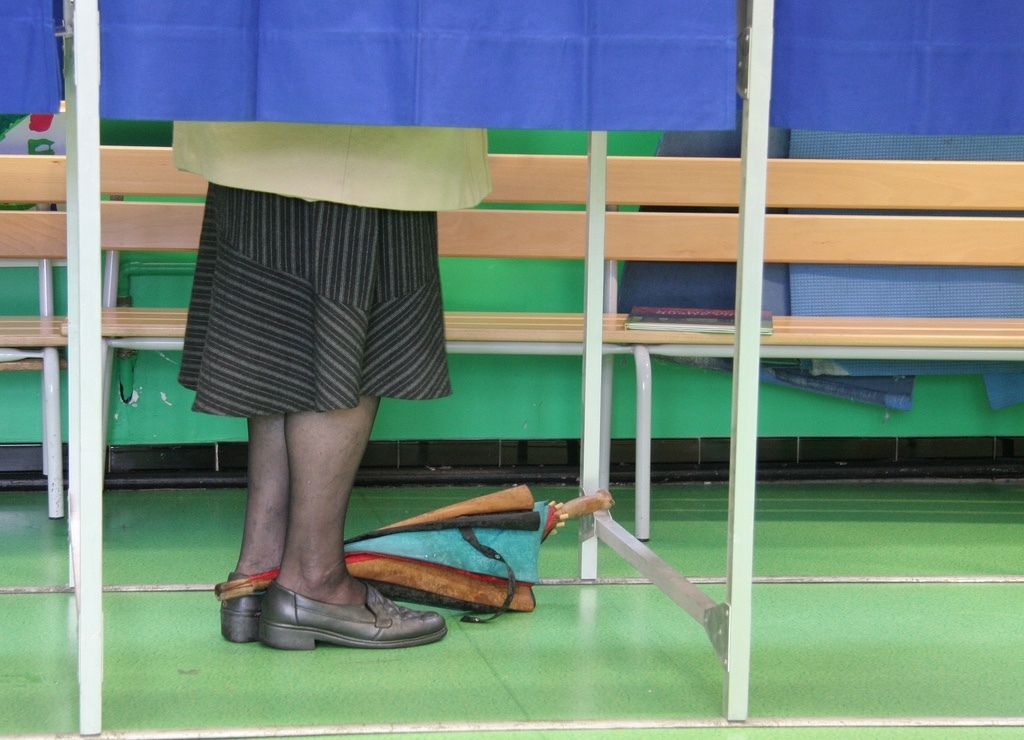
Editor’s Note: The following piece was written by Melissa Roberts on how voters who have made the decision not to vote for the available candidates should still submit a ballot — even if it’s blank. The opinions expressed in this commentary are hers.
It’s election season, which means it’s probably best to avoid Facebook altogether.
Despite the fact that I’ve spent my career registering, persuading and reminding people to vote, I really don’t blame people who are ready to write off politics entirely this year. The level of theater, undeserved pomp, overt racism and sometimes just flat yelling is enough to turn off even the most dedicated civic activist. What’s more, it’s hard to get excited when you feel like politics is stacked against you. Startups can’t afford lobbyists on staff, so our voices can appear to be lost in the fray.

Roberts
Of course, you should get off your duff and vote. But many people who can’t make up their mind or don’t like their options choose not to vote altogether. That is the reality. So, if you fall into that rapidly growing group that consciously chooses not to engage, I’m talking to you.
This year, instead of not voting, I’m asking you to vote — for nobody. Yes, you can do that.
In times like these, it’s easy to feel as if you can’t change the system. And that’s because, at the most visible level, you really can’t.
Change in politics, as in anything, requires a long-term view that is hard to fathom at the end of a long day. It requires grooming reasonable, dedicated and ethical local leaders now, and knowing that it will take a career-long wait for those people to rise to positions of great power and influence.
“Many people who decline to vote aren’t undecided at all. In fact, they’re entirely convinced that none of the people running are the right one for the job.” – Melissa Roberts
So this year, I don’t blame you for wanting to stay home from the polls altogether. There’s just one problem. When you don’t vote, the only person who knows why you didn’t is you. That leaves everyone else free to ascribe to you any trait they please — and people do.
They say that you’re turned off on today’s politics (which might be true), but they also say that you’re busy, disengaged, lazy, uninformed, uncaring, self-absorbed, whiny, careless, forgetful or unrealistic. Worst of all, they might even call you “undecided,” which is the biggest, most pervasive lie of all.
Many people who decline to vote aren’t undecided at all. In fact, they’re entirely convinced that none of the people running are the right one for the job.
What are your options?
At the ballot box, there may not seem to be many good options this time around. But to convince yourself that this means you shouldn’t take the time vote is shortsighted. Besides, it’s really quite easy.
You should:
- Double-check that you’re registered to vote.
- Find your polling place online.
- Go there between the hours of 7 a.m. and 8 p.m. on Election Day.
- Buy something at the bake sale on the way in, because all voters deserve a cookie.
- Walk up to the table and help the poll volunteer find your name on the list. (“Yes, it’s right there. No, that’s my sister. Right there.”)
- If they tell you that you’re not on the list you should find the right polling location, go there and start over.
- If you don’t have time to make it to the right one, you should demand a provisional ballot because it’s your constitutional right, and you shouldn’t leave until you get one.
- Go into the booth, and check…no boxes.
- Leave, hand your ballot to the poll worker on the way out, and consider yourself a real American. A voter.
Now, what is it that you just did?
The process of voting for no one is called casting a blank ballot. It is perfectly acceptable, and in fact, the only reasonable way to formally say you don’t like your options.
Here’s why it’s important.
Imagine that candidates Joe Blowhard and Jane Sleezeball are running for office. One hundred people are eligible to vote. 90 of the prospective voters think both Joe and Jane are completely insane and they really don’t want to choose either of them and so they stay home on Election Day. That means only 10 people actually show up to cast a ballot.
Joe wins with eight out of ten votes. The press declares his victory a landslide since he won 80 percent of the vote, allowing him to push his crazy agenda with the appearance of overwhelming public support. Second, it’s very likely that those ten voters represent only the most polarized of views in the political system. I say this is likely because if 90 percent of the American public thinks someone is crazy and you do not, you are probably crazy.
Alternately, what would happen if every one of the 90 disengaged people cast a blank ballot? Joe, the previously wildly popular winner would still win, but with 8 percent of the vote, rather than 80 percent. That’s hardly a victory, much less a landslide, and Joe’s crazy agenda would suffer because it was only supported by a small, crazy minority.
Everyone would know that Joe was elected, not with the support of the majority of voters but rather in spite of the wishes of 90 percent of them — a true majority mandate.
The only way to effect change is to make yourself heard.
Perhaps it’s just the optimist in me, but I think that if this happened — maybe, just maybe — the system would change.
People might start to realize that their reasonable views represent the norm. More reasonable people might seek public office, knowing they won’t have to pander to extremists to be elected. Politics might then change to represent a way in which reasonable people engage in thoughtful, respectful debate. Policies might represent the interests of people who are building the future, rather than those who can pay for armies of influence and SuperPACs. The media might highlight compassion over fear-mongering.
That hypothetical future could be a figment of my imagination — or it could be a very real possibility. We won’t know unless you take the time to vote at each and every election. The problem isn’t that you’re too busy. The problem isn’t that you’re lazy or uncaring. The problem isn’t even that you’re uninformed compared to everyone else. Who really has time to know everything?
The problem is that you’ve forgotten the power of your vote. It’s there, dormant and waiting. Use it.
Melissa Roberts is president of Free State Strategy Group, a Kansas City-based firm that offers public relations, content marketing and community-building services. She is also marketing director of the Enterprise Center of Johnson County (ECJC), a not-for-profit organization that connects entrepreneurs with the resources they need to grow and scale.


2016 Startups to Watch
stats here
Related Posts on Startland News
We all need help, honey: Nearly 3/4 of entrepreneurs are haunted by depression (Holistic Hustle)
Kharissa Forte is a writer, certified health coach, and columnist for Startland News. For more of her self-care tips on how to keep your cup full, visit graceandgrind.co. You did it. After all the nights dreaming about how amazing it could be and overcoming the endless stream of what-ifs that stopped you from moving forward…
Deploying tech to today’s American warfighter: FirePoint taps startup space to help modernize military
Startland News’ Startup Road Trip series explores innovative and uncommon ideas finding success in rural America and Midwestern startup hubs outside the Kansas City metro. This series is possible thanks to the Ewing Marion Kauffman Foundation, which leads a collaborative, nationwide effort to identify and remove large and small barriers to new business creation. Modern…
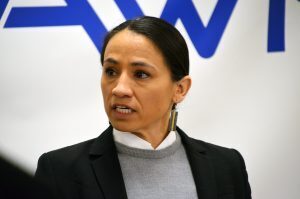
WATCH: Small biz struggles didn’t begin with pandemic pinch, says Rep. Davids; solutions go beyond COVID relief
The effects of the COVID-19 pandemic exposed and exaggerated pain points that small business owners were already facing before the global health crisis, said U.S. Rep. Sharice Davids. “I really think that what the pandemic did was, in some ways, highlighted the things that we should have been focusing on. … I know a lot…

SnapIT scores lucrative government contract with $50B ceiling in emerging tech space
An Overland Park IT firm’s selection to deliver technology solutions to federal agencies is the latest evolution of the Johnson County business, which has seen rapid growth over the past three years as it expanded its focus. SnapIT Solutions, a high-tech services and tech training firm headquartered in Johnson County, was tapped for the second…