

Sharing economy labors over lawsuits, paradigm shift for cyber security law
March 17, 2016 | Kat Hungerford

Here’s this week’s dish on the sharing economy, the issues with backdoor encryption, and corporate-to-startup collaboration. Check out more in this series here.
AustinInno – The gig economy is at a crossroads as lawsuits, innovative benefits expand
As the sharing or “gig” economy expands with companies like Uber and Lyft, it’s not just permit regulations that need to catch up with the times. It’s labor laws, too.
While independent contractor status legally might apply to most people “working for” sharing economy companies, it’s keeping workers from accessing basic full-time benefits at a low cost. The new economy needs to revamp traditional benefits to make them portable, according to the piece.
Portable benefits allow workers to transfer vacation time, health insurance, retirement planning and other perks of traditional full-time employment from job to job as they work with multiple employers. The effort to create a portable benefit program or law, however, has been stalled by ongoing lawsuit. And legislators’ idea that slight changes to decades-old laws will fix the issue hasn’t helped.
While Kansas City has been able to model Uber regulations after cities already using the service, it’s like other cities in that portable benefits are still a pie-in-the-sky idea.
Silicon Prairie News – Former White House CIO on encryption: ‘Backdoors are not architecturally sound’
Cyber security is priority one for most companies these days (or at least, it should be). Enter Uncle Sam, who says customer privacy is only paramount when he isn’t knocking on the door.
The issue has blown up in a giant kerfuffle between Apple and the FBI over the company’s refusal to unlock a mass shooter’s iPhone under court order. Doing so would in effect create a precedent of must-have backdoors or weaker encryption, which are absolutely security risks, according to Theresa Payton, who served as a CIO for the White House from 2006 to 2008.
The solution shouldn’t just revise regulation, she argues. What we need is a brand new design, an evolution in technology and case-by-case data sharing.
“We need the brightest minds in the room to create something that protects your and my privacy that doesn’t allow for weaker encryption,” Payton said. “And at the same time, if there’s a court order, there’s an opportunity … for that data to be produced.”
EQ – Give and take: How St. Louis’ community drives collaboration between startups and banks
Startups often aim to be disrupters of established businesses and industries. So what’s St. Louis fintech startup Fluent doing with its UMB partnership? Answer: building a win-win solution.
As a startup, Fluent is more agile and less hamstrung by regulations. Developing, testing and ultimately launching fintech happens faster than Kansas City-based UMB could hope to accomplish on its own. Meanwhile, UMB brings a host of resources, contacts and experience.
Partnerships like this can only happen in a closely collaborative community — one with open lines of communication between corporate and startup worlds, according to the article.


2016 Startups to Watch
stats here
Related Posts on Startland News

GigaPower coming to northeastern Johnson County
AT&T announced this week that the company is expanding availability of U-Verse with GigaPower, its latest high-speed internet service aiming to compete against Google Fiber. The service is coming to Fairway, Mission Hills and Prairie Village, the company announced Monday. GigaPower appeared in the Kansas City metro area in February in parts of Kansas City,…

Startup families: 3 similarities between my new baby and business
Starting a company is hard. Having a baby is hard. Doing both at the same time is kind of insane. But one major advantage of living in the Midwest is that founders have the ability to do both. In the coming months other founders will share their stories, experiences, and advice for having the best…

KC startup lands six PGA partnerships, more on the way
Jason Gregory is feeling pretty confident his company will be the exclusive partner for at least half of the PGA American independent sections by next year. CaddyX is a golf bag transportation company that takes the leg work out of golfer’s experience by letting them schedule pick up for their clubs with the click of…
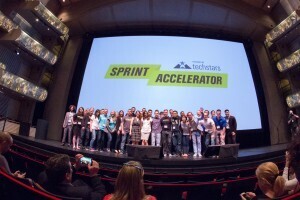
Sprint Accelerator opens applications, dons new name
Kansas City’s top business accelerator is now accepting applications for a wider applicant pool after a recent — albeit minimal — name change. The Sprint Mobile Accelerator — formerly the Sprint Mobile Health Accelerator — lightened up its name to better reflect its broader focus on boosting mobile-centric startups. Led by Boulder-based Techstars, the accelerator…