

We have liftoff! LaunchCode to boost Kansas City tech talent
March 29, 2016 | Bobby Burch
About 3,500 tech firms need to fill 2,300 open positions in the Kansas City area, according to KCnext.
Usually, that means businesses, both large and small, spar over the same people, snatching up programming talent wherever possible, including from their local neighbors. It makes for more than just awkward networking events among tech executives — the battle stifles the growth of the tech sector, and by connection, the area economy.
That’s the plight Jim McKelvey noticed when trying to grow St. Louis-based Square, now an international firm providing point-of-sale technology.
[pullquote]“It’s about creating new talent — it’s not about some game of musical chairs with people who have one job and then get recruited some place else.” – Jim McKelvey[/pullquote]
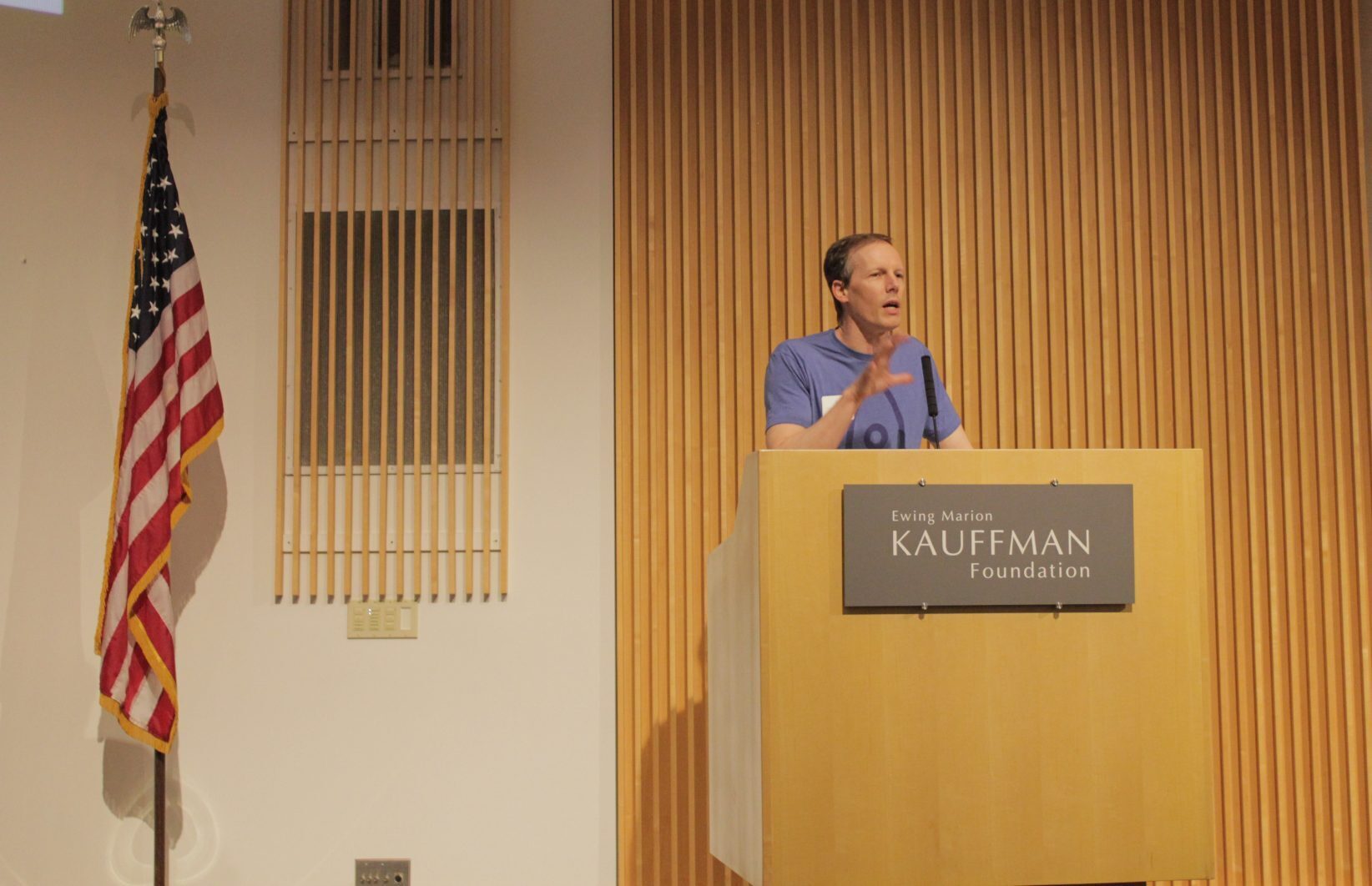
“Jack Dorsey (Square co-founder) and I wanted to build part of our company in our home town — and we couldn’t do it,” McKelvey said. “Every time we’d hire an engineer, I’d get a call from the company where we hired them from — from some irate CIO or sometimes an irate CEO — saying ‘Jim, why’d you steal Sally? She was our best Java person.’ ‘I didn’t steal her. It’s a free market, man.’ … It was obvious that the only way we could grow our company was at the expense of the other firms in the town.”
That frustration led McKelvey to think of a way to not simply snag talent where he could, but rather to grow the overall pool of talent in his hometown. That idea manifested itself in the form of LaunchCode, a nonprofit organization whose mission is to accelerate tech workforce development.
“It’s about creating new talent — it’s not about some game of musical chairs with people who have one job and then get recruited some place else,” McKelvey said. “We need new talent because there are great people in these cities who can take thee jobs if they just had two things: One, if they knew what to study … and then if we can open the doors to employers.”
Already, LaunchCode is making good on its promise to improve the area’s coding competency and is offering a free 16-week computer science course. The course will model Harvard University’s introduction to computer science class, which taps the expertise of area professionals. In this case, scientists at the University of Missouri-Kansas City’s School of Computing and Engineering will offer a preface to the world of programming. The course starts April 13.
The organization expanded to Kansas City in January and has already received more than $500,000 for its area operations. Founded in 2013, LaunchCode is currently partnering with a variety of Kansas City companies — including EyeVerify, UMB, blooom and Venture360 — and connecting with the region’s developers. The nonprofit’s goal is to support Kansas City’s tech ecosystem and provide a new pipeline of homegrown tech talent.
While successful, McKelvey said that LaunchCode faces steep challenges.
“Over the last two years, we’ve refined this model and we’re really excited to bring it to Kansas City,” McKelvey said. “But it is a new model. And models that are new come with an extra burden because they have to override what has been before and displace models that everyone holds in their heads.”
To buck those notions, McKelvey tackled three misconceptions he often faces when pitching LaunchCode to partner organizations. Here’s a quick summary of those misconceptions:
1) LaunchCode is a charity.
“Do not ever feel sorry for a LaunchCode candidate,” he said. “Don’t ever think that we’re sending you someone that really needs a job. We’re sending you somebody who’s met a talent standard that’s absolute.”
2) LaunchCode is a recruiter.
“Yes, we place people in computing jobs, but LaunchCode is about new, net talent,” McKelvey said. “Our mission is to take people who were not previously working as programmers and get them jobs. … We are a talent pipeline.”
3) LaunchCode is too good to be true.
“There’s no way you can take somebody with talent, give them a free education in six months or less and have that be sufficient to land a real job — a job where the employer is not taking pity on you but is paying you for what you know,” he said. “We can do that. This is unbelievable, and it’s unbelievable because a lot of the people who are the best candidates for these jobs have tried before and have been burned. They’ve been burned by for-profit educators. They’ve been burned by schools that have programs that aren’t what businesses want. … This isn’t a fantasy. This works.”


2016 Startups to Watch
stats here
Related Posts on Startland News

KC favorites eye World Cup: How to become ‘the spot’ for visitors without losing KC flavor
Even a visitor can become a repeat customer, said Dulcinea Herrera, stressing the importance of Kansas City businesses making their establishments a destination — not just a one-time stopover or accidental find — for international fans and other out-of-town guests when the FIFA World Cup arrives next summer. The goal: Win them over with intentional…
Meet LaunchKC’s winners: $60K prize today; world headquarters in KC tomorrow
Every iconic company headquartered in Kansas City — from Helzberg Diamonds to Hallmark — started with an entrepreneur hoping to scale a small idea into big impact, said Jim Erickson, teasing a next wave of emerging startups and the latest winners of the LaunchKC grants competition. Eight early-stage companies were announced Monday as recipients of…

Tesseract pairs one-button robotic badge with real-time, multi-industry workforce tracking
A new site management platform — complete with wearable robots designed to automatically document work as it happens — is expected to help construction, infrastructure, and military teams gain real-time clarity across their projects and workforce, said John Boucard. “Instead of relying on spreadsheets, manual reporting, or guesswork, leaders now have continuous visual and sensor…

LISTEN: KoraLabs connects AI to the field, helping agtech grow a more sustainable future
On this episode of our 12-part Plug and Play Topeka podcast series, we speak with Luca Corinzia of KoraLabs — an agtech pioneer based in Switzerland that’s bridging the gap between scattered farm data and actionable insights. KoraLabs’ AI-driven “digital twin” platform integrates field data, satellite imagery, soil and weather models to help agronomists and…