

Why coastal investors ignore the Midwest and what’s next for federal startup policy
January 14, 2016 | Kat Hungerford

Here are this week’s watercooler conversation-starters on why inland states struggle to find funding, coming issues in federal entrepreneurship policy and the success of innovation districts that are cropping up around the U.S. (and in Kansas City). More in this series here.
International Business Times: Finding venture capital far from the coasts
Of the $48.3 billion spent in the U.S. on venture capital in 2014, 80 percent of those dollars went to companies in just five states, with California receiving a whopping 56 percent. Although there’s a lot feeding into why that happens, the article distills it down to:
- Most investors are based on the coasts, and they like to work face-to-face with the companies on which they spend money.
- Investors are often biased against inland states, assuming there’s nothing here of interest.
- Coastal investment firms control massive amounts of capital, making them less likely to fund the small rounds with which companies located inland start.
On the brighter side, the article warns us not to give up hope. Thanks to angel investing becoming a mainstream practice and many central states launching their own investment funds, the gap is (very slowly) closing. The high cost of living and rabid competition is also driving many founders away from the coasts, and the money often follows them.
Kauffman Foundation: What’s next for entrepreneurship policy?
An election year usually means limited action on the federal policy front, but 2016 holds prospective wins — and challenges — for entrepreneurs.The Kauffman foundation highlighted these areas of change:
- The sharing economy will continue to disrupt traditional industries, especially those riddled with inefficiency and high costs like healthcare. Policy will continue to struggle to keep up, so expect more legal and political wars to follow.
- Equity crowdfunding will launch, but it will be slow-going to develop the infrastructure necessary to support the hoped-for reality.
- President Obama will leave on a high note for startup policy as having the first administration that recognized the need for a separate set of policies to help startups. He set this trend via initiatives like Startup America, the JOBS Act, and moving the Small Business Administration to the cabinet-level. He’ll also convene an entrepreneurship ministerial at the Global Entrepreneurship Congress this March.
Urban Land: Making the case for more innovation districts
Over the last decade, innovation districts have hatched all over the globe. These tech-centric developments are different from traditional business districts in that they are almost universally anchored by a major university, hospital, corporation or research institution. They also often house companies of varied industries at different growth stages and have focus to work together to foster new ideas, products and tech.
U.S. examples of the new model include: the St. Louis, Mo. Cortext Innovation Community; the Durham, N.C.-based Duke Clinical Research Institute and the Cornell Tech Campus in New York City.
These carefully-planned, intentional innovation centers are slowly taking the place of isolated corporate campuses. Kansas City is already home to smaller-scale examples of the innovation district model with its Think Big Coworking building and the forthcoming Westport Commons.

Featured Business

2016 Startups to Watch
stats here
Related Posts on Startland News

Biz class to barista: UMKC student’s mobile matcha cart hand-whisks crowds of thirsty fans
Editor’s note: The following story was published by KCUR, Kansas City’s NPR member station, and a fellow member of the KC Media Collective. Click here to read the original story or here to sign up for KCUR’s email newsletter. HerCafe, a matcha business founded by a University of Missouri-Kansas City student and her friend, has found success with its weekend…
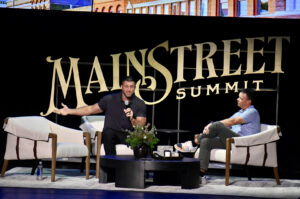
Tim Tebow to entrepreneurs: Embrace the heavy lift if you want to reap life’s real profits
COLUMBIA, Mo. — Business should be about driving impact, not just scoring another win, said former NFL quarterback Tim Tebow — challenging Midwest entrepreneurs, community builders, and investors to consider outcomes that boost others, not just one’s personal pocketbook. “Probably everybody in this room has been super blessed with skill sets, resources, relationships, opportunities, companies,…

Here’s how a Prospect renewal project invests in both those who built KC and the city’s future
Economic development initiatives are measured not just in buildings, but in opportunity, said Melissa Patterson Hazley, lauding the use of the Central City Economic Development (CCED) Sales Tax Program to transform underutilized parcels in Kansas City into modern, energy-efficient housing that support long-term neighborhood vitality. “Projects like Prospect Summit represent the intentional work of making…

Fusing talent, passion: Serial founder trades his Screamin Cow for offshore talent hiring platform
Brad Starnes’ itch to lean into a newly realized pain point at the end of 2024 led to the acquisition of his Screamin Cow Marketing Group and the launch of another passion project, the former UMKC Student Entrepreneur of the Year shared. With the move — which sees Screamin Cow transitioned to Builders of Authority…