

Roberts: My New Year’s resolution is a lie
January 11, 2016 | Melissa Roberts

Someone recently asked me what my New Year’s resolution was. I panicked and made one up on the spot. It was about learning to bake. I feel badly about that for a few reasons:
- It was inane;
- It was a lie—nothing short of a psychotic break could change my personality to give me the patience and attention to detail needed to become a good baker; and
- I hadn’t really set one. I’m coming clean: the truth is, I have never in my life successfully set a New Year’s resolution.
But it gets worse. The last time I officially set a goal was about five years ago, and I did it because my boss forced me to. If you’re one of those people (like me) who ended up an entrepreneur by way of the corporate cubicle, you might also have similar feelings about professional goal-setting and performance reviews. While most people would agree that feedback and communication are essential to any boss/employee relationship, I’ve always hated nerve-wracking performance evaluations.
So under pressure five years ago, I came up with a list of goals. They probably read something like:
“I will build a relationship with three new clients in each quarter of 2011 as evidenced by email feedback,” or
“I will achieve a 5% increase in profitability for each account that I’m placed on in 2011 by pitching add-on digital services.”
None of these had any relevance to my true goals at the time, which were to get a raise, get a promotion and become indispensable to the clients with whom I worked, in that order. Or in a bigger sense, to pay my Washington, D.C. rent, student loans and power bill all in the same month and to know that I would be able to maintain that “luxury” lifestyle for the foreseeable future.
Ultimately, I got the raise, I got the promotion and I think I achieved a level of indispensability to my clients. (They seemed pretty upset when I quit my job and moved home to Kansas City, but you’d have to ask them.) In the end, the measurable goals that I was forced to set felt meaningless and left me with a resistance to the practice.
Perhaps this resistance is unique to people with type-A personalities. Perhaps it’s unique only to me. Back then, I equated reaching measurable goals with achieving success and finding happiness. I went home each day feeling stressed; I built up a Pavlovian response to the buzz of my two Blackberries; I went in for a routine check up and discovered I had the blood pressure of a 65-year-old man. So why didn’t I realize that all this goal-setting and follow-through was making me unhappy? Because I was too busy achieving every “goal” that I set.
Once I left that environment, I also left behind the practice of setting goals.
Today I live in the infinitely less-structured world of entrepreneurship, where setting goals feels impossible. In my corporate world, the criteria for success changed rarely, if ever. In the entrepreneurial world, the criteria for success can change from not going belly up to not misspending $2 million dollars in one day. Success in entrepreneurship is flexible and dynamic, to say the least, and setting a goal for the entire year quickly loses relevance.
This year, I’m not making a measurable New Year’s resolution or undergoing a personal performance review. I’m not trying to have it all or be perfect by the year’s end. I’m trying to create more opportunities for entrepreneurs to access seed capital. I’m trying to maintain financial stability through my first year of home ownership. I’m not going to stop from trying to pursue big ideas, even though I know it might be impossible for one person to do alone. I’m probably not getting into shape. And I’m sure-as-hell not learning how to bake.
I don’t have a New Year’s resolution, but after all this I am wondering if I should leave my corporate background behind forever or give goal setting a second chance.
What do you think? Are goals useful or superficial?
Melissa Roberts is president of Free State Strategy Group, a Kansas City-based firm that offers public relations, content marketing and community-building services. She is also marketing director for the Enterprise Center of Johnson County (ECJC), a not-for-profit organization that connects entrepreneurs with the resources they need to grow and scale.


2016 Startups to Watch
stats here
Related Posts on Startland News

Firsthand from a founder: Applying for a SBA disaster loan? Come prepared with startup financials
Editor’s note: The opinions expressed in this commentary are the author’s alone. Serial entrepreneur Bo Lais is the founder of Lula, co-founder of the KC Collective founder network, and a current fellow in Pipeline Entrepreneurs. This op-ed is part of Startland News’ ongoing coverage of the impact of Coronavirus (COVID-19) on Kansas City’s entrepreneur community,…

Blockchain Basics: It’s more than a tech buzzword, but how does it actually work?
Editor’s note: The opinions expressed in this commentary are the author’s alone. Kenyon Briggs is an attorney at Husch Blackwell in Kansas City. This op-ed is part of a limited series on blockchain sponsored by Husch Blackwell. What is blockchain technology? Technically precise definitions found on Google define it as “a distributed, decentralized, public ledger.”…
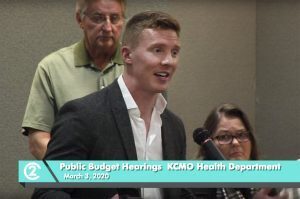
Open letter to KCMO: Entrepreneur community makes 0.1 percent budget ask ‘for backbone of our economy’
Editor’s note: The following open letter was produced independently of Startland News by a coalition of small business and entrepreneur support leaders and signed by more than 210 members of Kansas City’s startup and business community. The opinions expressed in this commentary are the authors’ alone. The signatories are provided courtesy of the authors. Mayor Quinton…
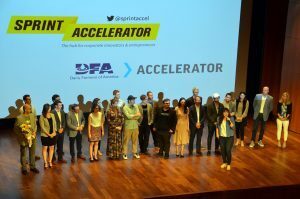
Sprint VP: Corporate engagement helps drive KC startup ecosystem, next-generations of innovation
Editor’s note: The opinions expressed in this commentary are the author’s alone. Bryan Fries is vice president of 5G marketing strategy and global services for Sprint. From job creation and economic growth to the increase in competition and innovation, Kansas City-area startups and entrepreneurs play a vital role within the ecosystem of our community. And…