

Crowdfunding law has changed, here’s what you need to know
January 7, 2016 | Malika Simmons
Editors note: This piece was originally published Jan. 7, 2016. The Securities and Exchange Commission’s expanded rules for equity crowdfunding went into effect May 16.
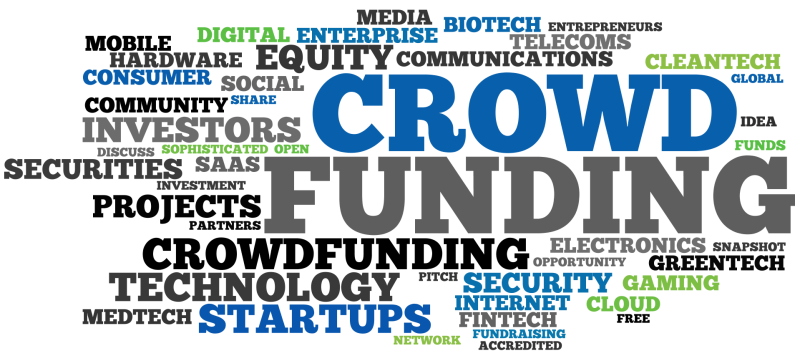
This past October, the SEC unveiled its final equity crowdfunding regulations set to take effect May 16. For the first time in the U.S., entrepreneurs will be able to leverage their company’s equity to gain investors through crowdfunding. Think Shark Tank, but on the world stage.
The SEC’s regulations come with a hefty learning curve, so here’s what you should know before you jump into the equity crowdfunding ocean.
- Equity crowdfunding is completely different from donor-based crowdfunding like Kickstarter, GoFundMe, or Indigogo. On donor-based platforms, crowdfunded money is classified as a gift or exchange of services. Equity-based crowdfunding means that entrepreneurs sell ownership percentages (securities) of their company in exchange for investment money.
- There’s a ton of red tape before a company can start selling securities. In addition to filing an annual report with the SEC and providing it to all investors, the Commission has a laundry list of requirements a company has to disclose to prospective investors, including:
- The company’s method for determining the security price
- How much money the company is attempting to raise
- The company’s financial condition, backed up by financial statements and documents
- A detailed business description
- What the investment money will be used for
- Information about officers, directors, and owners with more than a 20 percent stake
- Certain related-party transactions
- In any 12-month period, companies can raise a maximum of $1 million from individual investors. The new regulations allow anyone to join the equity crowdfunding game.
- But it costs money to raise money. The SEC estimates that registering and meeting their requirements will cost $20,500-$56,500 for companies seeking to raise between $100,000-$500,000. That figure doesn’t include the marketing costs associated with leveraging a successful crowdfunding campaign. Costs would include online platform fees totaling $15,000-$30,000, preparation and filing of SEC forms at $2,500-$5,000, issuing an annual report at $1,500-$3,500, and financial statement audits at $1,500-$18,000.
- There’s a limit to how much individual investors can invest in a 12-month period. Now, the average Joe Schmo will have more access to investing in early-stage companies so the SEC wanted to make sure it protects the less investment-savvy public. For investors with an annual income or net worth less than $100,000 (whichever one is less), it caps out at $2,000 or 5 percent (whichever amount is greater). For an annual income or net worth more than $100,000, that limit is 10%.
- There are two options for crowdfunding platforms. Companies can only run one crowdfunding campaign at a time, so it’s important to choose carefully. Some platforms operate as funding portals, which are prohibited from providing advice or compensation, soliciting investors, or handling investor funds or securities. Others platforms operate as broker-dealers and help companies navigate legal red tape, assist in matching companies with investors, and provide other investment advice. All crowdfunding platforms are required to register with the SEC.
- After all that, gaining investors may still be an up-hill battle. Investors are not allowed to resell their securities until one year after purchase, which means entrepreneurs will have to work hard to gain investor confidence. Beyond that, it’s unclear if a secondary resale securities market will eventually develop; if it does not develop, this could drop the demand for and value of crowdfunded securities.
As with any new government regulation, there are a lot of moving parts. I highly suggest that anyone interested, whether as an entrepreneur seeking capital or an investor looking for new opportunities, talk to an accountant and securities expert before embarking on the next wave of crowdfunding.
Malika Simmons is a lawyer specializing in high-growth ventures with Krause Law, LLC. She also serves as an Assistant Clinical Professor of Law for the University of Missouri—Kansas City School of Law.


2016 Startups to Watch
stats here
Related Posts on Startland News

KCSourceLink hires new senior director to champion Kansas City entrepreneur ecosystem
Michael Carmona has ‘led and lived’ the mission of KCSourceLink; now he’ll officially take the resource hub’s helm A longtime advocate for businesses across Kansas City — including some of the metro’s most underserved — Michael S. Carmona understands how entrepreneurship can elevate communities, said Maria Meyers. His new role as the senior director for…

UMKC pitch contest puts Cafe Cà Phê closer to Jackie Nguyen’s big goal; winners range from students to emerging startups
The University of Missouri-Kansas City continues to brew innovation — and the return of its Regnier Venture Creation Challenge (RVCC) Friday poured proof, offering more than $88,000 in critical cash prizes to percolating ventures that spill far beyond its classrooms. “I moved to Kansas City from Washington D.C. over the summer and I started following Cafe…
Why an Evangelical church in KCK opened a thrift store to build leaders in its immigrant-rich neighborhood
The heart and purpose of Mission Adelante is to develop and empower community members — especially its neighbors who come from backgrounds far from Kansas City, said Jared Meek. “We started Mission Adelante in 2005 to really reach out to the immigrant and refugee community in our neighborhood. We focused a lot on individual transformation,…

Halo championship arrives downtown as KC-built esports team ‘pioneers a dynasty’
KC Pioneers gain support of Chiefs, Charlie Hustle and other hometown household names for its #MyCity campaign as Kansas City hosts major esports tournament It’s time to showcase Kansas City’s esports and tech community on a global scale, said Mark Josey — and what better way to do so than with a worldwide tournament hosted…