

Crowdfunding law has changed, here’s what you need to know
January 7, 2016 | Malika Simmons
Editors note: This piece was originally published Jan. 7, 2016. The Securities and Exchange Commission’s expanded rules for equity crowdfunding went into effect May 16.
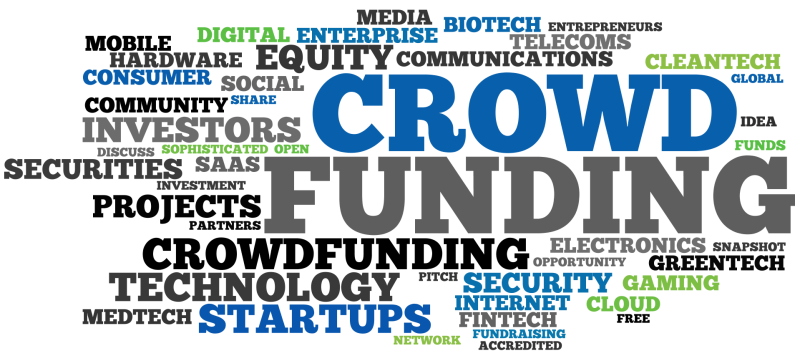
This past October, the SEC unveiled its final equity crowdfunding regulations set to take effect May 16. For the first time in the U.S., entrepreneurs will be able to leverage their company’s equity to gain investors through crowdfunding. Think Shark Tank, but on the world stage.
The SEC’s regulations come with a hefty learning curve, so here’s what you should know before you jump into the equity crowdfunding ocean.
- Equity crowdfunding is completely different from donor-based crowdfunding like Kickstarter, GoFundMe, or Indigogo. On donor-based platforms, crowdfunded money is classified as a gift or exchange of services. Equity-based crowdfunding means that entrepreneurs sell ownership percentages (securities) of their company in exchange for investment money.
- There’s a ton of red tape before a company can start selling securities. In addition to filing an annual report with the SEC and providing it to all investors, the Commission has a laundry list of requirements a company has to disclose to prospective investors, including:
- The company’s method for determining the security price
- How much money the company is attempting to raise
- The company’s financial condition, backed up by financial statements and documents
- A detailed business description
- What the investment money will be used for
- Information about officers, directors, and owners with more than a 20 percent stake
- Certain related-party transactions
- In any 12-month period, companies can raise a maximum of $1 million from individual investors. The new regulations allow anyone to join the equity crowdfunding game.
- But it costs money to raise money. The SEC estimates that registering and meeting their requirements will cost $20,500-$56,500 for companies seeking to raise between $100,000-$500,000. That figure doesn’t include the marketing costs associated with leveraging a successful crowdfunding campaign. Costs would include online platform fees totaling $15,000-$30,000, preparation and filing of SEC forms at $2,500-$5,000, issuing an annual report at $1,500-$3,500, and financial statement audits at $1,500-$18,000.
- There’s a limit to how much individual investors can invest in a 12-month period. Now, the average Joe Schmo will have more access to investing in early-stage companies so the SEC wanted to make sure it protects the less investment-savvy public. For investors with an annual income or net worth less than $100,000 (whichever one is less), it caps out at $2,000 or 5 percent (whichever amount is greater). For an annual income or net worth more than $100,000, that limit is 10%.
- There are two options for crowdfunding platforms. Companies can only run one crowdfunding campaign at a time, so it’s important to choose carefully. Some platforms operate as funding portals, which are prohibited from providing advice or compensation, soliciting investors, or handling investor funds or securities. Others platforms operate as broker-dealers and help companies navigate legal red tape, assist in matching companies with investors, and provide other investment advice. All crowdfunding platforms are required to register with the SEC.
- After all that, gaining investors may still be an up-hill battle. Investors are not allowed to resell their securities until one year after purchase, which means entrepreneurs will have to work hard to gain investor confidence. Beyond that, it’s unclear if a secondary resale securities market will eventually develop; if it does not develop, this could drop the demand for and value of crowdfunded securities.
As with any new government regulation, there are a lot of moving parts. I highly suggest that anyone interested, whether as an entrepreneur seeking capital or an investor looking for new opportunities, talk to an accountant and securities expert before embarking on the next wave of crowdfunding.
Malika Simmons is a lawyer specializing in high-growth ventures with Krause Law, LLC. She also serves as an Assistant Clinical Professor of Law for the University of Missouri—Kansas City School of Law.


2016 Startups to Watch
stats here
Related Posts on Startland News

This weekend only: Festive balloon wonderland inflates holiday spirit at 18th and Vine
More than 125,000 biodegradable balloons are lifting holiday spirits this weekend in the historic 18th and Vine Jazz District. The Big Balloon Build — an international festival — is popping up Dec. 2-4 at the Gregg/Klice Community Center. Led by Peyton Westfall and Darren Huffman of Kansas City’s Pop Culture Sculptures, more than 70 balloon…

Hollywood Animation Academy secures home at Centriq; set to begin first classes in January
Hollywood Animation Academy is leaping from the drawing board to live action in January with its first group of enrolled students. Founded by veteran director and animator Gavin Dell, the trade school is set to prepare students for jobs in the film, gaming, and television industry. Dell, an Overland Park native, returned to Kansas City…
KC duo opens candy shop at Mizzou, bringing familiar flavors to students far from home
COLUMBIA, Missouri — A pair of Mizzou students from the Kansas City area are providing international students on campus with a taste of home. Kogo’s Kandies sells candy and treats from other countries, with the goal of fostering a more inclusive campus environment at the University of Missouri, said co-founders Jacob Burrell-Kogo and Henry Accardo.…

Custom digital avatar tech, affordable housing startup among Scale’s third cohort
Startland News’ Startup Road Trip series explores innovative and uncommon ideas finding success in rural America and Midwestern startup hubs outside the Kansas City metro. This series is possible thanks to the Ewing Marion Kauffman Foundation, which leads a collaborative, nationwide effort to identify and remove large and small barriers to new business creation. COLUMBIA,…