

Crowdfunding law has changed, here’s what you need to know
January 7, 2016 | Malika Simmons
Editors note: This piece was originally published Jan. 7, 2016. The Securities and Exchange Commission’s expanded rules for equity crowdfunding went into effect May 16.
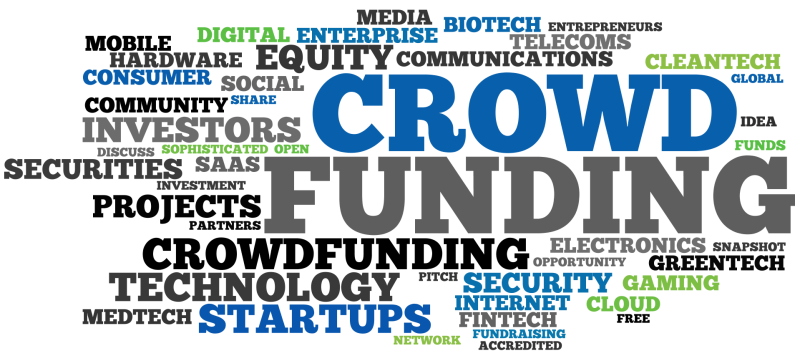
This past October, the SEC unveiled its final equity crowdfunding regulations set to take effect May 16. For the first time in the U.S., entrepreneurs will be able to leverage their company’s equity to gain investors through crowdfunding. Think Shark Tank, but on the world stage.
The SEC’s regulations come with a hefty learning curve, so here’s what you should know before you jump into the equity crowdfunding ocean.
- Equity crowdfunding is completely different from donor-based crowdfunding like Kickstarter, GoFundMe, or Indigogo. On donor-based platforms, crowdfunded money is classified as a gift or exchange of services. Equity-based crowdfunding means that entrepreneurs sell ownership percentages (securities) of their company in exchange for investment money.
- There’s a ton of red tape before a company can start selling securities. In addition to filing an annual report with the SEC and providing it to all investors, the Commission has a laundry list of requirements a company has to disclose to prospective investors, including:
- The company’s method for determining the security price
- How much money the company is attempting to raise
- The company’s financial condition, backed up by financial statements and documents
- A detailed business description
- What the investment money will be used for
- Information about officers, directors, and owners with more than a 20 percent stake
- Certain related-party transactions
- In any 12-month period, companies can raise a maximum of $1 million from individual investors. The new regulations allow anyone to join the equity crowdfunding game.
- But it costs money to raise money. The SEC estimates that registering and meeting their requirements will cost $20,500-$56,500 for companies seeking to raise between $100,000-$500,000. That figure doesn’t include the marketing costs associated with leveraging a successful crowdfunding campaign. Costs would include online platform fees totaling $15,000-$30,000, preparation and filing of SEC forms at $2,500-$5,000, issuing an annual report at $1,500-$3,500, and financial statement audits at $1,500-$18,000.
- There’s a limit to how much individual investors can invest in a 12-month period. Now, the average Joe Schmo will have more access to investing in early-stage companies so the SEC wanted to make sure it protects the less investment-savvy public. For investors with an annual income or net worth less than $100,000 (whichever one is less), it caps out at $2,000 or 5 percent (whichever amount is greater). For an annual income or net worth more than $100,000, that limit is 10%.
- There are two options for crowdfunding platforms. Companies can only run one crowdfunding campaign at a time, so it’s important to choose carefully. Some platforms operate as funding portals, which are prohibited from providing advice or compensation, soliciting investors, or handling investor funds or securities. Others platforms operate as broker-dealers and help companies navigate legal red tape, assist in matching companies with investors, and provide other investment advice. All crowdfunding platforms are required to register with the SEC.
- After all that, gaining investors may still be an up-hill battle. Investors are not allowed to resell their securities until one year after purchase, which means entrepreneurs will have to work hard to gain investor confidence. Beyond that, it’s unclear if a secondary resale securities market will eventually develop; if it does not develop, this could drop the demand for and value of crowdfunded securities.
As with any new government regulation, there are a lot of moving parts. I highly suggest that anyone interested, whether as an entrepreneur seeking capital or an investor looking for new opportunities, talk to an accountant and securities expert before embarking on the next wave of crowdfunding.
Malika Simmons is a lawyer specializing in high-growth ventures with Krause Law, LLC. She also serves as an Assistant Clinical Professor of Law for the University of Missouri—Kansas City School of Law.


2016 Startups to Watch
stats here
Related Posts on Startland News

It started with street smarts and a spit handshake; the only thing MADE MOBB was missing: a business book
Editor’s note: Startland News’ coverage of Global Entrepreneurship Week-Kansas City is made possible by the support of Husch Blackwell. Celebrating the victories is easy, said Vu Radley, calling out a decade in business for his streetwear company, MADE MOBB, along with high profile partnerships ranging from UMKC and United Way to the Kansas Chiefs and…
LaunchKC awards $300K: Six new startups enter the winners’ circle with KC investments
Editor’s note: Startland News’ coverage of Global Entrepreneurship Week-Kansas City is made possible by the support of Husch Blackwell. Emerging entrepreneurs don’t need Silicon Valley to launch or scale their startups, said Holly Andra Small, leader of one of six companies announced Tuesday as $50,000 winners in LaunchKC’s grants competition. “We were so excited,” said…

Digital Health KC earns $2M federal grant, doubled by matching funds from Kauffman Foundation
Three weeks after Kansas City’s designation as a U.S. “Tech Hub,” the region has earned “tremendous funding to jumpstart KC’s digital health cluster,” said Maria Meyers, informally announcing a $2 million federal grant — matched by an award from the Ewing Marion Kauffman Foundation. The Build to Scale grant was awarded to the University of…
Pitch competition at GEW Topeka puts $38K on the line for women, entrepreneurs of color
Startland News’ Startup Road Trip series explores innovative and uncommon ideas finding success in rural America and Midwestern startup hubs outside the Kansas City metro. TOPEKA — Building an equitable business community in Shawnee County is critical to economic development in and around the state’s capital city, said Glenda Washington. A pitch competition slated for…