

Amid success, the Kansas City Startup Village is shrinking
January 14, 2016 | Bobby Burch

It’s Nov. 13, 2012, and Kansas City’s Spring Valley neighborhood is in a frenzy.
TV vans line the streets near 4454 State Line Road, the first house to receive Google’s ultra fast Internet service in the Kansas City, Kan. neighborhood. Reporters jockey for access to a handful of entrepreneurs and techies that moved to area homes to access gigabit speeds.
“The national startup spotlight was finally pointing towards Kansas City, and we found ourselves right in the middle of it.” – Matthew Marcus
Matthew Marcus, a co-leader of the startup village, recalls a giddy conversation with fellow entrepreneurs before addressing media in which the group agreed they would affiliate themselves as part of a new organization: the Kansas City Startup Village.
“You really had to pinch yourself to make sure you weren’t dreaming,” said Marcus, who owns the first home to receive Google Fiber. “The national startup spotlight was finally pointing towards Kansas City, and we found ourselves right in the middle of it.”
Startups by the score serendipitously flocked to the area after learning Spring Valley would be the first neighborhood to land Google’s gigabit service. Stories on the village bubbled up for months, earning press from the New York Times, the Wall Street Journal, CNN and others.
Area politicians tapped the story for stump speeches, highlighting the vibrancy of the community. Large businesses, including Google, have pointed to the village as a symbol of the possibilities that gigabit Internet can enable.
At its peak, the volunteer-led village hosted 32 startups in 14 properties with about 75 employees, quickly solidifying itself as an asset in the Kansas City business community. Co-leaders of the village welcomed more than 70 groups from around the world for tours, detailing its rise and inspiring other communities to try similar efforts.
But in the years that have followed the initial excitement, the allure and exclusivity of Google Fiber has faded as the service has expanded into several other cities. In addition, the village itself has faced an array of challenges that have in part contributed to what’s now nearly a third fewer startups — 22 businesses — in Kansas City’s hamlet of innovation. “Everything was happening fast and we wanted to capture the excitement of Google Fiber. Unfortunately being a good neighbor was something we didn’t prioritize.” – Adam Arredondo
Rocky relations
In November 2014, residents in the Spring Valley neighborhood began voicing concerns with the startup village. Residents claimed that tours turned their neighborhood into a spectacle, increased foot traffic, invaded their privacy and non-locals crowded their streets with cars. Another key charge was that three homes in the village weren’t zoned for commercial use, threatening the homes of seven startups.
The Spring Valley Neighborhood Association eventually filed a laundry list of complaints with the Unified Government of Wyandotte County and Kansas City, Kansas. Adam Arredondo, a co-leader of the village, said the village wasn’t notified of the complaints until months after they were filed, adding to tensions between residents and startups.
“Everything was happening fast and we wanted to capture the excitement of Google Fiber,” he said. “Unfortunately being a good neighbor was something we didn’t prioritize.”
In March 2015, neighbors and village leaders addressed the unified government’s board of commissioners about the complaints, focusing primarily on the zoning of the three homes. After some heated discussion, the commission granted two special-use permits for mixed commercial and residential use, while the remaining startup planned to sell its space.
While at times a tense conversation, the meeting set the stage for improved relations between residents and the village, Arredondo said. Now the village is keen to notify neighbors about larger events and tour times.The group also offers the neighborhood association a free meeting space at Village Square Coworking Studio.
“It’s gone from a rocky relationship to now we catch up with each other about our families,” he said. “It came down to us getting to know them on a personal level and being more neighborly.”
Hope among challenges
“The village isn’t going away. It’s like the universe, continually expanding and contracting for the greater good.” – Matthew Marcus
Despite better relations with neighbors, the village has continued to diminish in size — from 32 companies and 14 properties in June 2014 to now 22 companies and 10 properties. A cursory glance at the numbers, however, can paint a deceptive picture that the village is struggling to find success.
In its roughly three years, the village has hosted 43 startups. Five of those companies have failed while 10 have outgrown the village to find larger office space for an expanding headcount — most recently RFP365, OneHQ and SquareOffs. Since 2012, those 43 companies have raised about $19 million in investment capital.
Kyle Ginavan, CEO of insurance tech company OneHQ, said that the village was valuable to his business in part for fast Internet from Google, but more so for the community it offered.
“So many great companies like Apple, Amazon, Google, Disney and Nike started in the garage, basement or kitchen table,” he said. “Most companies have humble beginnings and spending your startup’s limited resources on expensive office space is not smart. Furthermore, the collisions that occurred by being around other successful startup founders was huge for me.”
While he hopes to grow the number of startups in the village, Matthew Marcus said that he’s not worried by the smaller community. In fact, he said the diminished number means the village is meeting its primary goal of helping startups grow.
“I’m not concerned at all,” he said. “The village is an organic, grassroots community. It’s amorphous. It ebbs and flows, grows and shrinks, sees successes and failures. … Our ultimate hope is to help companies get to the point where they outgrow the village. We’ve always known we’ve had a big impact, but have never taken the time to look at the numbers. They’re more impressive than I would’ve guessed.”
Marcus hopes to facilitate the KCSV’s growth by being more strategic with attracting companies to the village in the future. Leaders of the village are now maximizing their volunteer efforts with the establishment of a foundation that hopes to unite startups and entrepreneurs in the area, as well as recruit companies.
Formalized in October as an official 501(c)3 public charity, the Kansas City Startup Foundation grew out of the village’s need for more external support. The village is now a special interest group of the foundation Marcus said, providing it with support and resources in a variety of ways.
The foundation, the village’s leadership and the Kansas City community are just a few reasons why Marcus isn’t fretting over the future of the community he’s helped build for three years. Another argument is more cosmic in nature.
“The village isn’t going away,” he said. “It’s like the universe, continually expanding and contracting for the greater good.”

Featured Business

2016 Startups to Watch
stats here
Related Posts on Startland News
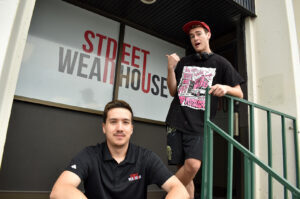
‘Younger eyes’ at Street Wearhouse see opportunity to win through the screen as digital personality meets quality printing
The owners of a recently-opened print studio hope to make an imprint on the industry by taking a different approach to garment design and production, they said. Street Wearhouse, co-founded by Alex Trinkle and Tyler Love, specializes in printing and embroidering T-shirts, hats, and other apparel from its North Kansas City production facility. Trinkle, who…

One of KC’s hottest smashburgers is at this all-natural wine bar; how Big Mood uncorked its potential with popup food, live music
Kansas City’s first all natural wine shop has evolved into more than simply a place to buy wine, said Richard Garcia; Big Mood Natural Wines now is the go-to spot for food, drinks, live entertainment and community. “Big Mood has morphed organically over the past few years into what it is now. When we first…

MVP in his field: Royals groundskeeper earns his own bobblehead for keeping The K green amid ups and downs
For the club’s first-ever Ag Night, the Kansas City Royals are celebrating — and bestowing the honor of a bobblehead — on their very own farmer. That’s what Trevor Vance — who has been keeping the field at Kauffman Stadium perfectly manicured for nearly 40 years — considers himself and other groundskeepers, he shared. “We’re…

Right to Start plans GOP debate on entrepreneurship; If America is going to be saved, Heartland innovators will be key, says leader
A nonprofit founded by a former Kauffman Foundation executive is planning a first-of-its-kind forum on entrepreneurship with four Republican presidential candidates this Friday in the Midwest. Right to Start is a nonpartisan organization that champions entrepreneurship as a civic priority through grassroots organizing and policy advocacy, with the goal of expanding entrepreneurial opportunity. Friday’s forum…