

(S)heStarts: Define yourself and your startup on your own terms
December 18, 2015 | Elizabeth Usovicz

At a recent One Million Cups gathering at the Kauffman Foundation, Little Hoots founder Lacey Ellis discussed lessons learned since launching her company.
It had been almost a year since she first presented at the pitch event, and one of her primary lessons is sound advice for startup founders.
“When you’re first starting out, you’re going to meet with a lot of people who have opinions and a lot of people who have perceptions,” Ellis said. “A lot of people that we talked to in the beginning saw Little Hoots as this cute idea. They saw me as this mom who has this cute idea. … I had to be really careful not to let that define me. … We truly believe that we are redefining memory-keeping for a new generation.”
Well said. All entrepreneurs face the challenge of being defined by other people’s perceptions. Women entrepreneurs who happen to be mothers have a unique challenge in keeping other people’s focus on their companies and not on their parental status. If their product or service is targeted to mothers — like the Little Hoots app is — external perceptions of the founder in the company can pose a double threat.
Ellis’s experience isn’t unique. Other women founders I’ve spoken with have confronted similar perceptions.
“Being a working mom is the same as being a working dad,” one of them told me. “I don’t want to succeed despite the fact that I’m a woman or a mother. I want to succeed because I’m focused. I have a vision and I’m good at what I do. I demand the same level of respect as any entrepreneur — man or woman — and I give it.”
What’s significant about both of these founders is not their common experience of dealing with other people’s perceptions. It’s how they intentionally define themselves and their companies on their own terms. Here are three action steps they’re taking:
- Focus on We: Ellis refers to “We,” not “I.” The perception-busting message? She and her team are building Little Hoots together. The circumstances of her personal life don’t define the company.
- State a Clear Vision: Ellis emphasizes her company’s big, ambitious, disruptive potential. Redefining memory-keeping is a long way from a cute mom with a cute idea.
- Level the Playing Field: The other founder I spoke to isn’t waiting to be perceived with respect and acceptance. She’s taking charge of her interactions by setting her own expectations and making sure that others understand how she perceives herself and her company.
If you’re an entrepreneur who has dealt with other people’s perceptions, please comment and join this conversation. How have you managed and owned perceptions of your startup?
Elizabeth Usovicz is topline revenue strategist and principal of WhiteSpace Consulting, and General Manager of Transaction Commons. Her career includes leadership roles in corporate, start-up and consulting environments. Connect with Elizabeth at elizabeth@whitespacerevenue.com or @eusovicz on Twitter.
In July of 2015, Startland News collaborated with WhiteSpace Consulting to conduct a whiteboard conversation with women entrepreneurs in the Kansas City region. Women entrepreneurs shared their perceptions about launching and leading companies, and identified topics for ongoing discussion. As a result of this conversation, Startland News and WhiteSpace Consulting have developed (S)heStarts, a blog series that explores the entrepreneurial experience that women and men share, as well as perspectives on how their experiences are unique.

Featured Business

2015 Startups to Watch
stats here
Related Posts on Startland News

From the Big Apple to the Heartland: A fresh set of eyes sees why KC is poised for growth
Editor’s note: The opinions expressed in this commentary are the author’s alone. Tristan Mace is an advisor to early-stage ventures, investment funds, and Fortune 500 companies, an occasional guest professor at The University of Texas, former corporate venture capitalist for Merck and AXA and a serial tech entrepreneur. Click here to read more about his…

Can I do it? New online tool helps users assess risk, make COVID-smart decisions about activities in KC
As a second wave of COVID-19 cases bear down on the nation, Kansas Citians have a new tool on their side to help them assess risk of exposure in everyday activities. Created as part of a partnership between pandemic-born resources, Comeback KC and COVID Can I Do It (CCIDI) touted the tool — branded “KC…
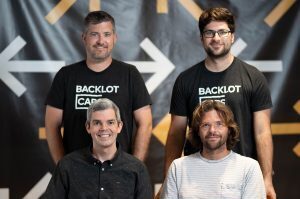
BacklotCars completes historic $425M exit, joining ‘power and fierce entrepreneurial spirit’ of KAR Global
The $425 million acquisition of Kansas City-based BacklotCars is complete, nearly two months to the day it was announced. “There is so much energy and excitement around this combination with our employees and with our customers,” Justin Davis, president and co-founder of BacklotCars, said in a release announcing the milestone acquisition’s completion Thursday by KAR…

From Aussie garage to unicorn: How SafetyCulture continues its climb in an ever-changing environment
Starting from humble beginnings, SafetyCulture earned its membership in the Australian unicorn club this year with a $1.3 billion valuation, said Nick Topping. “Our CEO and founder Luke Anear actually founded the company [in 2004] out of his garage in Townsville, Australia,” said Topping, who leads the marketing and business development teams in the Americas…