Farmobile plows an agricultural revolution by empowering farmers with data
December 22, 2015 | Bobby Burch
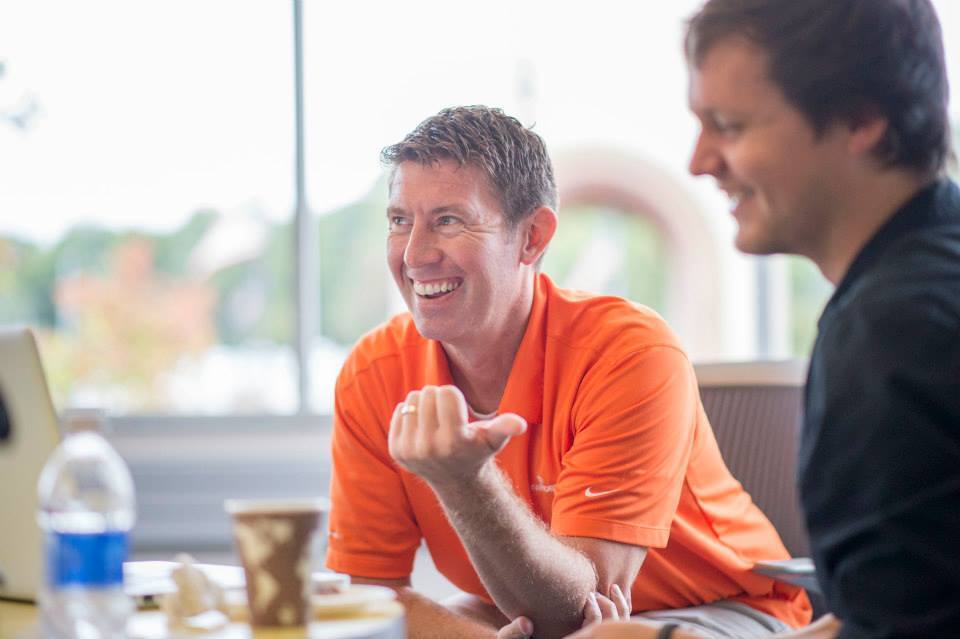
Agriculture techie Jason Tatge spent Monday morning as he often would: with a farmer interested in his company.
The two kicked off the week in Fargo, North Dakota, kicking the proverbial tractor tires on Tatge’s ag tech business, Farmobile, and how the farmer’s data could generate additional revenue for his operations. They also chatted about performance of the business — Tatge’s second in agriculture technology — and how it’s been taking off as of late.
In the last year, Farmobile has grown from 6 employees to now 27. Farmers around the nation are implementing the firm’s “dirt to database” system into their operations, enabling them to sell data to third parties or use the information to inform their farming decisions. The company on Friday also announced a $5.5 million investment from a large Amsterdam-based venture capital firm.
And that traction is what made this meeting remarkable.
“This farmer is huge, and he said ‘Jason, I’m really proud of you guys,’” Tatge recalled. “He said ‘Everyone comes in with the best intentions of helping the farmer, and then they can’t raise money and then they usually change their mind. You’re the first one I know of that’s been able to get funded and not have to bend on that mission.’ … That was just further confirmation that what we’re doing is resonating with farmers out there.”
Founded in 2013, Farmobile invented a device — or Passive Upload Connection (PUC) — that plugs into a tractor’s diagnostic port to collect a variety of farming data, such as info on planting, spraying, fertilization, harvest, fleet management and more. The company created a database and complimenting software that allows a farmer to easily distill insights from the torrent of data to make informed farming decisions. All data collected is owned by the farmer, who decides either to keep the information private, share it or sell to interested third parties.
Farmobile costs $1,250 per year, per device, Tatge said, which provides the farmer with cellular connection, data storage with Farmobile and access to its applications.
Tatge said that the company’s policy on data ownership was a sticking point for many investment firms interested in Farmobile. Anterra Capital — which led a $5.5 million Series A round — encouraged that model, Tatge said, which really solidified them as the right partner.
“Most people thought we should own the data and use it as we choose,” he said. “I was convinced that that model wasn’t right for agriculture. These relationships matter and they don’t go away. … The big idea with this is if we can create a marketplace for the data, then we’ll be able to monetize it if farmer chooses, and split what we make with the farmer. The long term play for this thing is to have this be a revenue center for a farmer, and I don’t really know of another business model on the planet that does that.”
A member of Pipeline, Tatge said that in addition to growing his staff 350 percent in the last year, Farmobile has focused on building the backend of its database system for farmers. The recent capital injection will allow for further development of that database, and to advance production of the company’s hardware.
Several anonymous Kansas City investors also have invested in Farmobile in addition to Anterra Capital, who Tatge said was a great fit for the company’s mission. In addition to business connections, the investor’s funds will allow Farmobile to significantly accelerate its operations.
“We’re really now in a good position to scale,” he said. “Our goal is to roll the next three-year’s worth of innovation into the next 18 months. That’s the kind of boost you get when you take on an investment like this.”
Asked his thoughts on another Kansas City ag tech firm, FarmLink, Tatge said that the two businesses are not competitors.
“We see them and other analytics providers as customers,” Tatge said. “They have a suite of farm equipment — we don’t have any iron that we own — and they’re able to drive analytics from the data off of their machines. … If they’re good at their analytics we see ourselves as being totally complimentary.”