

Schukman: Is social entrepreneurship becoming business as usual?
November 6, 2015 | Josh Schukman

One year ago, I started building my company by telling the story of social entrepreneurship to the world.
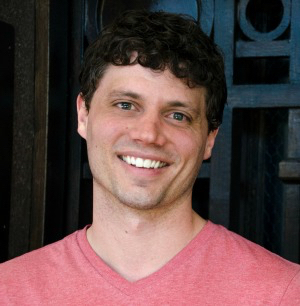
Josh Schukman
Via a podcast, blog and other content, I launched Social Change Nation as the online hub for anyone who aspires to launch a company that makes a dollar AND a difference. At first, I imagined I would be catering to a niche of companies who wanted to create a “Toms Shoes” style mix of charity and capitalism.
“The simple reality is that any business wanting to succeed in today’s marketplace needs to build social good into its brand.” – Josh Schukman
But as I’ve explored this story, I’ve come to realize that social entrepreneurship is much more than a unique flavor of business. The simple reality is that any business wanting to succeed in today’s marketplace needs to build social good into its brand.
To drive this point home, let’s check out a few examples of some traditional companies pursuing social entrepreneurship in non-traditional ways:
1. COPR Security: When thinking of security companies, we don’t tend to think of social change.
Instead, we picture corporate behemoths that are more intent on securing the suburbs than on securing genuinely troubled communities. COPR is a Kansas City startup that is endeavoring to become the world’s first cause-driven security company.
Rather than simply making charitable donations, COPR has created partnerships with Habitat for Humanity affiliates and neighborhood development organizations who are on the front lines of combating blight in our nation’s cities. COPR’s core business is a mobile security solution that allows real estate investors to quickly and easily secure vacant properties. This is also a very valuable tool for community nonprofits because vacant properties drive blight by attracting copper thieves, vandalism and other criminal activity.
So, COPR is launching an Indiegogo campaign in early November that will gift security systems to these nonprofits. The campaign provides a great way for COPR to help these organizations tell their story while also offering ‘perks’ that allow its core clients to receive equipment at a discounted rate.
2. Toyota: Like many large corporations, Toyota has a standard charitable program that donates cash to a select number of non-profits.
Toyota, however, has recently gotten creative with its corporate social responsibility by pursuing charitable endeavors that are more hip than the old ways of giving. For example, Toyota has single handedly doubled the output of New York City’s largest food bank by donating its expertise on logistics.
At first glance, this would seem an odd partnership, but upon closer examination, the ties become clear. With a footprint spanning the globe, Toyota is one of the world’s foremost experts on logistics. So when a team of Toyota logistics experts devoted itself to helping the food bank improve its output, it’s little surprise that the impact was so large. Check out the whole New York Times story on it here.
3. Timberland: As one of the first companies to pay its employees to volunteer, Timberland is a pioneer in this space.
Its most longstanding endeavor is a partnership with City Year. City Year is an AmeriCorps program that recently entered Kansas City and is focused on serving children around the country. With City Year branches in over 26 cities, it’s becoming a force for good around the world. For nearly two decades, Timberland has been the sole provider of uniforms for all of City Year’s corps members. Every year, thousands of City Year young adults are outfitted with Timberland boots, shirts, jackets, and hats bearing the City Year logo.
Additionally, Timberland and City Year executives share a close relationship. They go on corporate retreats together, serve together and support each other professionally as both organizations grow.
The companies above are but a few examples showing that social entrepreneurship is becoming business as usual at companies of all stripes. Take a cue from these companies as you seek ways to get creative with making a dollar AND a difference.
Know of some more examples of companies that have been exceptional in creating social good? Add them to our comments sections below!
Josh is the founder of Social Change Nation, whose mission and passion is to provide startup social entrepreneurs with the best possible resources and tools for growing their ventures. He hosts a podcast featuring interviews with the world’s leading change agents and creates online content to help startups make a dollar AND a difference.


2015 Startups to Watch
stats here
Related Posts on Startland News

Look inside: Plexpod opens coworking oasis amid River Market’s concrete jungle (Photos)
Faux grass lining the walls. Neon signs. A mix of vintage and contemporary stylings. Plexpod’s Eric Milner was initially skeptical of plans for a jungle theme in one of the co-working space’s enclaves — quirky seating areas tucked between offices and amenities at the new River Market location. “It really panned out though. Stephanie [Medina]…
Car vending machine drives into KC skyline with Carvana’s launch off Southwest Boulevard
Towering over Southwest Boulevard, Missouri’s first Carvana location has been parked in Kansas City and it’s finally ready to rev its engine, Amy O’Hara confirmed Thursday. “It’s a beautiful location and we’re looking forward to showing everyone our signature car vending machine experience and the new way to buy a car,” said O’Hara, Carvana associate…
UMKC awards students $75K in prizes at Regnier Venture Creation Challenge
Student startups are growing rapidly on the University of Missouri-Kansas City campus, said Bryan Boots. Such acceleration has been further propelled thanks to the recent distribution of $75,000 in prize money, awarded to a series of winners of the Regnier Venture Creation Challenge Competition May 2-3, split across events at the Ewing Marion Kauffman Foundation…

‘Wild idea’ behind OYO Fitness sends KC inventor into Space Tech Hall of Fame
Commercial viability for an inventor-entrepreneur comes with only about a “one in 1,000” chance of success, said OYO Fitness founder Paul Francis, who was recently inducted into the Space Technology Hall of Fame for his patented SpiraFlex technology. “It’s probably much smarter to come up with an app because you don’t have any selling costs…