

The WTF Series: Artificial Intelligence
October 27, 2015 | Ben Kittrell
On a daily basis, Ben Kittrell translates the jargon-filled world of technology for clients of his tech consultancy. The Words that Frustrate (WTF) series aims to offer readers some clarity in an industry dominated by techies’ confusing argot.
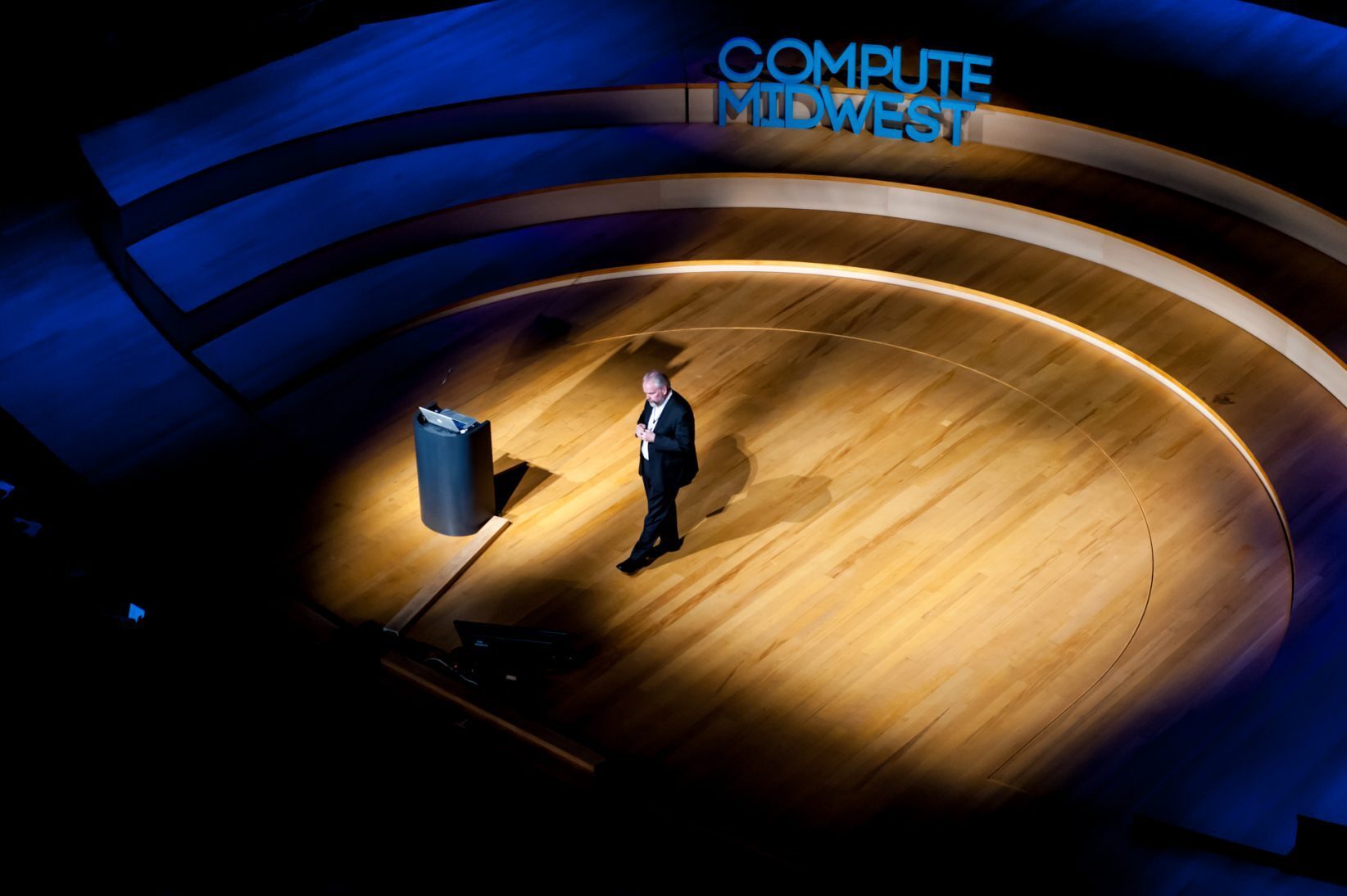
Last week I went to my favorite event of the year, Compute Midwest.

Ben Kittrell
The last four years of this conference has brought world-class speakers in technology and other fields to Kansas City to talk about innovation and the future. Throughout this year’s talks the topic of artificial intelligence, or “AI,”seemed to be a fairly common thread.
Most of us probably think of The Matrix, The Terminator or Ultron when we think of AI but the reality isn’t so scary. In fact there’s some level of it behind most of the software you use every day. GPS mapping, Apple’s Siri, Google and Facebook all use some type of AI to make predictions and bridge the gap between computers and humans.
“Expect to see an AI explosion over the next ten years. … Technology is improving at an exponential rate and before you know it, you’ll be talking to your phone, car, house and everything else.“
What is Artificial Intelligence?
The field actually goes back decades and covers many diverse sub-topics. At its root, the goal of AI is to make a computer behave more like a human brain. One example is natural language processing, which attempts to decode and understand a human’s voice. Using older, standard programming techniques, you would attempt to match pre-determined sounds with words. This would be far too cumbersome, and it would not account for subtleties like dialect, accent and mispronunciation.
Natural language processors like Siri are based on scientific research that studies how the brain processes and stores sound. The software itself can’t do very much at all without teaching it, much like you would teach a child. The more it learns, the better it can understand language.
Should I be worried?
Nobody can predict the future, but other than Sci-Fi movies there’s nothing to indicate that we should be concerned about AI. Most researchers aren’t actually interested in recreating a complete human brain. Why would we need that? We’ve got plenty of those already. To be helpful, AI may need to understand human traits like emotion, but it does not and should not exhibit them.
As long as we don’t create a giant titanium humanoid robot that has access to heavy firepower and a figurative chip programmed on his shoulder, we should be just fine.
What about the future?
Get enough whiskey in me and I’ll go on for hours about pseudo-scientific — almost cultish — theories about what lies ahead, but I’ll try to keep it pretty straightforward.
Expect to see an AI explosion over the next ten years. IBM Watson, the computer that won Jeopardy, is already aiding professionals all over the world. Watson is currently helping oncologists research potential treatments for patients. Also, through a program called Watson Chef, it has analyzed recipes from culinary institutes and figured out what tastes good together. Now it can synthesize tasty combinations like mushrooms and cherries, something most humans wouldn’t think of.
The technology is improving at an exponential rate and before you know it, you’ll be talking to your phone, car, house and everything else. But it won’t just be “Set an appointment reminder.” It will be a true back and forth. Your AI will understand who you are, your interests and your pet peeves. It will ask you clarifying questions like “Are you sure you want to set an appointment for 7 a.m. on Wednesday? The Royals are going to win Game 1 Tuesday night.”
Ben Kittrell is the co-founder of Doodlekit and an advisor for startups and small businesses. Kittrell also is host of Spare Room Radio, a podcast that features Kansas City entrepreneurs.


2015 Startups to Watch
stats here
Related Posts on Startland News

Small Biz to Watch: Matchless Cabinet throws ‘BBQ nerds’ onto national spotlight’s grill
Editor’s note: Startland News is showcasing five Kansas City small businesses this week through the newsroom’s first-ever Small Biz to Watch series, presented by Bank of America. The following highlights one of the 2025 honorees, curated by editors from Kansas City’s wide array of hard-working entrepreneurs and business owners. Selection criteria is based on factors…

KC-built creator marketplace expands to connect small businesses to influencers of all sizes
When Wes Elder and Caleb Vetter launched CreatorSpace more than a year ago, they set out to carve their own path through the blended world of entertainment and technology, Elder shared. Now their startup — what they bill as the world’s first creator marketplace — is taking a new turn. The co-founders plan to release…

Tiger 21 expands its invite-only peer network in KC as number of ultra-wealthy leaders rises
A prestigious — and relatively new-to-Kansas City — resource for high-net-worth C-suite leaders and successful entrepreneurs and founders is expanding: Tiger 21, a premier peer membership organization for ultra-wealth creators and preservers, is adding a second group. The launch is being orchestrated by Heidi Lehmann, a seasoned investor, board member and five-time startup founder leading…

Small Biz to Watch: Deposit The Work builds mass with tech-enabled consistency — no excuses, all grit
Editor’s note: Startland News is showcasing five Kansas City small businesses this week through the newsroom’s first-ever Small Biz to Watch series, presented by Bank of America. The following highlights one of the 2025 honorees, curated by editors from Kansas City’s wide array of hard-working entrepreneurs and business owners. Selection criteria is based on factors…