

The WTF Series: The Cloud
August 27, 2015 | Ben Kittrell

On a daily basis, Ben Kittrell translates the jargon-filled world of technology for clients of his tech consultancy. The Words that Frustrate (WTF) series aims to offer readers some clarity in an industry dominated by techies’ confusing argot.

Ben Kittrell
When most people think of the Internet, they think of websites. But it’s actually much more than that.
Emails, file transfers and other types of traffic are part of the Internet but technically fall outside of the World Wide Web. The same goes for mobile applications, which do not fall under the Web umbrella but use the Internet for communication, data storage and more.
If this sounds like a boring semantic argument, then congratulations, you now understand the cloud. It’s just a word — a label for a subset of Internet services that are used by web, mobile and desktop applications.
What about cloud computing?
Ten years ago, if you wanted to host a web application you would most likely have to go buy a computer and install it in a data center where you rented space. It was your responsibility to support and maintain that server and you were paying for it whether you were using it or not.
At some point Amazon decided to take everything they’ve learned about hosting the country’s largest online retail store and create services that everyone else can use called Amazon Web Services or AWS. The company maintains the physical infrastructure and lets its customer create on-demand virtual servers in “the cloud.” While there are many benefits to cloud computing, essentially it’s about commoditizing computation in a way that lowers cost and reduces overhead.
Now, according to a 2105 study by RightScale, 93 percent of the companies they surveyed are currently using cloud services.
Is the cloud secure?
Cloud services like AWS run in the most secure data centers on the planet. The physical and network security goes well beyond most enterprise companies. Not only that, most hackers don’t target data centers — they target you. It’s much easier to trick someone into giving you a password than breaking into a Tier 4 data center.
You may have heard about the Apple iCloud fiasco in January where some accounts where hacked, including some celebrities with risqué photos. This raised a lot of concerns about security, but was this really the cloud’s fault?
The hackers used a method called “brute-force” which is older than the cloud or probably the Internet itself. They wrote a program to try millions of combinations of passwords until one of them worked. Normally, this tactic is thwarted by limiting the number of times someone can try a password, but Apple failed to properly address this. So in reality, the cloud is no less secure than any other networked, server-based platform. It’s only as secure as you make it.
What’s the future of the cloud?
Amazon Web Services chief product ec2 (Elastic Cloud Computing) is essentially a way to create a virtual server in the cloud that behaves the same as a physical server would in your own datacenter. This is called “Infrastructure as a Service” (IaaS). It provides the infrastructure, and you create the virtual servers. If you have a Java web application, there is still a considerable amount of work needed to get the server ready to run it.
Other services — like Heroku and Amazon’s own Elastic Beanstalk — take care of all of the specifics of hosting a Java, Ruby or Node.js type of application. You provide the app and they provide the rest. This is called Platform as a Service (PaaS) and is the direction the industry is going. More and more you’re seeing cloud-computing providers create specialized services for sending email, transcoding video, hosting applications, etc.
Ben Kittrell is the co-founder of Doodlekit and an advisor for startups and small businesses. Kittrell also is host of Spare Room Radio, a podcast that features Kansas City entrepreneurs.


2015 Startups to Watch
stats here
Related Posts on Startland News
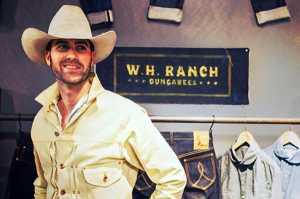
Cowboy couture: WH Ranch lassos dream of making the ‘best blue jeans in the world’
Ryan Martin sold his best cowboy boots to buy high-quality denim for his western couture brand, said the founder of Kansas-based W.H. Ranch Dungarees. “I was always describing [my product as] ‘custom made’ but ‘couture’ really describes it best,” said Martin, detailing the laborious process that limits production to an average of four pairs of…

Keystone Award forecasts potential job growth thanks to soon-to-open iWerx-Gladstone
A still-in-the-works coworking space already is inspiring economic development north of the river, said Bob Martin, partner at iWerx, bolstered this week by a Keystone Award for business impact. “Before even opening our doors in Gladstone, we had commitments for nearly 30 percent of the more than 75 offices,” Martin said ahead of the entrepreneurial…

Experience unlocked: Aussie pop-up racing into KC in early 2019 with Mushroom Rally
Mushroom Rally — a real life Mario Kart race experience with roots in Australia — is expected to swerve into the Kansas City scene in early 2019, said James Harrison. “[Mushroom Rally] will hit 16 cities [next year], with Kansas City being one of them,” said Harrison, a race organizer for the experience pop-up. “We…

Nickel & Suede couple create their hook with style, influence and fast-selling leather earrings
Feeling is believing, said Kilee Nickels, the fashion inspiration behind Nickel & Suede. “You may not remember you’re wearing our earrings until someone compliments you,” she said of the light-weight, leather statement accessories that earned the business she co-founded a top spot on Inc. 5000’s 2018 fastest-growing companies list. Based in Liberty, the company boasted…