

Modern Coalition app ‘gamifying’ politics raises $350K
August 4, 2015 | Bobby Burch
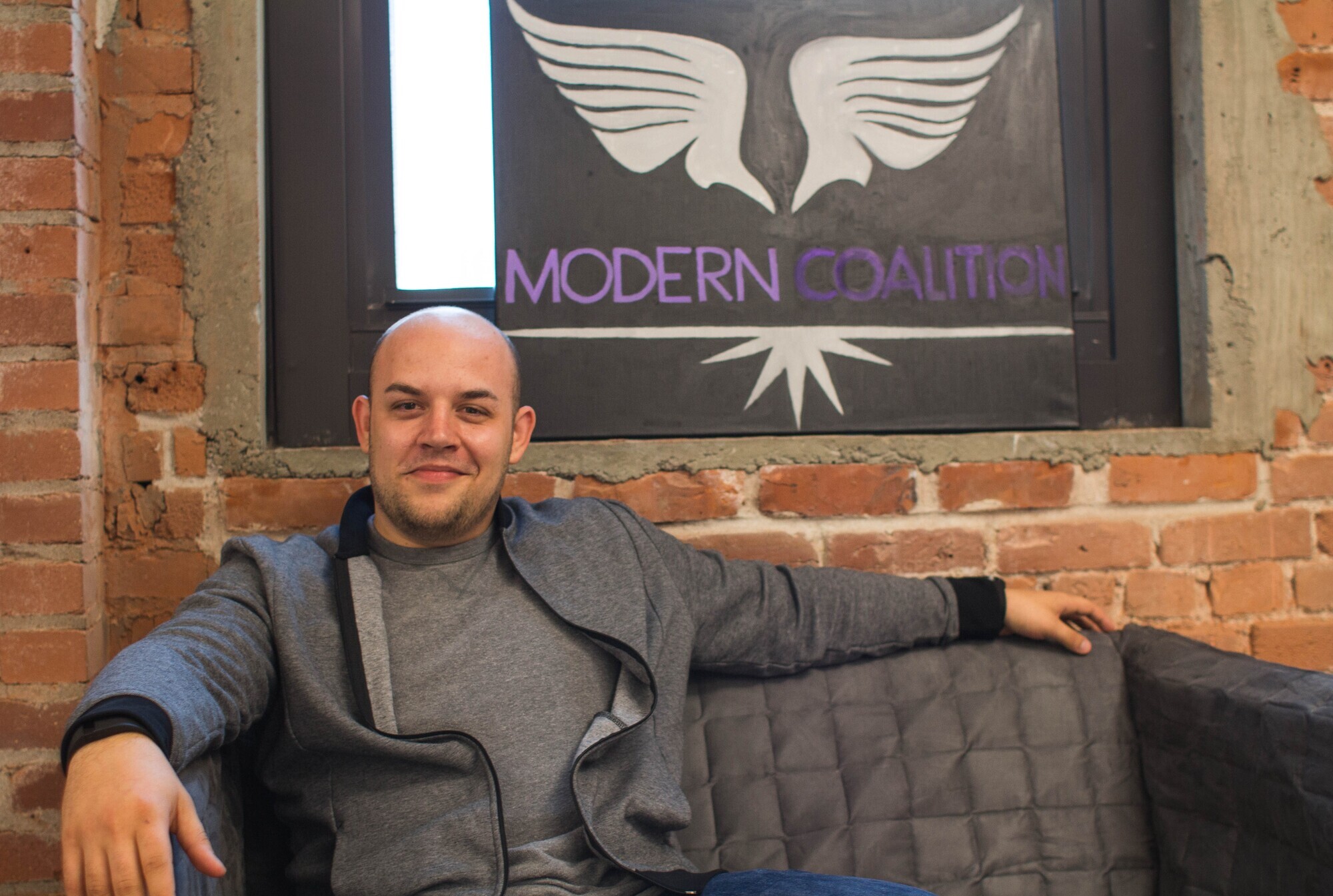
U.S. Congress is doing a lousy job.
At least that’s what 78 percent of Americans thought in July, according to Gallup. The research group theorizes that such dissatisfaction is not only resulting in lower voter turnout, but also generally less political engagement — particularly among young people.
Kansas City-based Modern Coalition, however, is hoping to change that by transforming political discourse into a game that drives engagement. The company created a mobile app that allows users to spar over political issues that are important to them and form alliances to win.
“We’ve created the first gladiatorial arena that fosters not just innovative thinking toward issues at the local, regional or national level, but also working hard to get your issues to win out in the ecosystem,” Modern Coalition CEO Christian Fisher said. “Instead of complaining about an issue, sharpen your knife and do something about it.”
In Modern Coalition’s game, users navigate a political world in their city, region or the U.S., working to rally a band of like-minded people to win votes on particular issues.
For example, a user may try to coalesce support to enact a one-cent sales tax for Kansas City’s streetcar. To do that, a user may lobby others with persuasive arguments or barter in-game currency to gather support of an issue. If one’s coalition wins, users have the chance to win prizes such as gift cards or products.
Modern Coalition monetizes the platform by providing a rich amount of polling and demographical data on issues that are relevant to politicians, parties, political action committees and businesses. The information offers insight into not only how people feel about an issue, but also ideas on how to improve it and how to frame it with particular groups.
As users duke it out over issues, they also learn more about subjects relevant in their lives, Fisher said.
“Everybody’s vision is the same: we want to see more millennial engagement,” he said. “But (millennials) just don’t care about the actual elections themselves to get engaged. What we found with our users that we’ve been testing with is that they feel incentivized by us bringing them to the table and doing what they already do every day, which is playing mobile games.”
Solving the democratic engagement conundrum is not purely a patriotic pursuit for Modern Coalition — it’s also an extremely lucrative opportunity. Candidates, parties and political action committees spent roughly $7 billion on the 2012 presidential elections, according to finance reports from the Federal Election Commission.
Snagging even a fraction of that pie is part of the reason why Modern Coalition has already gained traction with investors. Fisher said that Modern Coalition has secured $350,000 from regional angel investors as part of its seed round, and plans to double that in coming months.
“We’ve seen a huge interest from investors and others because Modern Coalition is going after a hefty billion-dollar market and we’re going at it from a gaming perspective, which is another billion-dollar market in the United States,” Fisher said. “We’ve got these two massive markets and we’re going after them in a way that nobody ever has. If you look at it from a monetary standpoint, it’s going to be really hard for us to miss when you’re going after two massive markets.”
Modern Coalition is also finding success with users around the country. More than 100,000 people around the country have signed up for the mobile game, which is now in its beta testing phase, Fisher said.
That early adoption rate is gaining attention from a crowded candidate field in the 2016 presidential elections that’s hoping to find an edge any way they can. Modern Coalition is now in negotiations with four presidential candidates that hope to use the platform as a bullhorn of their messages, he added.
“This is the biggest election we’ve ever seen,” Fisher said. “Look at the Republican field right now — they don’t even have enough space for podiums at debates.”
Modern Coalition, whose board includes EyeVerify CEO Toby Rush, currently has eight employees and also operates an office in Omaha. Fisher said the company plans to hire up to four more staffers in coming months as it works to push its app to more people around the country.


2015 Startups to Watch
stats here
Related Posts on Startland News

On the TechWalk runway: This is what real KC Women in Tech look like
Tech careers are available to everyone, said Ventura Rangel. Kansas City Women in Technology, a nonprofit dedicated to growing the number of women in technology careers, played host to its second annual TechWalk fashion show, showcasing female tech professionals on the runway, said Rangel, event director for KCWiT. The goal is to inspire young girls…

Lawrence-based Ainstein predicts radar tech will push self-driving automotive advances
From Kansas, Ainstein’s radar technology can have a profound impact on industries across the globe, said Zongbo Wang. “We wanted to design radar that can be very affordable and play different roles in the industry,” said Wang, CEO of the radar tech firm. “Over the past three years, we’ve experienced a time of tremendous growth.”…

Hustle in the making: Startups scaling ‘maker’ concept with high-growth models (Photos)
Andy Talbert is in no way crafty, the Snow Pops co-founder said. “At all,” he emphasized, eliciting laughter from the crowd at Startland’s “Hustle in the Making” Innovation Exchange. The event — sponsored by Plexpod and Polsinelli — explored the evolving spectrum of startup businesses that could be considered “makers” in modern entrepreneurial culture. Kansas…
Innovation district will look to black community for insight, McGinnis tells GEW crowd
Developing an innovation district takes a village, Kevin McGinnis told a packed room of Global Entrepreneurship Week attendees — a cross-section of Kansas Citians eager to learn more about how his proposed Keystone innovation district could re-shape diversity and inclusion efforts in the startup space. “I’m not going to suggest that I’m bringing a bunch…