

Schukman: Authenticity is the ultimate currency for millennials
July 8, 2015 | Josh Schukman

The facts are in.
Millennials prefer cause based products, are willing to pay more for them, and demonstrate strong brand loyalty to companies who weave social good into their stories.
On the surface, these stats should be enough for any company to dive head first into branding themselves as social entrepreneurs. But, cause-based marketing is rarely successful when done exclusively for financial benefits. That’s because millennials use a new type of currency, and if you hope to win them (and their $200 billion in annual buying power) over, you need to know what that currency is.
That currency is authenticity. If you build up this currency, you’ll reap the rewards of social entrepreneurship. Try to fake it and your brand will fail to win over millennials in the long run.
To explore this point, let’s take a trip to Jamaica, where my fiancé and I recently traveled for her cause-driven company, Hostel KC.
We first travelled to Harmons, Jamaica, to visit the Harmony House, which launched 30 years ago in the wake of one of Jamaica’s most devastating earthquakes. Lloyd the Harmony House’s director and a Kansas City native, said his group’s mission is to empower Jamaicans by creating sustainable entrepreneurship opportunities. It’s quite a lofty goal considering most homes in Harmons lack running water and electricity.
Lloyd and team have generated sustainable opportunities for countless families in Harmons. For example, they run a thrift store, roast and sell coffee beans, build homes in Harmons, and export beautiful woodcrafts to the U.S. The most touching part of Harmony House, however, is the way it is authentically connected to the community. I was personally moved to tears watching Lloyd walk the grounds paying his local employees for their work. For Lloyd, this was clearly not just business — this was his purpose.
Our next stop brought us to Kingston. We arrived early in the day to meet with Jamaica Volunteer Programs (JVP). JVP brings service groups from the U.S. to volunteer in Jamaica. When groups arrive, they stay in JVP’s mansion overlooking Kingston, and step out for a few hours each day to “serve” such organizations as the Salvation Army.
I was immediately struck by JVP’s lack of authenticity. At Harmony, Lloyd’s motivation was crystal clear: He had been personally touched by the people of Harmons so he built a business aimed at changing their future. As the founder of JVP explained her organization’s mission, I simply could not figure out what her authentic motivation was.
Instead, she spouted out stats like: rich college students pay a premium to pad their resume with service trips, corporate bigwigs pay big bucks to have catered service opportunities, and this all adds up to a great business opportunity for JVP. It was clear JVP didn’t understand the power of authenticity.
I don’t believe there is anything fundamentally wrong with what JVP is doing. Businesses should capitalize on lucrative opportunities; however, I’m critical of the way JVP markets their work. Millennials have too many tools at their disposal to spot companies who lack authenticity, and I believe JVP will feel the repercussions of this in the long run.
Thus, be sure to highlight an authentic and clearly-defined motivation for your cause-based marketing or miss out on the opportunity to build lifelong brand loyalty from the most socially-conscious generation to ever walk the earth.
Josh is the founder of Social Change Nation, whose mission and passion is to provide startup social entrepreneurs with the best possible resources and tools for growing their ventures. He hosts a podcast featuring interviews with the world’s leading change agents and creates online content to help startups make a dollar AND a difference.


2015 Startups to Watch
stats here
Related Posts on Startland News

KCultivator Q&A: Tyler Enders talks his biggest failure, the ‘Made In’ concept and Obama
Seated amid vintage mosaic tile and striking black-and-white portraits by Kansas City photographer Cameron Gee, founder Tyler Enders seems at home within the walls of the Made in KC Cafe. He’s an art lover with a finance degree — not to mention one of the minds behind Made in KC, a retail showcase for local…

Kimberly Gandy: Proof a startup can emerge stronger from its founder’s cancer diagnosis
Cancer needn’t mean can’t, Kimberly Gandy said. When the Play-It Health founder and CEO was diagnosed with an aggressive, mid-stage cancer in May 2016, her startup found itself at a crossroads. Gandy had just joined the Kansas City-based Pipeline fellowship and her company was poised for growth through its web- and mobile-based health regimen tracking…
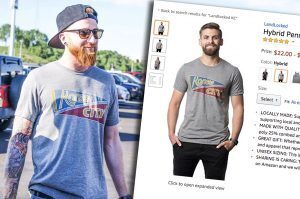
Landlocked, Marknology startups ‘killing it on Amazon,’ KC founder says
Landlocked is a brand many Kansas Citians recognize on sight, founder Andrew Morgans said. Marknology is the behind-the-scenes engine that sells it. While his dual companies — an apparel startup known for its popular hybrid pennant tee and a bootstrapped digital marketing firm specializing in Amazon sales — complement one another, the pairing is an…

Lula raises $420K, fueling expansion of home service offerings
A $420,000 funding round from Kansas City area investors will accelerate tech startup Lula to expand in Kansas City and soon two more large metros, CEO and founder Bo Lais said. The Overland Park-based firm is eyeing Phoenix and Dallas as its next service areas, but it first plans to focus on marketing its on-demand…