

Kittrell: 5 frustrations for non-technical founders
July 21, 2015 | Bobby Burch

You’ve got a great idea for an app — the kind that keeps you up at night.

Ben Kittrell
But you’ve never worked on a software project before and have no idea what you’re in for. Sound familiar? Here’s a list of common frustrations I see from my non-technical clients.
1. Scope creep
No, it’s not a creepy guy using a telescope. Scope creep is what happens when you start out with a simple project and one by one features keep getting added. Before you know it the project, is twice as big and doesn’t seem like it will ever launch.
If you’ve spent any time around tech entrepreneurs, you’ve probably heard the acronym “MVP” thrown around. Thanks to the book Lean Startup by Eric Reyes, the term “Minimum Viable Product” has become a pivotal part of any successful startup’s vernacular. The idea is simple: create the absolute minimal set of features your app needs in order to be viable in your market.
It’s very tempting to say “We need X before we launch.” What you should be saying is “Can we launch without X, Y and Z?” I highly recommend reading Lean Startup for more on this and many other valuable topics.
2. Developers are not created equal
Whether it’s front-end, back-end, social, mobile, web flash or intranet, most developers have a specialty.
This is the same for development firms, which may seem to have a broad expertise but usually have a set formula for building projects. The problem is that by the time you figure out a developer or development firm isn’t right for you, it’s usually too late.
Here’s a real world example from one of my clients. This client wanted to build a social platform with a big vision. The app had many different features, and it needed an innovative interface to handle them. The client found an accomplished development firm owned by the former CTO of a well-known tech company. The idea was to use this firm to build the initial product and transition to an internal team.
After some time it became clear that while the team had a great deal of experience building intranet and enterprise applications, they had little to no experience building social networks or complex interactive user interfaces. In addition, they were using proprietary technology to build the application, a common practice that development firms use to lock you in to their services. Ultimately, the client realized he had spent over a year and $500,000 building an application that just wasn’t right. Very few developers will tell you they’re not right for the job.
3. “Done”
Most of the time, issues between developers and owners come down to communication. A word or idea may mean two different things to two people. One of my favorite examples is the use of the word “Done”.
When a founder says, “Is the app done?” they’re really asking “If I show this to everyone I know, will they have a perfect experience?” When a developer says, “We’re done” what they’re really saying is “I’m done coding, I ran through the first tests that came to mind, and I feel pretty good about it.”
Neither use is unreasonable, but the difference between them can cause a lot of frustration. Clear communication is important between clients and developers to avoid issues.
4. Software always has bugs
Every single piece of software you use has hundreds of bugs in it. You probably experience bugs every day without noticing. You open an app on your phone, it crashes right away and you open it again without thinking about it. You try to post to Facebook and get a cryptic error message, only to try again and it’s fine.
But when it’s your project, a bug can feel like the end of the world. Inconveniences that you ignore every day are now critical issues.
There are obviously different types of bugs and it’s likely that you will encounter a few “Show-stoppers”. However after the developer says it’s “Done” most bugs will probably be specific to a small set of users. Not to say it shouldn’t be fixed, it just becomes a matter of priority among other pending work.
Coming to terms with the reality of never ending bug lists can save you headaches, sleepless nights and grey hairs.
5. Complaints: They’re a good thing
Why? First, it means you have users — hooray! Second, you now have the most valuable information you can get: customer feedback.
It’s hard not to take complaints personally when it’s your product, but what a customer is saying when they complain is “I like your service and want to use it, but here’s one thing that’s in my way.” If they didn’t like it at all they’d just disappear.
There’s a small caveat here. If you address every complaint then you’re going to end up with a terrible product. Not all complaints will come from users in your target demographic. Changing the interface for one user might irritate one hundred. You know your product better than anyone, so never let someone else tell you how it should work. Complaints are suggestions. Take them all in to figure out how it fits into your vision.
Ben Kittrell is technology consultant, working with startups and small businesses. Kittrell also is host of Spare Room Radio, a podcast that features Kansas City entrepreneurs.


2015 Startups to Watch
stats here
Related Posts on Startland News

Daupler closes $15M Series B to boost real-time responses to energy, water emergencies
A Kansas City company’s latest funding round will help the startup manage critical infrastructure provided by utilities and municipalities — driving its growth within the electric utility market and accelerating international expansion into utilities in the United Kingdom and European Union. Daupler on Thursday announced an oversubscribed $15 million Series B round led by Aqualateral,…

URL to IRL insights: KC analytics startup downloads $1.2M pre-seed round powered by coalition of VCs
The region’s investment community is rallying around an Overland Park tech startup that unlocks insights from videos online and beyond — and its trio of Kansas City founders is grateful to see local talent earning capital that more easily flows to coastal innovators. A $1.2 million pre-seed for dScribe AI is expected to fuel growth…
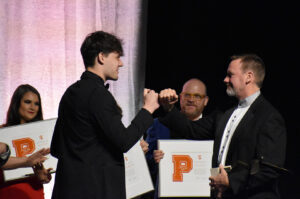
A night for knock-outs: Pipeline gala adds glitz to the hard-fought battles of entrepreneurship (Photos)
Midwest means resilience, Melissa Vincent told a black-tie crowd of entrepreneurs gathered Friday evening in the Grand Hall at Union Station, ultimately sharing the stage with not one, but two Innovator of the Year honorees. “When they get knocked down, knocked out, they get back up and they stay in the ring,” continued Vincent, CEO…

Why perfect timing beats perfect products — every time
Editor’s note: The perspectives expressed in this commentary are the author’s alone. Serial entrepreneur and three-peat exited founder Matt Watson is the host of Product Driven and co-founder of Full Scale, a global staffing company. Click here to subscribe to the free Product Driven newsletter. Have you ever noticed how many “revolutionary” products actually weren’t the…