

FCC commissioner Ajit Pai visits with local entrepreneurs
July 6, 2015 | Bobby Burch
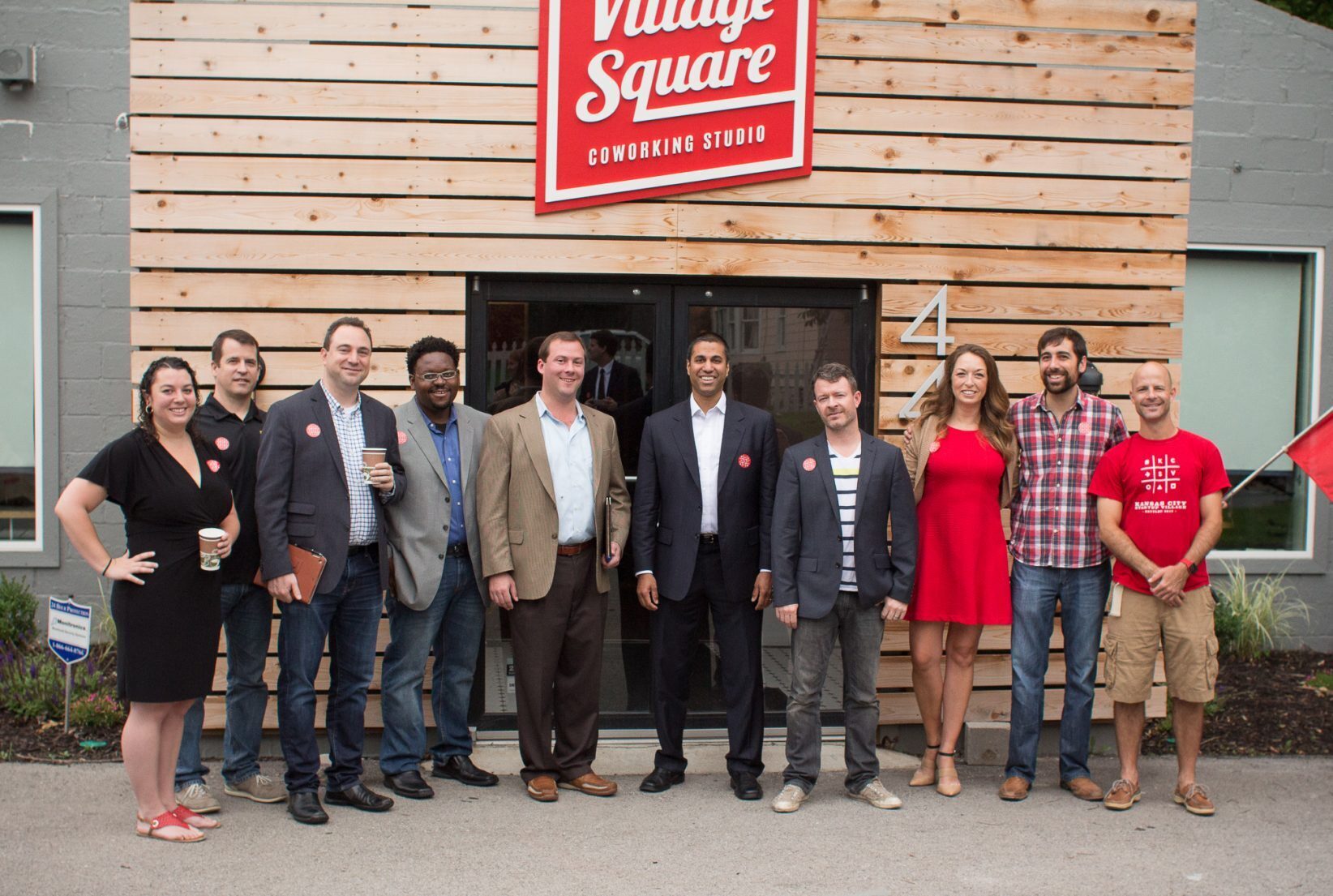
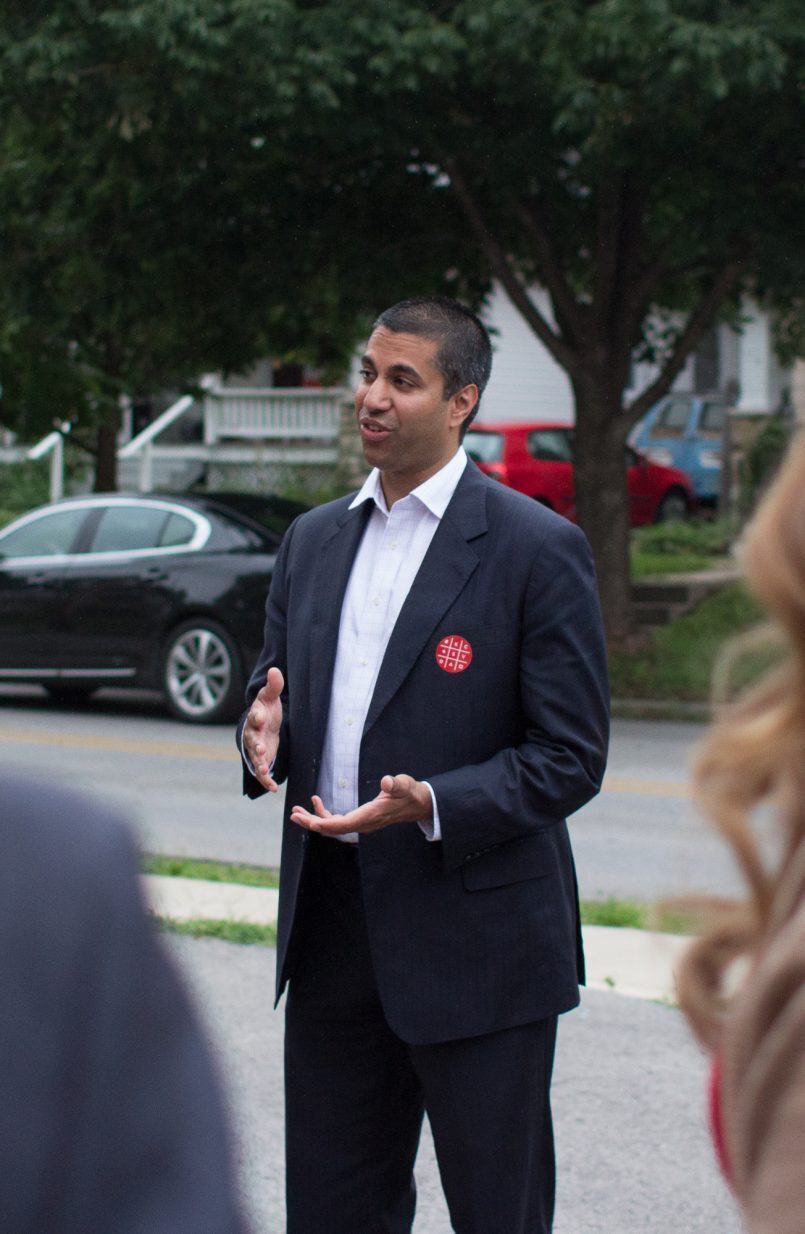 In a reunion trip to Kansas City, a federal communications official visited with entrepreneurs and business leaders to discuss the effects of high-speed Internet access in the area.
Ajit Pai, a commissioner with the Federal Communications Commission, stopped by the Kansas City Startup Village Thursday on a tour to gain more information on broadband expansion and its effects on small business.
A native of Parsons, Kan., Pai last visited the Kansas City Startup Village as Google Fiber first began its deployment of gigabit Internet more than three years ago. The Startup Village was created largely by happenstance after entrepreneurs quickly converged on the same neighborhood to receive the gigabit connections. Now the village features more than 30 startup companies, many of which offer their services via the Internet.
Startland News joined the conversation between Pai and area entrepreneurs to listen in on his thoughts regarding broadband access, net neutrality and Internet innovation.
On broadband’s effects …
I truly believe that broadband has a democratizing effect on society, most notably in entrepreneurship. If you’re somebody in Ottawa, Kansas, with a good idea and a good broadband connection, you have just as much ability to put that idea into practice as quickly as someone in Silicon Valley would.
On broadband enabling entrepreneurship …
One of the things that I find interesting about the digital age is that now you see all these types of entrepreneurship that we might not have seen 20 years ago. Silicon Valley gets a lot of the press, but what I’ve found in places like the Startup Village, Kalamazoo, Michigan, and in Omaha where I was a few days ago, there are all these entrepreneurial possibilities that are made viable because of broadband. I’ve been focusing on ways to promote broadband deployment and broadband competition all across the country, especially in predominately rural states like Kansas and to some extent Missouri. I believe that there are a lot of ideas that are probably just falling through the cracks that shouldn’t have to.
On net neutrality …
My great concern with net neutrality was that I didn’t want to adopt rules that inadvertently stand in the way of innovation on networks. We heard from a number of smaller companies that these rules will disproportionately benefit the bigger companies — the Comcasts, AT&Ts and Verizons of the world — who have lawyers and accountants that have a greater incentive to discriminate on a network. My preference would be instead of preemptive regulation of the entire industry is to rely on the FCC and Federal Trade Commission to focus in a targeted way on the companies that may be misbehaving.
On politicizing net neutrality …
One of the concerns I had was that we’ve had a bipartisan consensus (on net neutrality) in this country going back to the Clinton administration that the Internet should be unfettered from federal and state regulation. As a result of that we’ve seen something like $1.5 trillion in investments in our networks over the last 15 years. … Broadband being politicized is the worst thing that can happen to arguably one of the greatest free market success stories of the 21st Century. We take it for granted how far we’ve come over the last 25 years regarding broadband innovation, and I’d hate to see that fall into political affiliations or talking points.
On the hurdles to ubiquitous gigabit expansion …
A lot of state and local governments just haven’t streamlined the approval process and allowed companies to deploy the infrastructure. For example, when Google came, Kansas City, Kansas, and Kansas City, Missouri, made a concerted effort to update some of their permitting processes to reduce the cost of deployment.

Featured Business

2015 Startups to Watch
stats here
Related Posts on Startland News

Bloch faculty duo earn $200K grant toward effort to disrupt social media echo chambers
Editor’s note: The following story was originally published by the University of Missouri-Kansas City. Click here to read the original story. In the digital realm where algorithms reign supreme, Alex Krause Matlack and Bryan C. Boots from the UMKC Henry W. Bloch School of Management aim to create a tool that disrupts the social media landscape,…

Some 18th & Vine leaders say losing downtown stadium could have ‘a tremendously negative impact’
Editor’s note: The following story was published by KCUR, Kansas City’s NPR member station, and a fellow member of the KC Media Collective. Click here to read the original story or here to sign up for KCUR’s email newsletter. Businesses were split on their reaction to the vote on April 2 that rejected the extension of a 3/8th-cent sales tax…
Build a bigger bandwagon for women entrepreneurs, founders say; an isolated journey is too lonely
Representation of women in entrepreneurship is critically important, Vanessa Jupe told a crowd gathered this week at Union Station, emphasizing the power of exposure and leading by example to create a stronger, more diverse ecosystem. “If we don’t start businesses, then other women aren’t going to see that as a possibility,” said the founder and…

Designed with minimal parking, KC Current wants you to carpool to team’s next home match
A just-announced tech tool aims to help KC Current fans make sustainable and affordable transportation an easier choice on matchday as the hometown team continues a string of development wins at its new riverfront stadium. Current Carpool — a new feature from the free WAY TO GO trip planning and carpool matching app — connects…