

FCC commissioner Ajit Pai visits with local entrepreneurs
July 6, 2015 | Bobby Burch
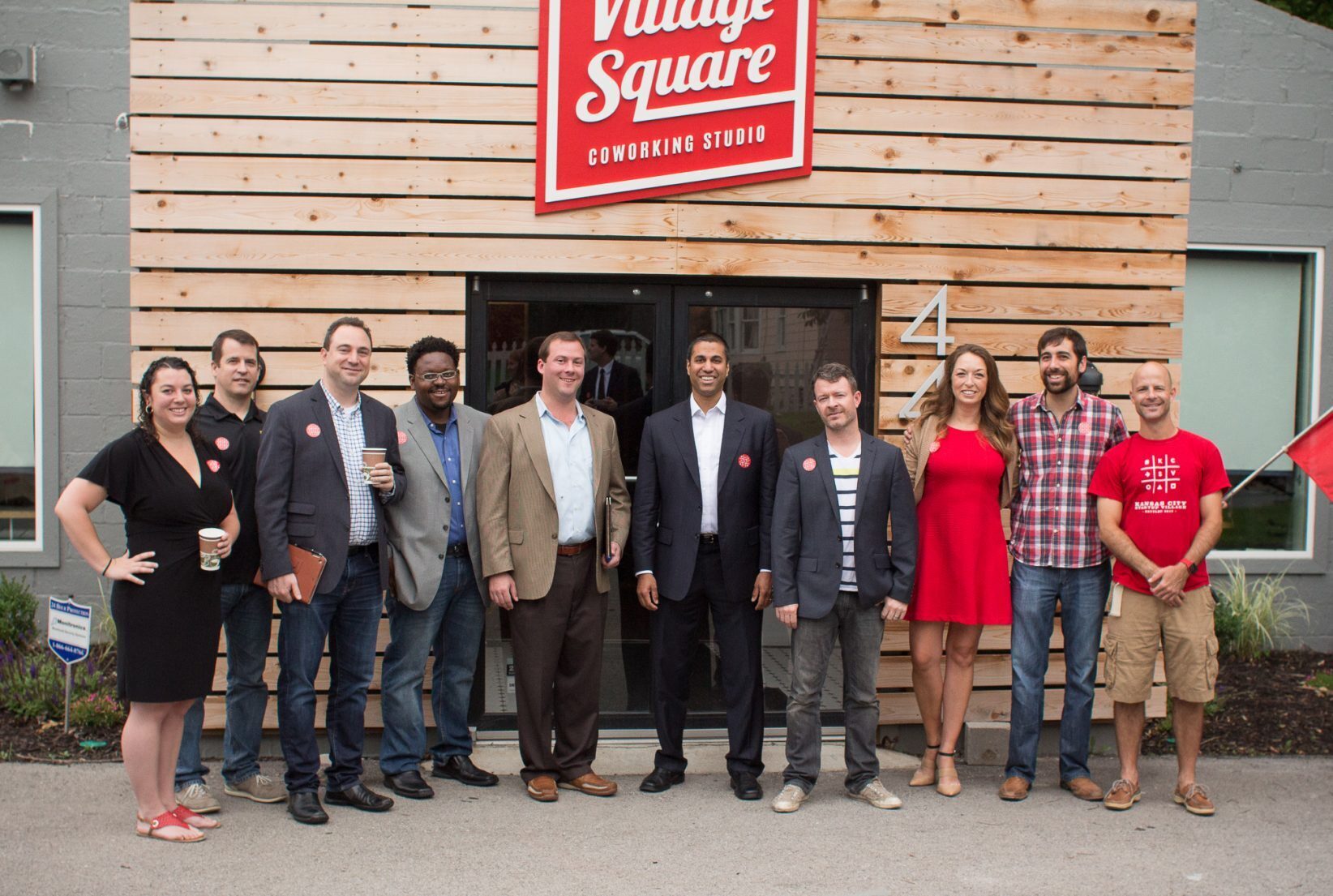
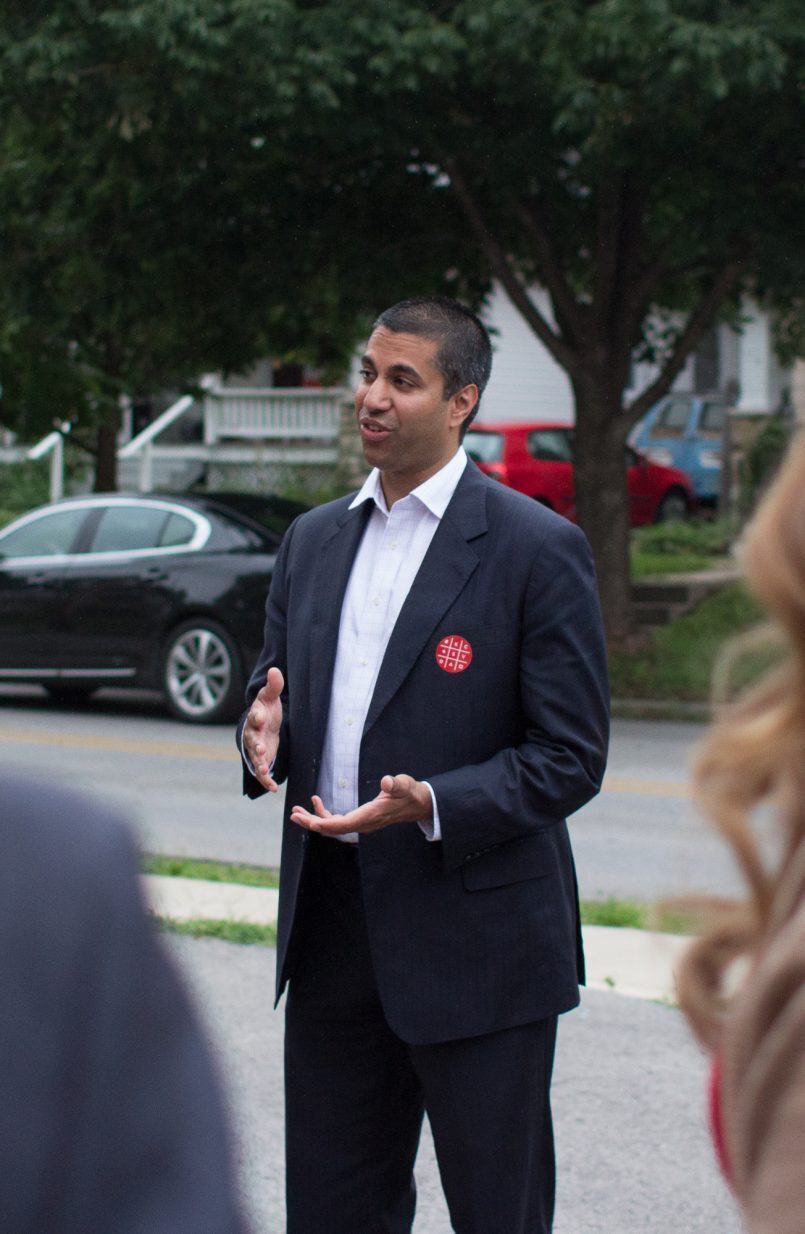 In a reunion trip to Kansas City, a federal communications official visited with entrepreneurs and business leaders to discuss the effects of high-speed Internet access in the area.
Ajit Pai, a commissioner with the Federal Communications Commission, stopped by the Kansas City Startup Village Thursday on a tour to gain more information on broadband expansion and its effects on small business.
A native of Parsons, Kan., Pai last visited the Kansas City Startup Village as Google Fiber first began its deployment of gigabit Internet more than three years ago. The Startup Village was created largely by happenstance after entrepreneurs quickly converged on the same neighborhood to receive the gigabit connections. Now the village features more than 30 startup companies, many of which offer their services via the Internet.
Startland News joined the conversation between Pai and area entrepreneurs to listen in on his thoughts regarding broadband access, net neutrality and Internet innovation.
On broadband’s effects …
I truly believe that broadband has a democratizing effect on society, most notably in entrepreneurship. If you’re somebody in Ottawa, Kansas, with a good idea and a good broadband connection, you have just as much ability to put that idea into practice as quickly as someone in Silicon Valley would.
On broadband enabling entrepreneurship …
One of the things that I find interesting about the digital age is that now you see all these types of entrepreneurship that we might not have seen 20 years ago. Silicon Valley gets a lot of the press, but what I’ve found in places like the Startup Village, Kalamazoo, Michigan, and in Omaha where I was a few days ago, there are all these entrepreneurial possibilities that are made viable because of broadband. I’ve been focusing on ways to promote broadband deployment and broadband competition all across the country, especially in predominately rural states like Kansas and to some extent Missouri. I believe that there are a lot of ideas that are probably just falling through the cracks that shouldn’t have to.
On net neutrality …
My great concern with net neutrality was that I didn’t want to adopt rules that inadvertently stand in the way of innovation on networks. We heard from a number of smaller companies that these rules will disproportionately benefit the bigger companies — the Comcasts, AT&Ts and Verizons of the world — who have lawyers and accountants that have a greater incentive to discriminate on a network. My preference would be instead of preemptive regulation of the entire industry is to rely on the FCC and Federal Trade Commission to focus in a targeted way on the companies that may be misbehaving.
On politicizing net neutrality …
One of the concerns I had was that we’ve had a bipartisan consensus (on net neutrality) in this country going back to the Clinton administration that the Internet should be unfettered from federal and state regulation. As a result of that we’ve seen something like $1.5 trillion in investments in our networks over the last 15 years. … Broadband being politicized is the worst thing that can happen to arguably one of the greatest free market success stories of the 21st Century. We take it for granted how far we’ve come over the last 25 years regarding broadband innovation, and I’d hate to see that fall into political affiliations or talking points.
On the hurdles to ubiquitous gigabit expansion …
A lot of state and local governments just haven’t streamlined the approval process and allowed companies to deploy the infrastructure. For example, when Google came, Kansas City, Kansas, and Kansas City, Missouri, made a concerted effort to update some of their permitting processes to reduce the cost of deployment.

Featured Business

2015 Startups to Watch
stats here
Related Posts on Startland News

mySidewalk partners with the White House on its open data initiative
Editor’s note: In response to readers’ desire for quick-hitting stories, Startland News is launching a new segment, “News Flash,” to enable more coverage. Let us know what you think! Kansas City tech firm mySidewalk is working with the White House. The firm on Friday announced its participation in The Opportunity Project, an initiative that…

Is your logo too safe? KU researcher explores the psychology behind your branding
Your logo may not be communicating what you want, which could hurt your business, according to new research. In her recent research on logo design, University of Kansas marketing scholar Noelle Nelson found that the disconnection between what founders hope to convey with a logo and how a person perceives it may discourage a…

Batch of startup funding news kicks off Kansas City’s autumn
In response to readers’ desire for quick-hitting stories, Startland News is launching a new segment, “News Flash,” to enable more coverage. Let us know what you think! Fall in Kansas City is off to a solid start for area startups. Several firms in the metro area have recently raised capital that they hope will accelerate…

Medical device startup Forest Devices finds local fit with stroke detection tech
Editor’s note: This content is sponsored by LaunchKC but independently produced by Startland News. Everyone who goes into medicine is motivated, in part, by their desire to reduce pain and suffering. That desire is what pushed Matt Kesinger to go to medical school. In 2009, Kesinger worked as an emergency medical technician in Boston.…