

Think IP: 3 IP rights your startup should know
June 4, 2015 | Startland News Staff

In this Think column, Venture Legal attorney Andrew McGhie explores the complex world of intellectual property and how to protect your company. The Think column helps entrepreneurs to stop and think about the various aspects of starting and running a business.
 The most valuable assets for startups often include some type of intellectual property.
What protection is available for these assets? It depends on the type of IP you want to protect. Most IP protection falls into one of three well-developed areas of law. Here’s a brief cheat sheet on IP and how to protect your business.
Copyright
Copyright law protects artistic and literary works — such as recordings, manuscripts, books, artwork, etc. — and also computer programs (object and source code). It is important to remember that expressions of ideas are copyrightable, but the ideas themselves are not.
Copyright protection begins as soon as an original work is fixed in a tangible medium and rights extend automatically to the creator unless it’s a work made for hire or the creator has made a contractual agreement to the contrary (such as in a contractor agreement).
Rights protected under copyright law include the exclusive right to produce, distribute, create derivative works, display or perform publicly. Any unauthorized exercise of any of these rights, which usually last for the lifetime of the creator plus 70 years, constitutes copyright infringement.
Trademark
Trademark law protects names, logos, slogans, color schemes, etc., used in connection with the sale of goods or services.
Rights are created as soon as the mark is used in interstate commerce (which courts interpret very broadly) and include the right to prohibit others from using your mark with respect to the specific goods and services offered in connection with that mark. Rights last as long as the mark is used in interstate commerce, provided you do not abandon your mark.
Protection extends only to the geographic area in which the mark is used unless the owner seeks protection from the United States Patent and Trademark Office, which extends protection throughout the U.S.
Any unauthorized use of a protected mark — or any mark confusingly similar to the protected mark that is likely to cause customer confusion — constitutes trademark infringement.
Patent
Patent law protects things like inventions and new and useful improvements of machines, processes, manufactured products or materials, and compositions of matter. There are three types of patents available depending on what is being protected: design, utility and plant.
Patent protection allows the owner to prohibit others from making, selling or using the subject matter of the patent. Design patents last for 14 years from the date of filing, while utility and plant patents last for 20 years.
To get patent protection, an inventor must be the first to file for protection of a patentable subject matter. Patentable subject matter must be useful, new and not obvious (to a person having ordinary skill in the field).
*This article is very general in nature and does not constitute legal advice. Readers with legal questions should consult with an attorney prior to making any legal decisions.
Andrew McGhie is an attorney with Venture Legal, a firm that provides legal services for small, growing businesses. Follow him at @andrew_kcesq.


2015 Startups to Watch
stats here
Related Posts on Startland News

Why employers should hire veterans: KC entrepreneurs say combat prepared them for startup life
Effectively communicating the skills and experiences gained from military service can be a major challenge for veterans, said Zachary Oshinbanjo. Too often that disconnect contributes to unemployment or mental health struggles when a service member returns to civilian life. “Many veterans may have gone straight from high school into the military and now are looking…

How did KC land Meta, Panasonic megaprojects? Infrastructure, energy and enthusiasm, companies say
Kansas City is one of America’s most exciting and dynamic cities, said Matt Sexton, making it the ideal choice to build out a nearly 1 million-square-foot data center for Meta, the tech behemoth behind Facebook, Instagram, and WhatsApp.. “There are a lot of sites around the country that might have one or two qualities that…
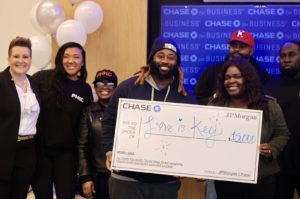
Bank partners with Porter House to give out more than hugs; Meet four latest KC grant recipients
Cameron Martin understands the importance of scaling deep into the community that inspired his journey and first fed the business he built with his wife, Tameisha, he said. The co-owners of Love is Key — a waffle-centric brunch restaurant and catering concept in the former Soulcentricitea space on Troost Avenue — were awarded a $15,000…

Cannabis biz expected to grow like a weed after MO voters light recreational marijuana
Tuesday’s vote in favor of recreational marijuana in Missouri shows Kansas City’s obvious appetite for legalization, said Michael Wilson, whose cannabis startup sees a vast new market opened by the election outcome. Statewide, Missouri poll-goers this week approved the high-profile constitutional amendment with 53.1 percent of the more than 2 million votes cast. In Kansas…