

Think IP: 3 IP rights your startup should know
June 4, 2015 | Startland News Staff

In this Think column, Venture Legal attorney Andrew McGhie explores the complex world of intellectual property and how to protect your company. The Think column helps entrepreneurs to stop and think about the various aspects of starting and running a business.
 The most valuable assets for startups often include some type of intellectual property.
What protection is available for these assets? It depends on the type of IP you want to protect. Most IP protection falls into one of three well-developed areas of law. Here’s a brief cheat sheet on IP and how to protect your business.
Copyright
Copyright law protects artistic and literary works — such as recordings, manuscripts, books, artwork, etc. — and also computer programs (object and source code). It is important to remember that expressions of ideas are copyrightable, but the ideas themselves are not.
Copyright protection begins as soon as an original work is fixed in a tangible medium and rights extend automatically to the creator unless it’s a work made for hire or the creator has made a contractual agreement to the contrary (such as in a contractor agreement).
Rights protected under copyright law include the exclusive right to produce, distribute, create derivative works, display or perform publicly. Any unauthorized exercise of any of these rights, which usually last for the lifetime of the creator plus 70 years, constitutes copyright infringement.
Trademark
Trademark law protects names, logos, slogans, color schemes, etc., used in connection with the sale of goods or services.
Rights are created as soon as the mark is used in interstate commerce (which courts interpret very broadly) and include the right to prohibit others from using your mark with respect to the specific goods and services offered in connection with that mark. Rights last as long as the mark is used in interstate commerce, provided you do not abandon your mark.
Protection extends only to the geographic area in which the mark is used unless the owner seeks protection from the United States Patent and Trademark Office, which extends protection throughout the U.S.
Any unauthorized use of a protected mark — or any mark confusingly similar to the protected mark that is likely to cause customer confusion — constitutes trademark infringement.
Patent
Patent law protects things like inventions and new and useful improvements of machines, processes, manufactured products or materials, and compositions of matter. There are three types of patents available depending on what is being protected: design, utility and plant.
Patent protection allows the owner to prohibit others from making, selling or using the subject matter of the patent. Design patents last for 14 years from the date of filing, while utility and plant patents last for 20 years.
To get patent protection, an inventor must be the first to file for protection of a patentable subject matter. Patentable subject matter must be useful, new and not obvious (to a person having ordinary skill in the field).
*This article is very general in nature and does not constitute legal advice. Readers with legal questions should consult with an attorney prior to making any legal decisions.
Andrew McGhie is an attorney with Venture Legal, a firm that provides legal services for small, growing businesses. Follow him at @andrew_kcesq.


2015 Startups to Watch
stats here
Related Posts on Startland News

Crossroads small biz owners to Royals: Come back with a better plan (and put it in writing)
It didn’t have to be this way, said Crossroads business owners, blaming Tuesday’s failed stadium sales tax initiative on what they viewed as a lack of transparency and legally binding agreements, too many last-minute deals and changes, and a disregard for community input. Most, however, hope the conversation isn’t entirely finished. Jackson County voters this…

These founders just earned Digital Sandbox KC funds; next comes proving their concepts
A trio of newly funded Digital Sandbox KC companies includes a closely-guarded startup launched by an exited Pipeline founder who also helped bring headline-grabbing sports tech to the forefront of the Kansas City innovation scene. Mission Hills, Kansas-based Chemniscient (pronounced kemʹniSH(Ə)nt) is currently operating confidentially and is not disclosing any product information to the public…
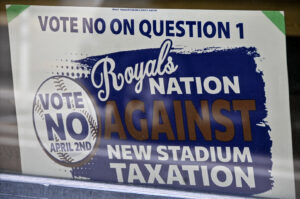
Voters hand Royals, Chiefs a resounding defeat on sales tax that would’ve funded stadium projects
Editor’s note: The following story was published by KCUR, Kansas City’s NPR member station, and a fellow member of the KC Media Collective. Click here to read the original story or here to sign up for KCUR’s email newsletter. The 3/8th-cent sales tax extension would have helped build a new Kansas City Royals stadium downtown as well as fund renovations…

Kelce Jam returning to KC in May with Lil Wayne, Diplo, 2Chainz (plus Takis and Uncrustables)
Travis Kelce’s celebration of the Kansas City Chiefs’ back-to-back Super Bowl championships not only flexes the star tight end’s pull with top-tier artists, but showcases his ability to attract major brand deals. Kelce Jam returns Saturday, May 18 to Azura Amphitheater in Bonner Springs, Kansas, with musical performances personally curated by the three-time Super Bowl…