

Schukman: 5 ways to fuse a social mission in your company
June 8, 2015 | Josh Schukman

I’ve recently been exploring ways in which traditional companies have been retroactively becoming social entrepreneurs.
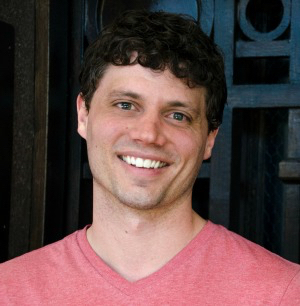
Josh Schukman
Recall from my last piece that social entrepreneurship is a businessperson that creates a profit and purpose-driven organization in which the business and social missions run in tandem. Our social mission, therefore, becomes a key component of our marketing, branding, and success metrics.
Interestingly, many large companies fit the first half of this definition, yet fall short on the latter by failing to tell the story of their social impact. Timberland, for example, is one of the greatest social entrepreneurs of our time. It outfits the uniforms for thousands of City Year corps members, pays their employees for 40 hours of volunteer time annually, and uses its product channels to empower sustainable suppliers. I’m sure you knew of Timberland, but did you know about its social mission? My guess is no.
Traditional companies can no longer afford not to have a story like Timberland’s. We know that 69 percent of millennial consumers want to know the story of businesses using their influence for social good. This, plus the fact that millenials have over $200 billion of buying power at their disposal, should be enough for any business to make the case for telling their cause-based story.
Here are five simple ways that an established company can become a retroactive social entrepreneur:
1.) Develop a social mission that aligns with your business mission. For example, Kansas City-based Affinity Enterprise Group specializes in supporting residential real estate investors, and a key part of their social mission is supporting efforts that restore blighted residential neighborhoods in cities like Detroit and Kansas City. Affinity’s charitable arm also works with River of Refuge, which provides free temporary housing to working families.
2.) Create a shared vision with your team. This begins at the very top. The leadership of an organization must be unified on the social mission that will be branded as part of its core business. That story and the strategies for telling it must be communicated to all teams within the organization so customers receive a consistent story that is apparent with every interaction. Patagonia is an exemplary retroactive social entrepreneur because they tell their story of sustainable fashion and corporate good at every touch point.
3.) Don’t bury your story. I can’t tell you how many times I go to an established company’s website, try to find more about its social mission, and have to dig through 20 pages before I find the soup kitchen it donates to. Don’t do this. Business is too powerful a force for good to not have its story more loudly told. Find a way to authentically tell the story of the good your company is creating for the world.
4.) Get ‘B-Corp.’ certified. B-Corp Certification is essentially the ‘certified organic’ sticker for social entrepreneurs. There are some big companies — Etsy, Ben & Jerry’s, Patagonia and Warby Parker to name a few — who’ve sought this out because it’s a trusted way of telling consumers that you’re part of a new class of business leader. It’s an affordable certification, and a quick way to show customers you take sustainability and social good seriously.
5.) Be authentic. While today’s consumers are more likely to remain loyal to a cause-driven brand, it is also true that the Internet allows us to spot fakers from a mile away. In this article, I’ve shared several compelling business reasons to become a retroactive social entrepreneur, but if you do this strictly for that purpose, you will not succeed in the long run. You must genuinely believe in the story you’re telling and the change you’re creating for it to resonate.
Josh is the founder of Social Change Nation, whose mission and passion is to provide startup social entrepreneurs with the best possible resources and tools for growing their ventures. He hosts a podcast featuring interviews with the world’s leading change agents and creates online content to help startups make a dollar AND a difference.

Featured Business

2015 Startups to Watch
stats here
Related Posts on Startland News

This weekend only: Festive balloon wonderland inflates holiday spirit at 18th and Vine
More than 125,000 biodegradable balloons are lifting holiday spirits this weekend in the historic 18th and Vine Jazz District. The Big Balloon Build — an international festival — is popping up Dec. 2-4 at the Gregg/Klice Community Center. Led by Peyton Westfall and Darren Huffman of Kansas City’s Pop Culture Sculptures, more than 70 balloon…

Hollywood Animation Academy secures home at Centriq; set to begin first classes in January
Hollywood Animation Academy is leaping from the drawing board to live action in January with its first group of enrolled students. Founded by veteran director and animator Gavin Dell, the trade school is set to prepare students for jobs in the film, gaming, and television industry. Dell, an Overland Park native, returned to Kansas City…

KC duo opens candy shop at Mizzou, bringing familiar flavors to students far from home
COLUMBIA, Missouri — A pair of Mizzou students from the Kansas City area are providing international students on campus with a taste of home. Kogo’s Kandies sells candy and treats from other countries, with the goal of fostering a more inclusive campus environment at the University of Missouri, said co-founders Jacob Burrell-Kogo and Henry Accardo.…

Custom digital avatar tech, affordable housing startup among Scale’s third cohort
Startland News’ Startup Road Trip series explores innovative and uncommon ideas finding success in rural America and Midwestern startup hubs outside the Kansas City metro. This series is possible thanks to the Ewing Marion Kauffman Foundation, which leads a collaborative, nationwide effort to identify and remove large and small barriers to new business creation. COLUMBIA,…